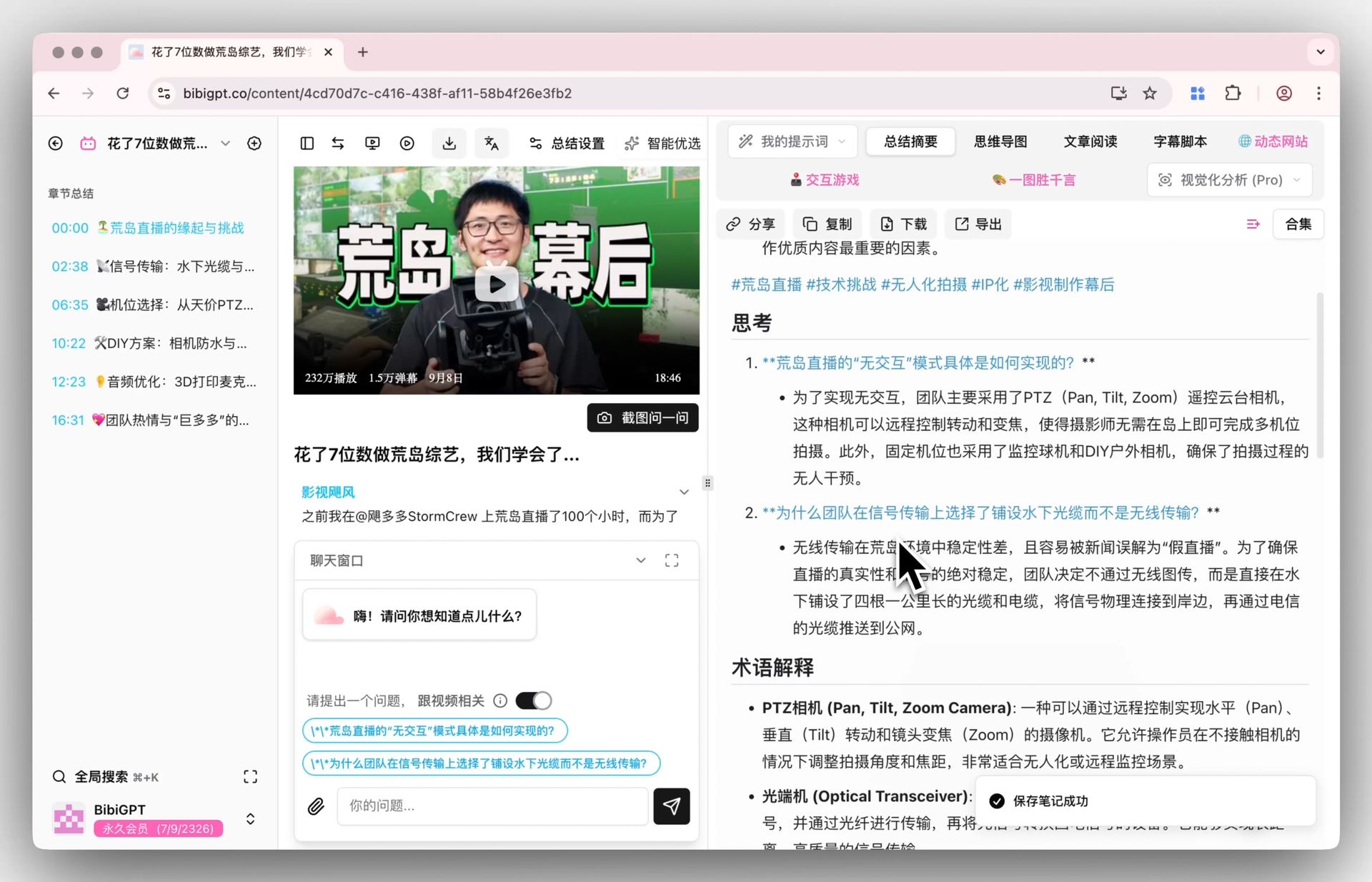
Clear Your "Watch Later" Backlog in One Sitting: The Inbox-Zero Method for Videos With AI (2026)
Clear Your “Watch Later” Backlog in One Sitting: The Inbox-Zero Method for Videos With AI (2026)
Open your “Watch Later” list and count—dozens, maybe hundreds, right? In there: a tutorial bookmarked half a year ago, an open course you wanted to learn last month, the “you have to watch this” a friend forwarded. You know full well that at your current pace, you’ll never finish it. Every time you open it, it’s a tiny pang of guilt: piled up so much again, did nothing again.
The problem isn’t a lack of discipline—it’s that “Watch Later” is by nature a black hole that only takes in and never lets out. You keep adding to it, but you’ve never had an efficient “exit.”
What this article gives you is a video inbox-zero method—borrowing the “Inbox Zero” idea from email, using AI batch speed-reading to triage a backlog into “watch now / save to knowledge base / delete” in minutes, so your queue truly hits zero for the first time.
100-word answer: Treat “Watch Later” like an email inbox—instead of watching everything to the end, quickly decide keep-or-drop for each item. Use AI to turn each video into a TL;DR + key points in seconds; one glance tells you: watch the worthy ones now, save the valuable-but-not-urgent into notes, delete the clickbait. This flow turns “never finish” into “clear in an afternoon.” To try it now, paste a link into BibiGPT.
1. Why “Watch Later” Never Gets Cleared
To solve the problem, first see its structure clearly.
Bookmarking Costs Almost Nothing, Consuming Costs a Lot
A single tap to “bookmark” takes half a second, but finishing a 30-minute video takes 30 minutes. The in/out is severely asymmetric—that’s the root cause of the backlog. You think bookmarking = halfway done; actually bookmarking just hands the decision to “future you,” who is equally short on time.
You’re Afraid “Deleting Means Missing Out”
Many people don’t dare delete, afraid the one they delete is exactly the useful one. So they let it hang there forever. But hanging there unwatched, and deleting—deliver the same actual return to you: zero. The only difference is that hanging there also drains your mental load.
In the interactive demo below, pick a sample video and see AI turn it into judgeable key points in seconds:
Summarize any video in seconds
Pick a sample below to see the AI summary — TL;DR, key points, and jump-to timestamps.
TL;DR: Karpathy builds a GPT-style language model from scratch in code, explaining every piece — from a tiny character-level model up to the full Transformer.
Key points
- Start with a bigram model, then add self-attention so tokens can "talk" to each other
- A Transformer block = multi-head attention + feed-forward + residual connections + layer norm
- Training is just predicting the next token; scale and data do the rest
- The same architecture behind nanoGPT is what scales up to ChatGPT
Jump to
- 00:07 Why build GPT from scratch
- 08:23 Self-attention, intuitively
- 1:00:00 Assembling the Transformer block
- 1:35:00 From nanoGPT to ChatGPT
Practical rule: When bookmarking a video, ask yourself, “What specific problem do I plan to solve with this?” If you can’t answer, it shouldn’t have been bookmarked in the first place.
2. The Core Method: Triage Videos Like Email Instead of “Finishing” Them
The essence of inbox zero is separating “processing” from “consuming.” When you process an inbox, you don’t read each email to the end—you quickly decide what to do with each: reply, save, delete. Videos are the same.
With AI speed-reading, each video yields a TL;DR + key points in seconds, so you can make a three-way quick decision for each:
- Watch (Do): the summary shows it’s genuinely worth it and you need it now → watch immediately, or schedule it into today.
- Save (Defer): valuable but not urgent → save the AI summary into your knowledge base with the original link attached. When you really need it later, read the summary first, then decide whether to revisit.
- Delete (Delete): the summary shows it’s clickbait, outdated, or you don’t actually need it → delete with zero mental burden, because you already know there’s nothing in it for you.
The key shift: you no longer need to “finish watching” to “process.” One glance at the summary decides, an order of magnitude faster.
Source: YouTube · AI batch speed-reading demo
3. In Practice: 4 Steps to Clear the Backlog in One Afternoon
Turn the method into executable steps:
- Process in a block, not in dribs and drabs: set aside a full 1 to 2 hours and clear it in one concentrated pass like an inbox, rather than clearing two a day—piecemeal never catches up with new additions.
- Speed-read and decide on the spot: paste each video link from the list into the AI tool, read the summary in seconds, and immediately make the three-way “watch / save / delete.” Don’t hesitate; hesitation is the new backlog.
- “Save” goes uniformly into the knowledge base: for the ones you keep, export the AI summary to Markdown and save it into note bases like Notion and Obsidian, tagged. It turns from a “to-watch black hole” into searchable knowledge—find it with one search when needed, no item-by-item revisiting.
- Schedule the “watch” ones: the ones truly worth watching now, slot directly into today’s or this week’s time blocks. As for the rest—the list is already empty.
When handling collections / entire playlists, you can select multiple at once for batch processing for better efficiency.
Practical rule: The goal of clearing isn’t “watch them all,” it’s “make a decision on each.” A list you’ve decided on, even unwatched, is no longer a burden.
Further reading: to turn the videos you “save” into notes automatically, see how to take notes from a video automatically; for accented or low-quality videos that won’t transcribe accurately, see what more accurate AI subtitles really mean.
4. How Much This Method Actually Saves You
Do the math: say you’ve backlogged 50 videos averaging 25 minutes each—watching them all would take over 20 hours. With speed-read triage, each video averages 1 minute to read the summary and decide; 50 of them take under an hour to fully process—and maybe only 5 to 10 are truly worth your time.
In other words, you use 1 hour of “processing” to save 15+ hours of “ineffective consuming,” while turning the valuable content into searchable notes.
The little tool below helps you estimate how much time speed-reading can save you:
How many hours could you save?
Drag the sliders. Watching in full vs. skimming an AI summary — see the gap.
BibiGPT has generated over 5 million AI summaries for more than 1 million users, supporting 30+ platforms—built precisely for “quickly triaging away the content you’ll never finish.”
Practical rule: What’s truly scarce isn’t content, it’s your time to consume it. Spend your time on the “worthy 10%,” and triage away the other 90% with speed-reading.
5. Frequently Asked Questions (FAQ)
Q1: Will reading only the summary and not the original cause me to miss important info? A: For the purpose of “decide keep-or-drop,” the summary is enough. For content you decide to keep, you can use timestamps to jump back into the original anytime to study closely—the summary is a sieve, not a replacement.
Q2: Can I process an entire playlist or collection at once? A: Yes. Batch processing of multiple items is supported; speed-reading a collection / playlist as a whole is faster than pasting one by one.
Q3: How do I manage the “saved” summaries so they don’t become a new black hole? A: Export to Markdown, save into a note base, and tag them; use them by search rather than “item-by-item revisiting.” Find them with one search when needed, and they won’t pile up again.
Q4: Which platforms’ videos can be processed this way? A: 30+ platforms like YouTube, Bilibili, Douyin, TikTok, Xiaohongshu, and podcasts just need a link; local videos can be uploaded too.
Q5: How do I prevent the backlog from re-forming after clearing? A: Build the habit of “bookmark = process”—speed-read and decide on the spot when bookmarking, cutting off the “only in, never out” black hole at the source.
Want to clear half a year’s worth of “Watch Later” in one afternoon? Paste a link into BibiGPT smart speed-read summary and start from the oldest one.
BibiGPT Team