Google I/O 2026 Gemini Omni Explained: The World Model Era and How Video Consumption Tools Adapt
Google I/O 2026 Gemini Omni Explained: The World Model Era and How Video Consumption Tools Adapt
As of May 24, 2026, Google I/O 2026 (opened May 19) has rewritten the visual-AI playing field. The headline isn’t another model — it’s that Gemini Omni fuses “world model,” “multimodal video generation,” and “voice-driven editing” into a single model, with summer rollout across the Gemini app, YouTube Shorts, and Flow.
Practical rule: When one model both “understands” and “produces” video, the second half of 2026 will see the same users flip between “generation” and “consumption” inside one workflow — tool choices must cover both ends.
1. What Gemini Omni Actually Ships
Stitching together the keynote and Sundar Pichai’s deep dive, Omni cracks three pain points that haunted every video AI in 2025:
- World-model layer: the model maintains an internal, coherent understanding of the physical world (object permanence, lighting direction, character identity), so cuts no longer “swap faces” and props don’t vanish
- Multimodal generation layer: a single prompt yields visuals + native audio + captions in one pass, no post-production alignment
- Voice-driven editing: after generation users can simply say “slow this part down” or “swap the background at second 12 to dusk,” and the model regenerates on the fly
A lightweight Gemini Omni Flash lands later this summer with much lower latency. Per Google DeepMind’s launch numbers, Flash runs at roughly 1/3 the inference latency of Omni while preserving world-model consistency.
Practical rule: Pick Omni for top generation quality, Omni Flash for live feedback and cost — they aren’t mutually exclusive, most production workflows will run both rails.
2. What This Means for Content Consumers
The world-model story is usually told from the creator side. But for anyone who learns from or works with audio/video every day, the bigger shift is at the consumption end.
Students and researchers: the YouTube videos you watch may soon be AI-generated “knowledge videos,” meaning the underlying data may not actually exist. You’ll need a habit — after watching, run a structured summary and verify “what are this video’s core arguments and supporting data.” Tools like BibiGPT that timestamp and trace sources become more valuable, not less.
Content creators: Omni already outputs vertical 9:16 with native audio, so the labor-heavy step of “edit a short” gets compressed into one sentence. Topic, script, and information density still need a human — you have to consume a lot of existing video to find angles. BibiGPT video-to-article is the must-have at that stage.
Knowledge workers: once Omni Flash ships, AI video will flood feeds. BibiGPT’s Feed (Beta) aggregates the recent uploads of every channel you subscribe to into one structured timeline — scan a week’s worth in five minutes.
| Persona | What Gemini Omni changes | What you need |
|---|---|---|
| Students | YouTube becomes AI-generation-heavy | Structured summary + source tracing |
| Creators | Short-form production cycle drops to minutes | Efficient consumption + info extraction |
| Knowledge workers | Feeds drown in AI video | Subscription aggregation + one-click Q&A |
3. How BibiGPT Pairs With Gemini Omni
BibiGPT isn’t a model company — it’s a consumption-side tool. Trusted by over 1 million users, with over 5 million AI summaries generated and 30+ supported platforms — that positioning makes it complementary to Gemini Omni, never a replacement.
The full workflow:
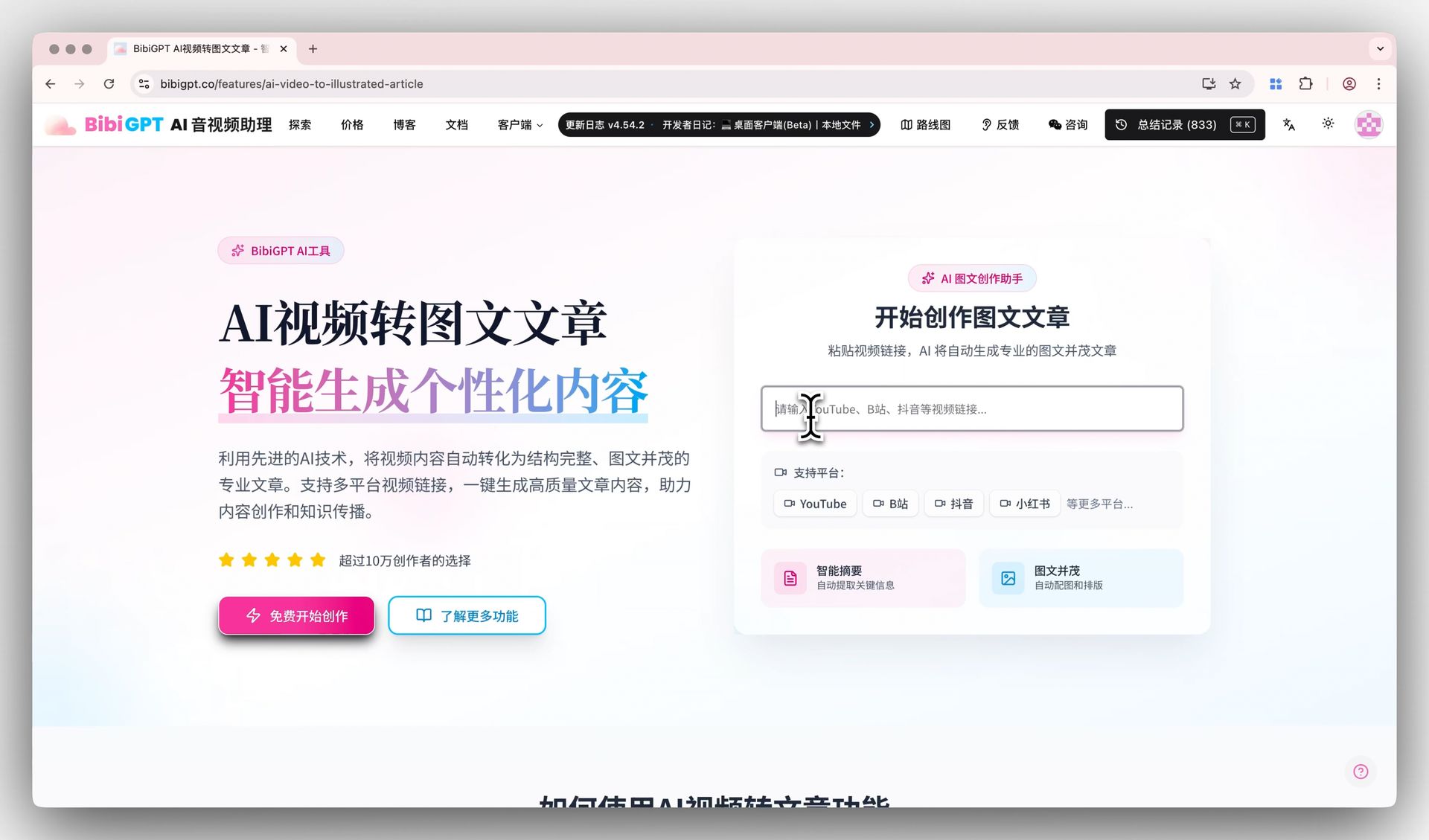
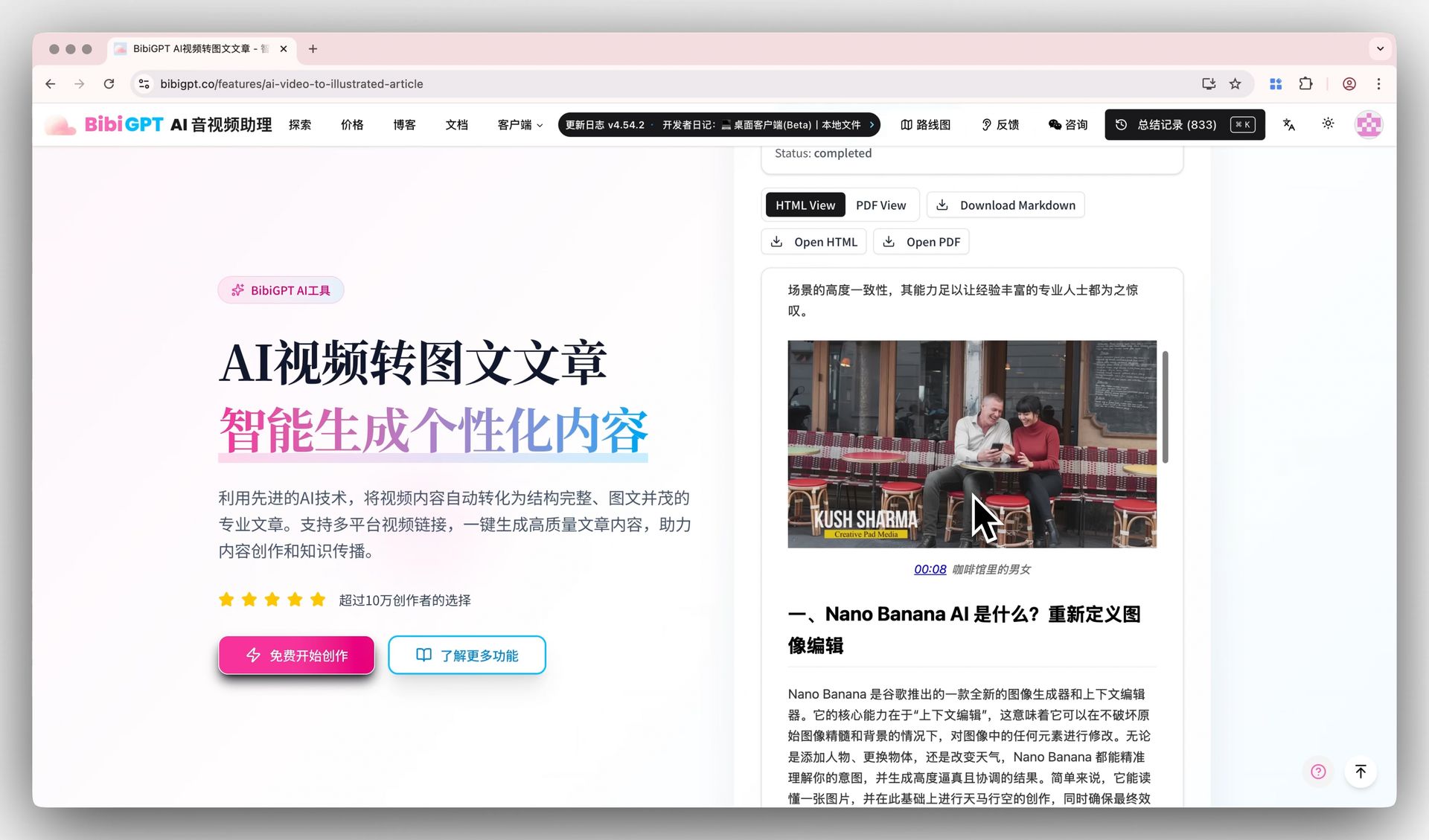
- Watch → BibiGPT summary: when an AI-generated video pops up on YouTube/Bilibili/podcast feeds, paste the link to BibiGPT and get a structured summary plus timestamped outline in seconds
- Probe → BibiGPT smart chat: use AI Video Dialog & Source Tracing to verify every data point in the video and separate insight from AI fluff
- Remix → Gemini Omni generation: feed the verified takeaways from several BibiGPT-summarized videos to Omni and produce your own commentary short
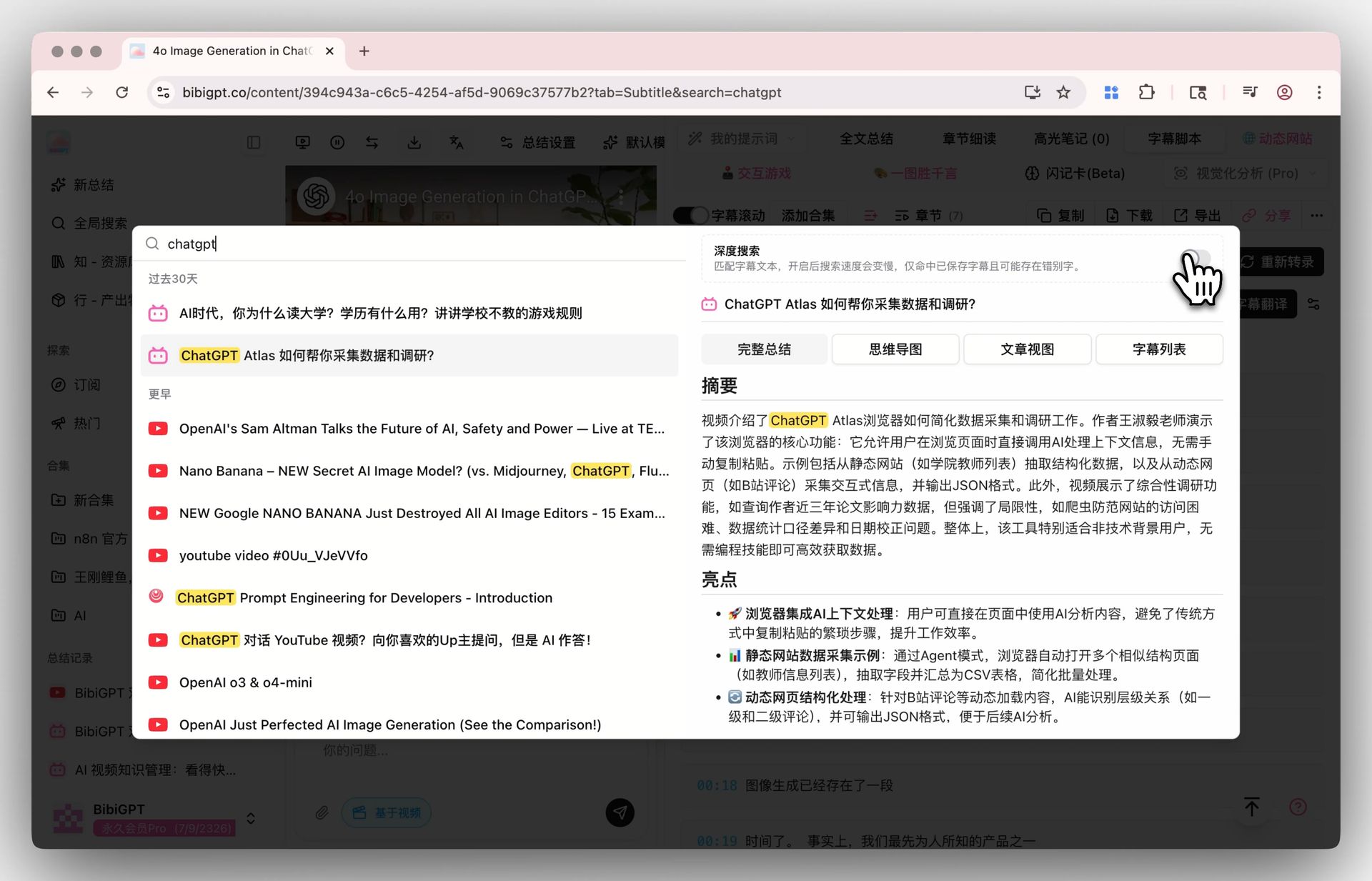
- Archive → BibiGPT library: every watched video lands in your BibiGPT library; next time you need an idea, Deep Search lets you search inside transcripts
Practical rule: Treat generation AI (Omni) as your output end and consumption AI (BibiGPT) as your input end — the more solid your input, the more differentiated your output.
4. What to Expect in the Next 6–12 Months
Based on The Verge’s Gemini Omni product review and Google’s known release cadence, three predictions:
- Trend 1: YouTube Shorts will embed Omni Flash natively by Q3 2026 — creators won’t leave YouTube to generate shorts, squeezing CapCut and Jianying out of that entry point
- Trend 2: OpenAI is also chasing world models, with a counter-product likely before end-of-2026. Video generation will enter “model parity, workflow differentiation” — whoever owns the more solid consumption side captures mindshare
- Trend 3: As AI video proliferates, “human creator certification” becomes a real need. YouTube/Bilibili will likely add source labels by 2027, and tools like BibiGPT with built-in source tracing will be folded into the certification ecosystem
5. FAQ
Q1: Can I use Gemini Omni today? A: The Omni main version announced May 19 is in preview for Gemini Ultra subscribers in the US first; Flash is scheduled for summer.
Q2: Will BibiGPT add Gemini Omni for video generation? A: BibiGPT is positioned as audio/video consumption + knowledge management, not generation. If you want to make videos, use the Gemini app or YouTube Shorts directly; BibiGPT’s role is helping you digest AI-generated videos efficiently.
Q3: Does Omni replace subtitle translation? A: No. Omni is an end-to-end generation model and doesn’t target “translating existing videos.” For translating long YouTube videos into your language and downloading captions, BibiGPT subtitle translation remains the go-to.
Q4: How long can world-model consistency hold in long video? A: Per Google DeepMind’s technical blog, Omni preserves object/character ID consistency within 60 seconds; beyond that, ID drift appears — which is why short form benefits first.
Q5: How many languages does BibiGPT support? A: BibiGPT’s main site supports Chinese, English, Japanese, and Korean across web, desktop, browser extensions, and mobile, with a single subscription syncing all platforms.
6. Try BibiGPT and Max Out Consumption in the AI Video Era
Models are no longer scarce — the speed at which we consume content is. BibiGPT turns every AI video into readable, searchable, reusable structured knowledge.
- Try BibiGPT AI video summary in one click
- Read our BibiGPT vs YouTube Ask AI deep comparison
- Follow our WeChat channel “魔法司” for weekly AI video industry takes
—— BibiGPT Team