
[BibiGPT Growth Series] Episode 1 | How AI Summaries for Bilibili Were Born
A look back at the first version of BiliGPT—how we built an AI tool to summarize Bilibili videos, the scrappy launch tactics, and the early lessons that still guide us today.
[BibiGPT Growth Series] Episode 1 | How AI Summaries for Bilibili Were Born
Welcome to Episode 1 of the BibiGPT Growth Series—a retrospective on the product that eventually evolved into today’s BibiGPT.
In late 2022, we posted the video “AI Summaries for Bilibili—Powered by ChatGPT” and launched the first version of BiliGPT. While the UI and features have changed dramatically, the story behind the prototype is worth revisiting.
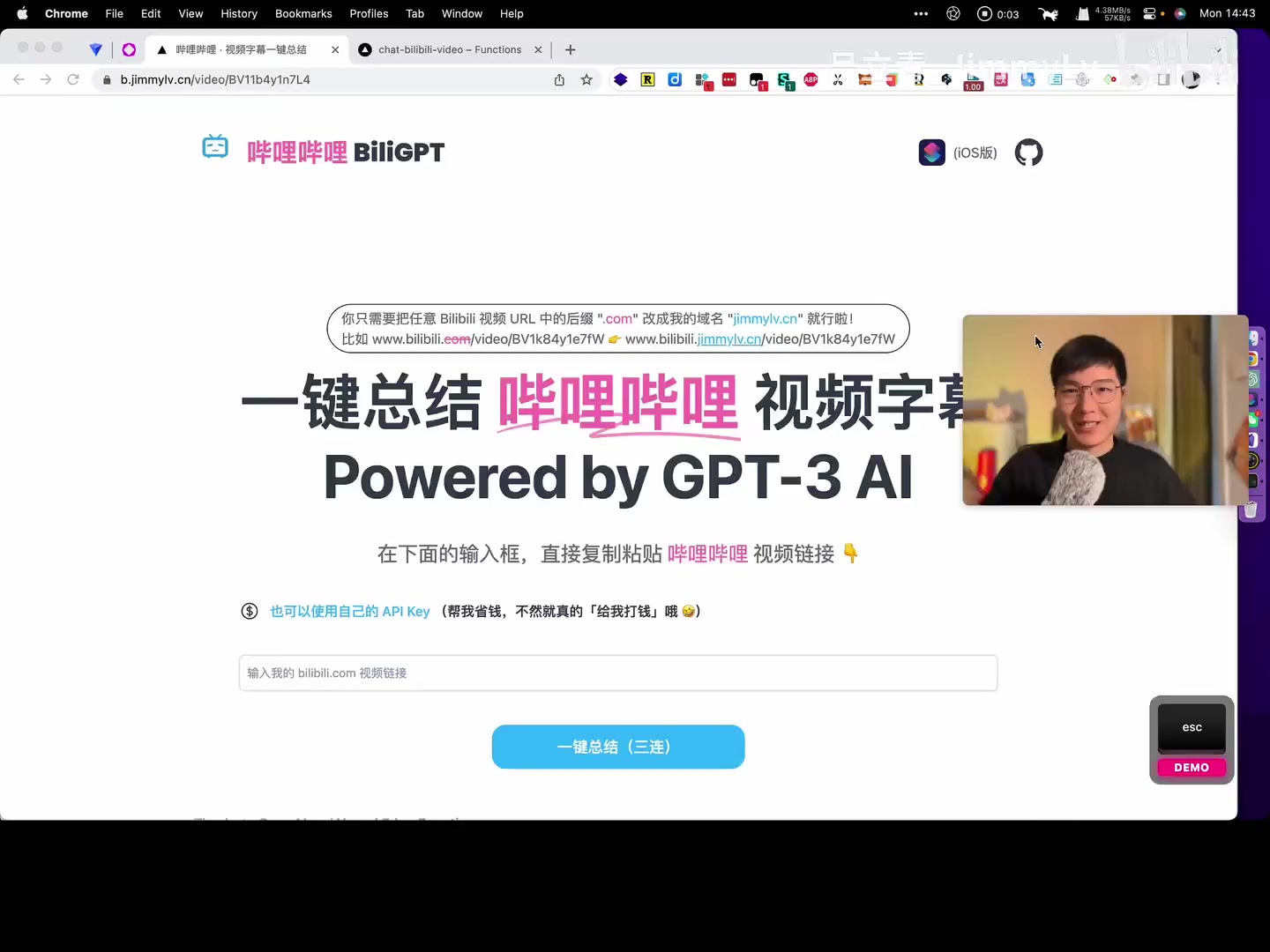 Early UI
Why Bilibili? Why Now?
ChatGPT’s capabilities convinced us to ship something tangible. Bilibili was overflowing with long-form content, yet key insights remained locked behind full-length viewing. The goal: deliver core takeaways without watching every minute.
Early interface demo
Two Launch Tactics
- Copy & paste URL – Users dropped any Bilibili link into BiliGPT, hit “Summarize,” and received a concise outline with highlight bullets.
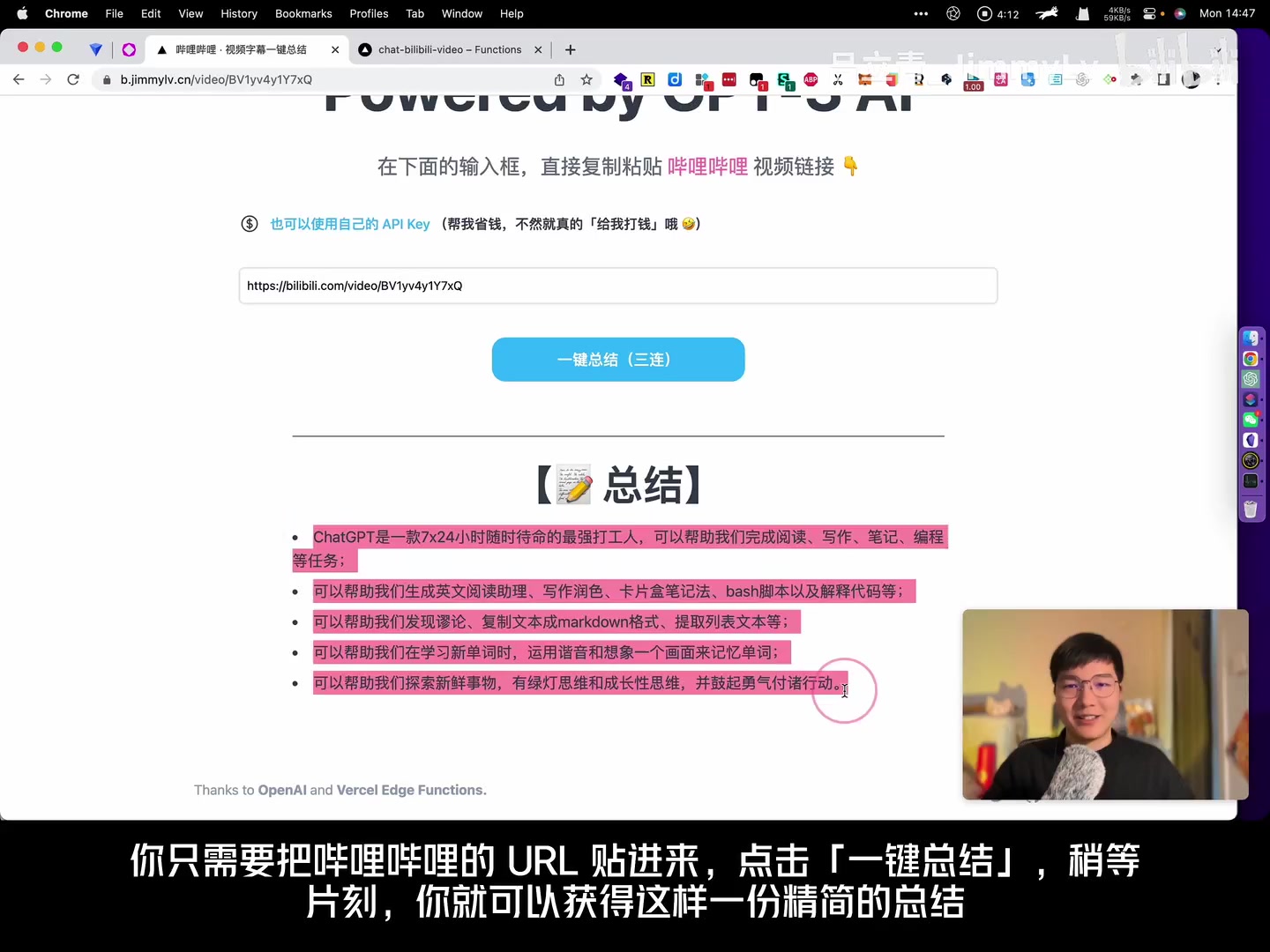 Paste link
 - URL hack – Swap
.comforjimmylv.cnin the browser bar while watching; the page redirected to BiliGPT and generated a summary automatically.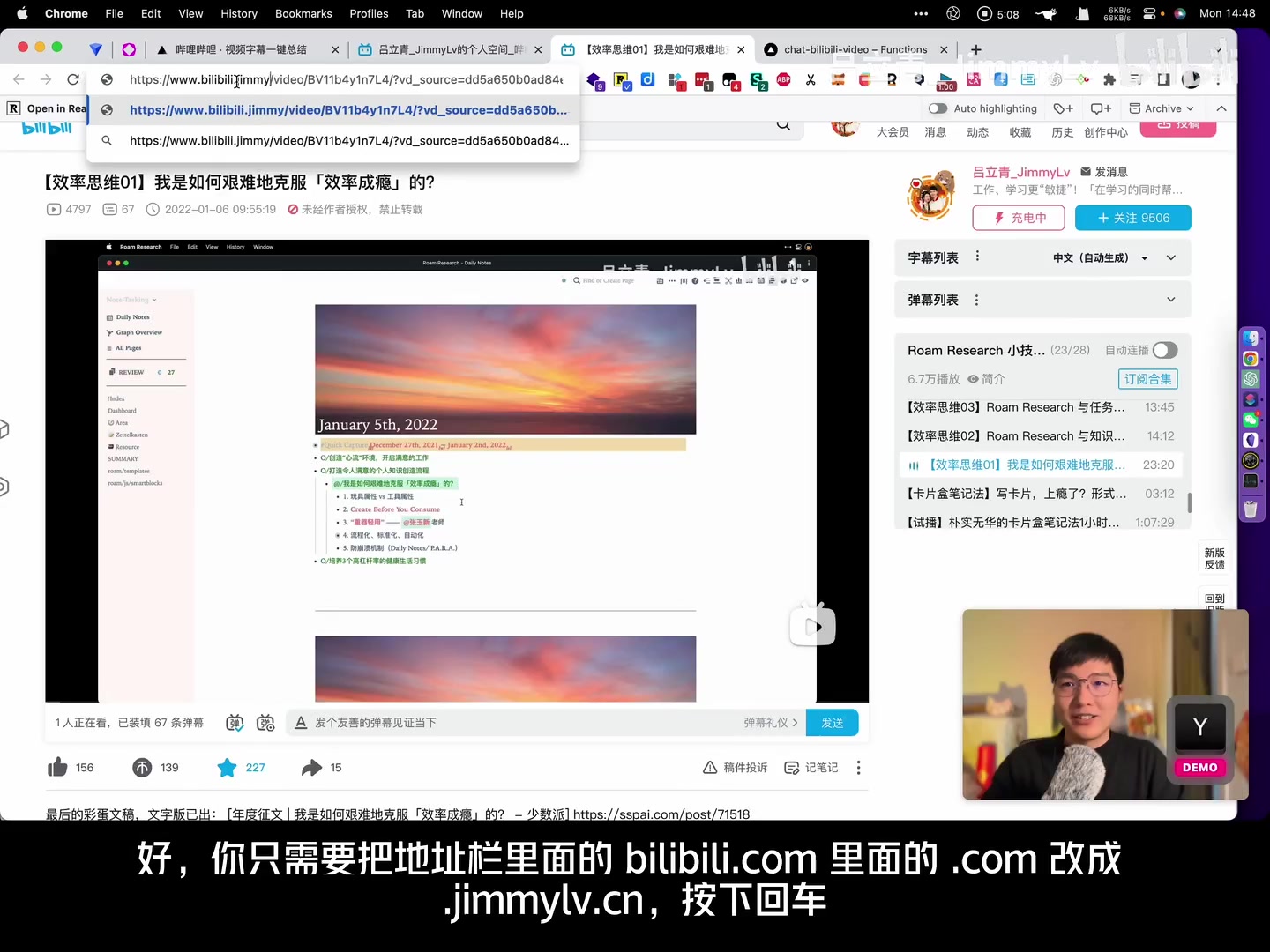 URL hack
Managing API Costs
Scaling summaries required OpenAI credits. We added an “Enter your own API key” field—locally stored—to let power users underwrite their usage while keeping the service alive.
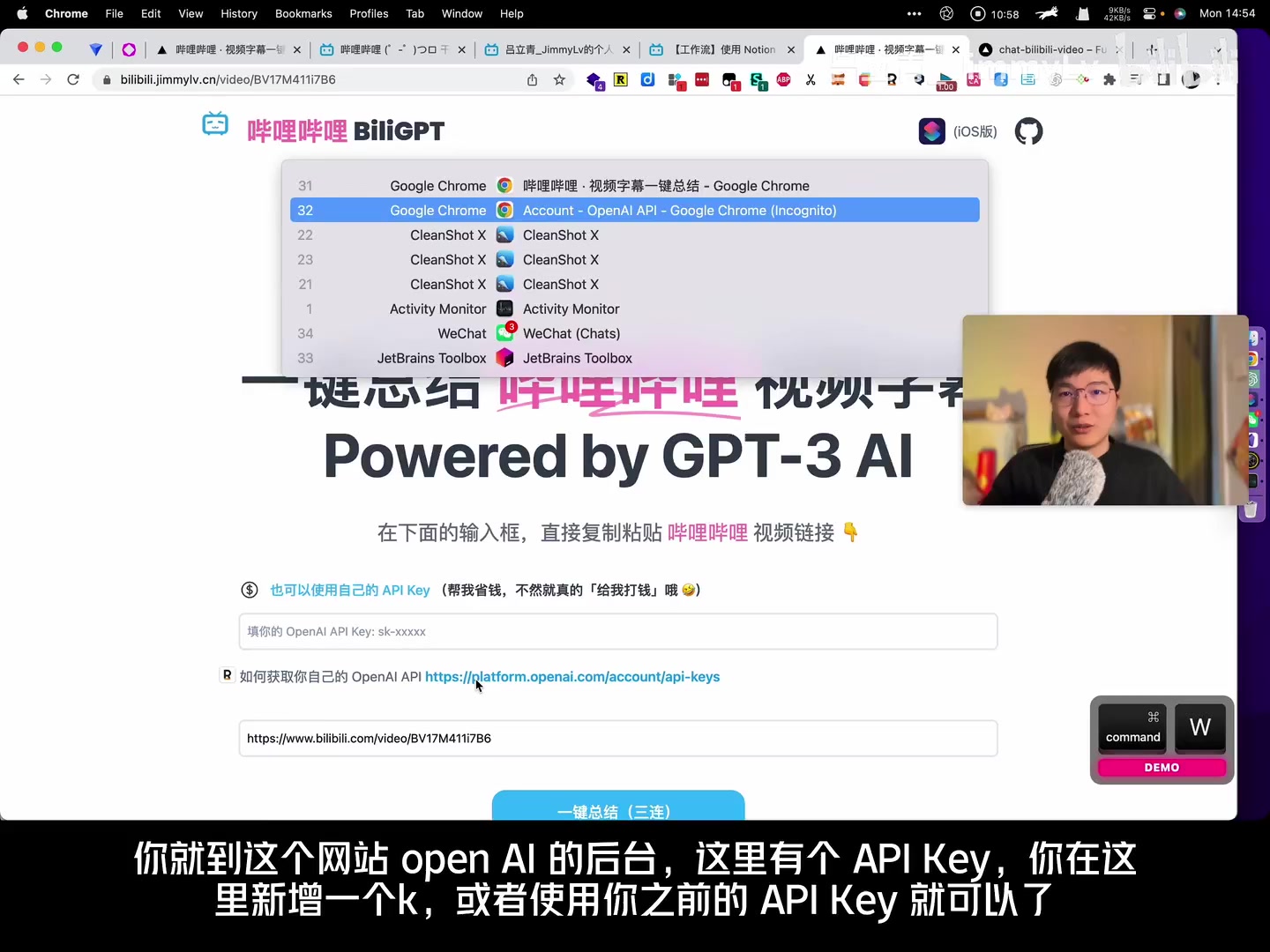 API key input
Mobile Shortcuts
- iOS Shortcut – Install from the BiliGPT site, tap “Share” in Bilibili, choose “Summarize with BiliGPT,” and get the summary without leaving the app.
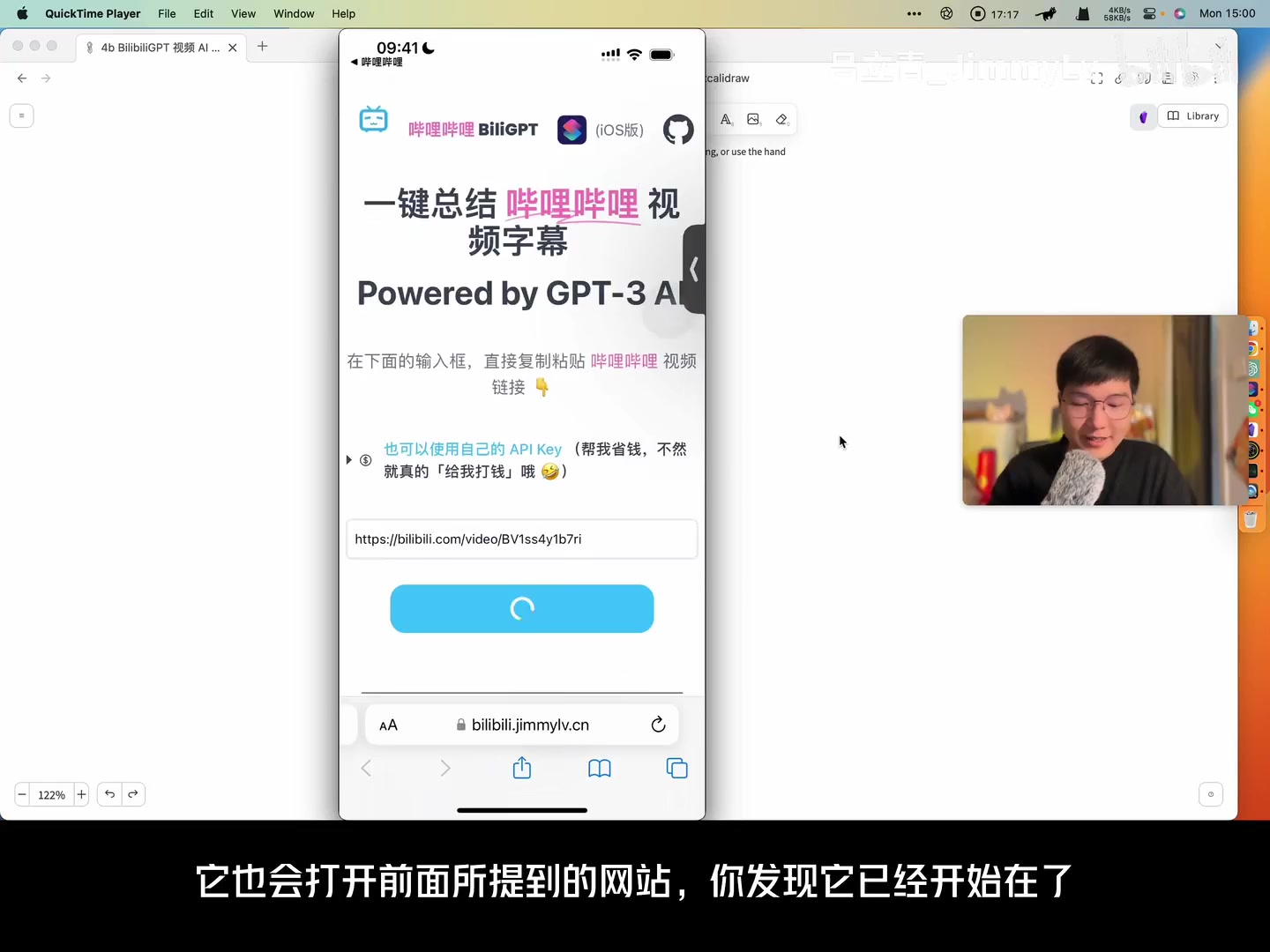 iOS flow
 - Android Tip – The
.com → jimmylv.cntrick worked in mobile browsers, too.
Early Roadmap
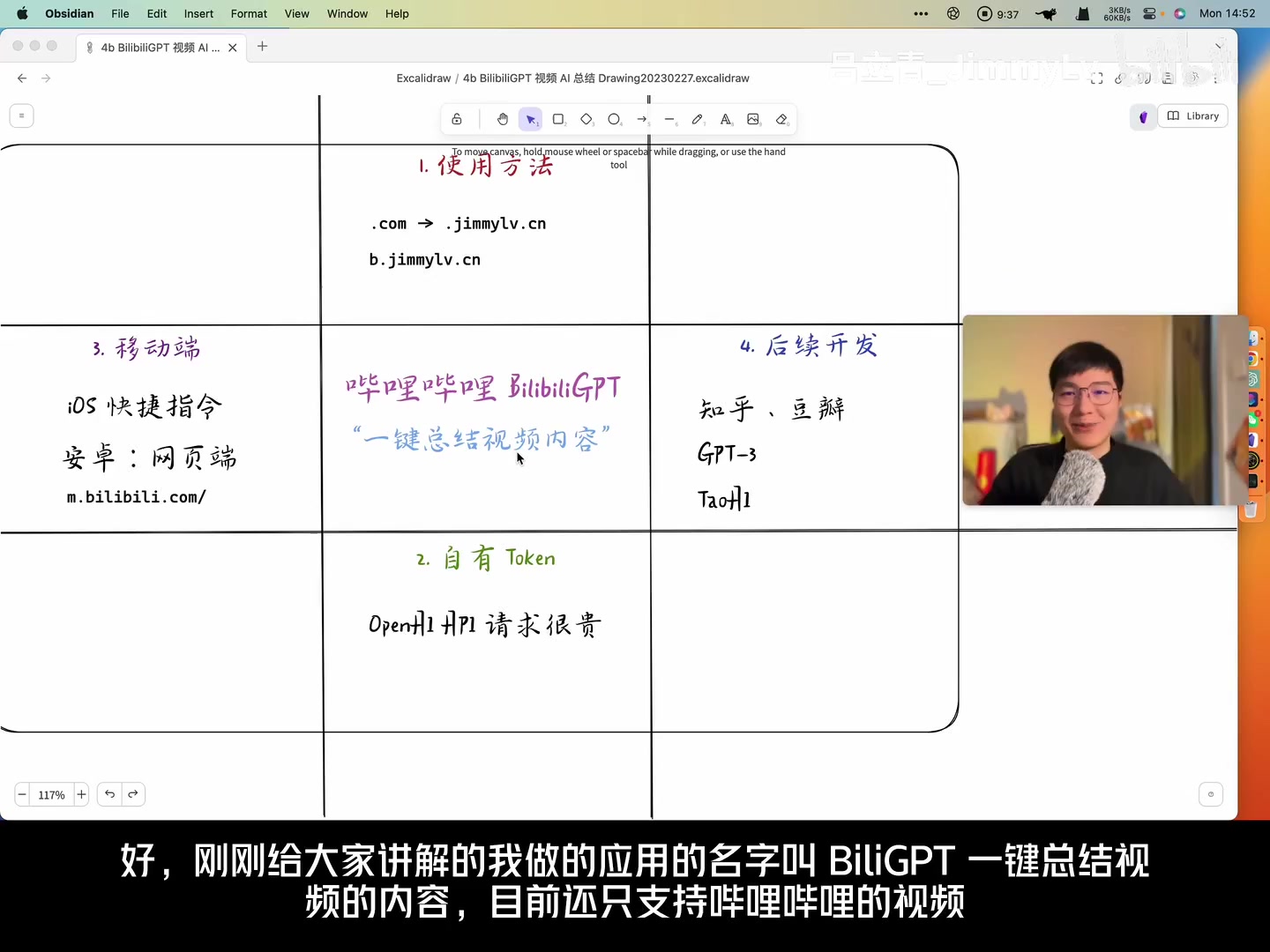 Whiteboard roadmap
- Expand beyond Bilibili—Zhihu, Douban, and more.
- Explore prompt engineering + private data alignment.
- Empower users with AI tools that bridge consumption and comprehension.
Even as the product matured, the mission stayed constant: help people learn faster. Today’s BibiGPT reflects the same DNA—multi-platform support, transcript search, mind maps, note exports—just on a much bigger stage.
Original video: https://www.bilibili.com/video/BV1fX4y1Q7Ux/