
[BibiGPT Growth Series] Episode 3 | One-Click AI Apps: The Birth of ChayaCha and OpenGPT
Revisit how BibiGPT evolved from a video summarizer into an AI app platform—supporting Bilibili, YouTube, and the launch of ChayaCha and OpenGPT for creating custom AI experiences.
[BibiGPT Growth Series] Episode 3 | One-Click AI Apps: The Birth of ChayaCha and OpenGPT
Welcome to Episode 3 of the BibiGPT Growth Series. In this chapter we revisit a pivotal milestone from the early days, originally chronicled in the video “Build AI Apps in One Click”—when BibiGPT introduced the ChayaCha mini-program and the OpenGPT web platform.
 BibiGPT, OpenAI, Bilibili logos
This article documents the thinking behind those early experiments. Although the product has evolved, the lessons, decisions, and prototypes from that era still inform how we build today.
Curious about the journey so far? Start with:
- [BibiGPT Growth Series] Episode 1 | How AI Summaries for Bilibili Were Born
- [BibiGPT Growth Series] Episode 2 | YouTube Support, Smart Timestamps, and Notion Login
BibiGPT: Core Features at the Time
The product’s promise was—and still is—“summarize audio and video with one click.” Early 2025 updates focused on flexibility and control.
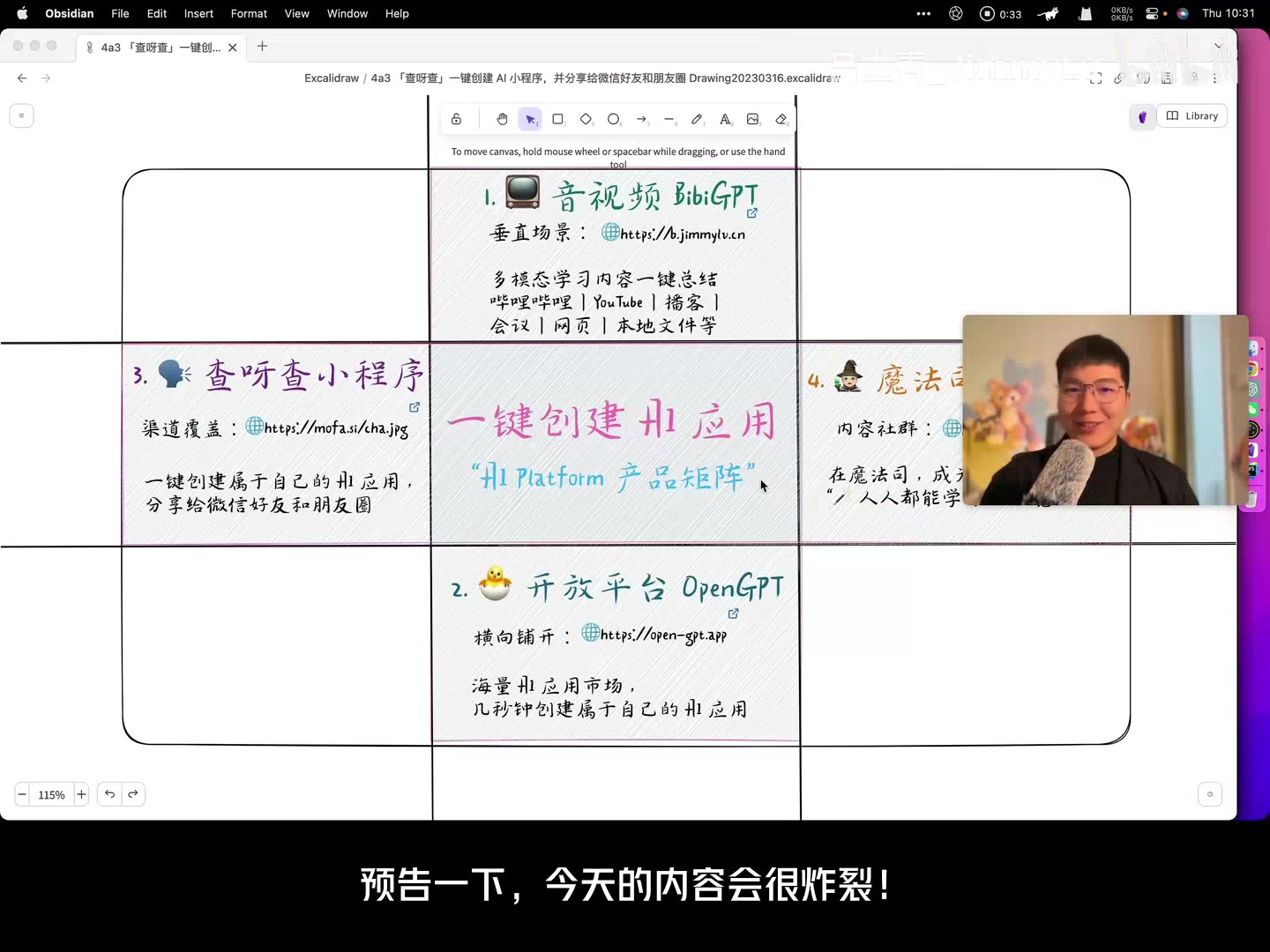
Key additions included:
- Output language selector – choose your summary language.
- Emoji toggle – decide whether emojis appear in the result.
- Granularity controls – adjust bullet counts, outline depth, and detail level.
- Streaming responses – see summaries as they generate.
- Clickable timestamps – jump straight into the video from the summary.
- Link compatibility – support for avid IDs and b23.tv short links.
- Prompt tuning – constant iteration on internal prompts for sharper output.
- Profile center (beta) – track processed videos and notes for a tighter learning loop.
 Summary options
Collectively, these tweaks made BibiGPT more customizable—and more useful for people juggling different media sources.
ChayaCha Mini-Program: AI Apps Inside WeChat
ChayaCha is an “AI quick app platform” designed for the WeChat ecosystem. The vision: let anyone build and share their own AI apps within minutes.
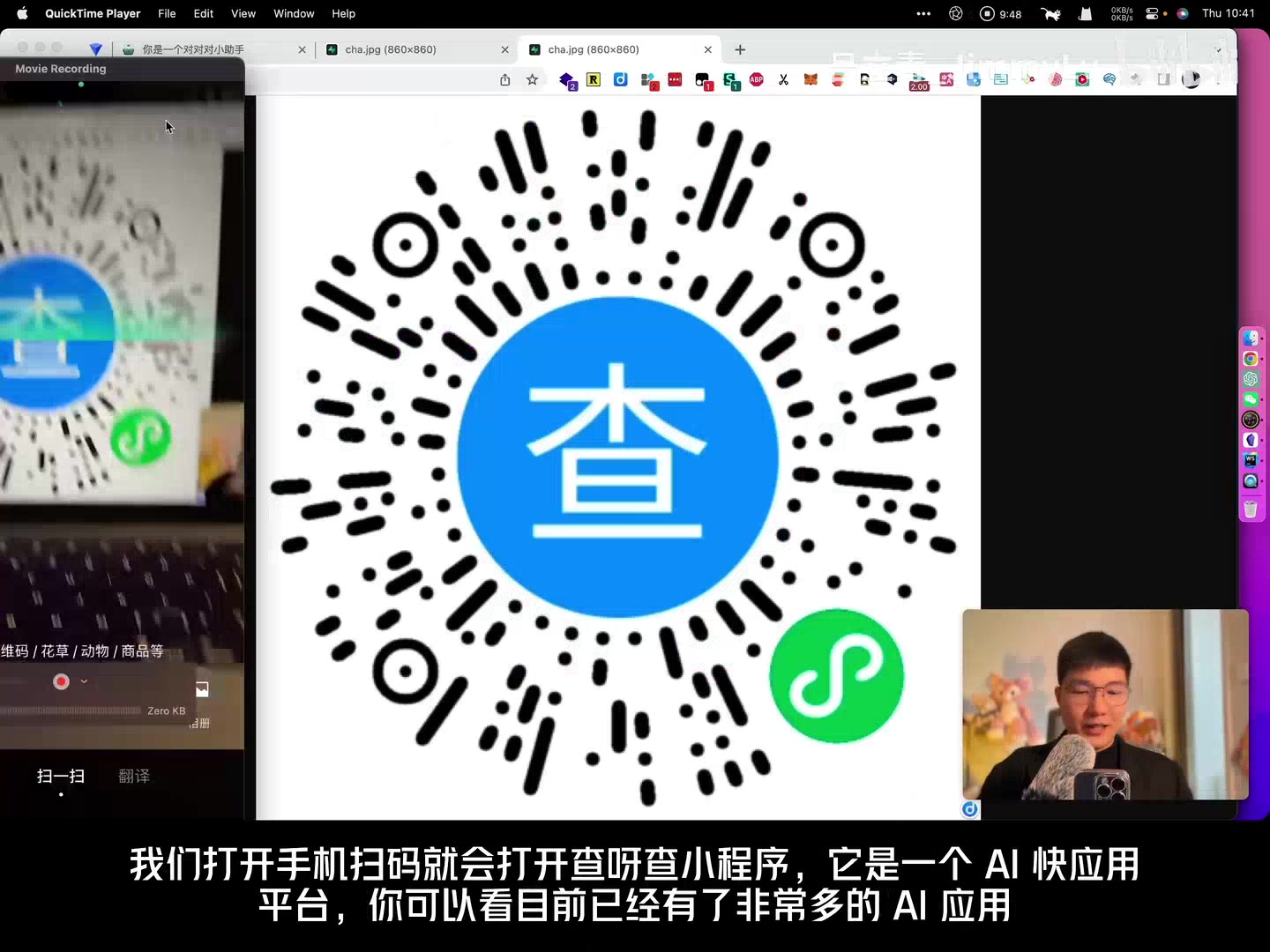 ChayaCha QR code
Highlights:
- Template marketplace spanning scenarios like “reply to boss,” “write Xiaohongshu captions,” “name generator,” “weekly report ideas,” and more.
- Worker’s toolkit – everyday prompts for softening a “no,” writing polite responses, or brainstorming ideas.
- One-click creation and sharing – customize a template (or start from scratch) and share it across WeChat.
- Zero-code workflow – no technical background required.
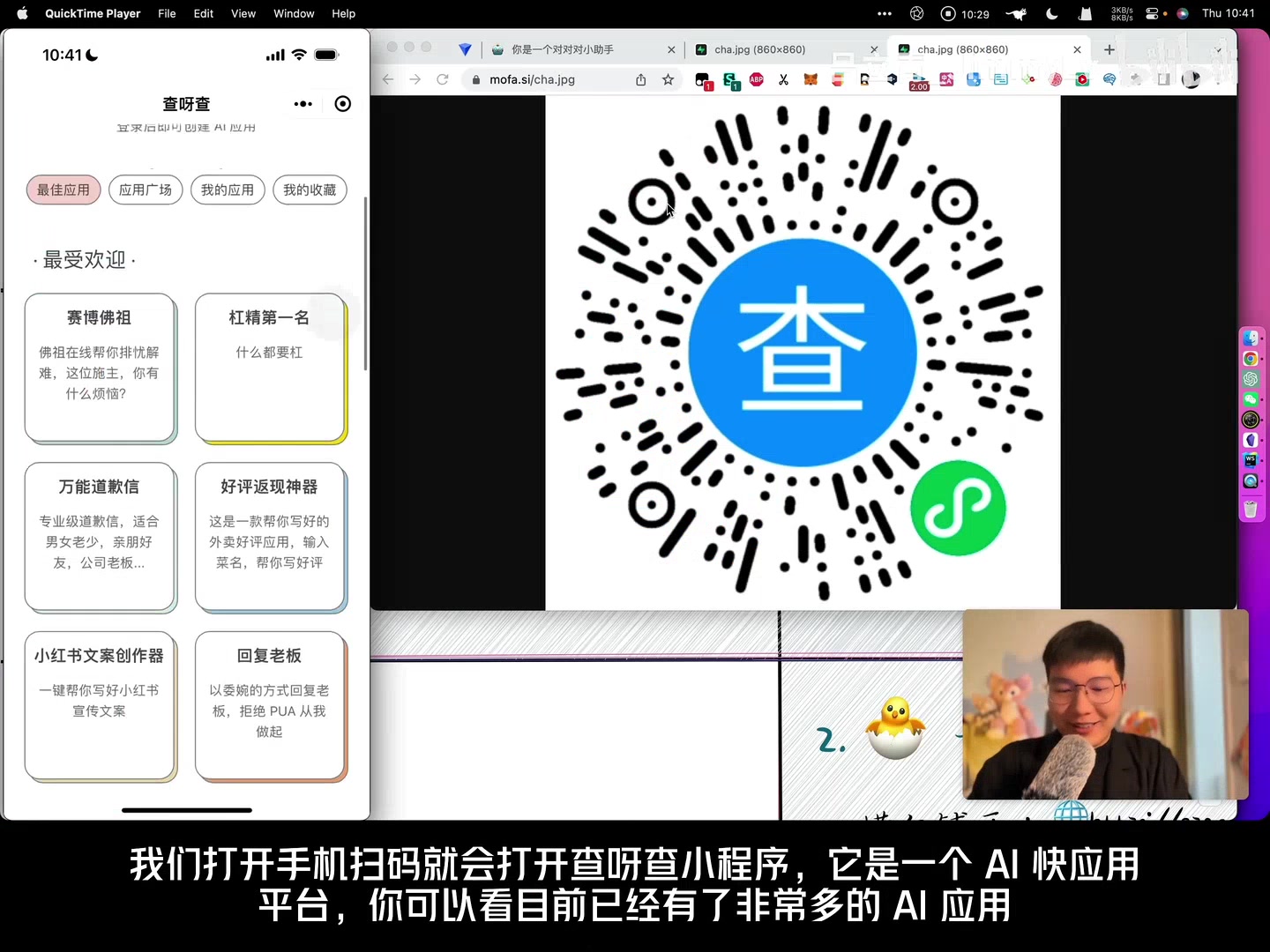 ChayaCha interface
The overarching goal was to lower the barrier to AI adoption in daily life.
OpenGPT: Web-Based AI App Builder
OpenGPT mirrored ChayaCha on the web. Its mission: “Create ChatGPT applications in seconds.”
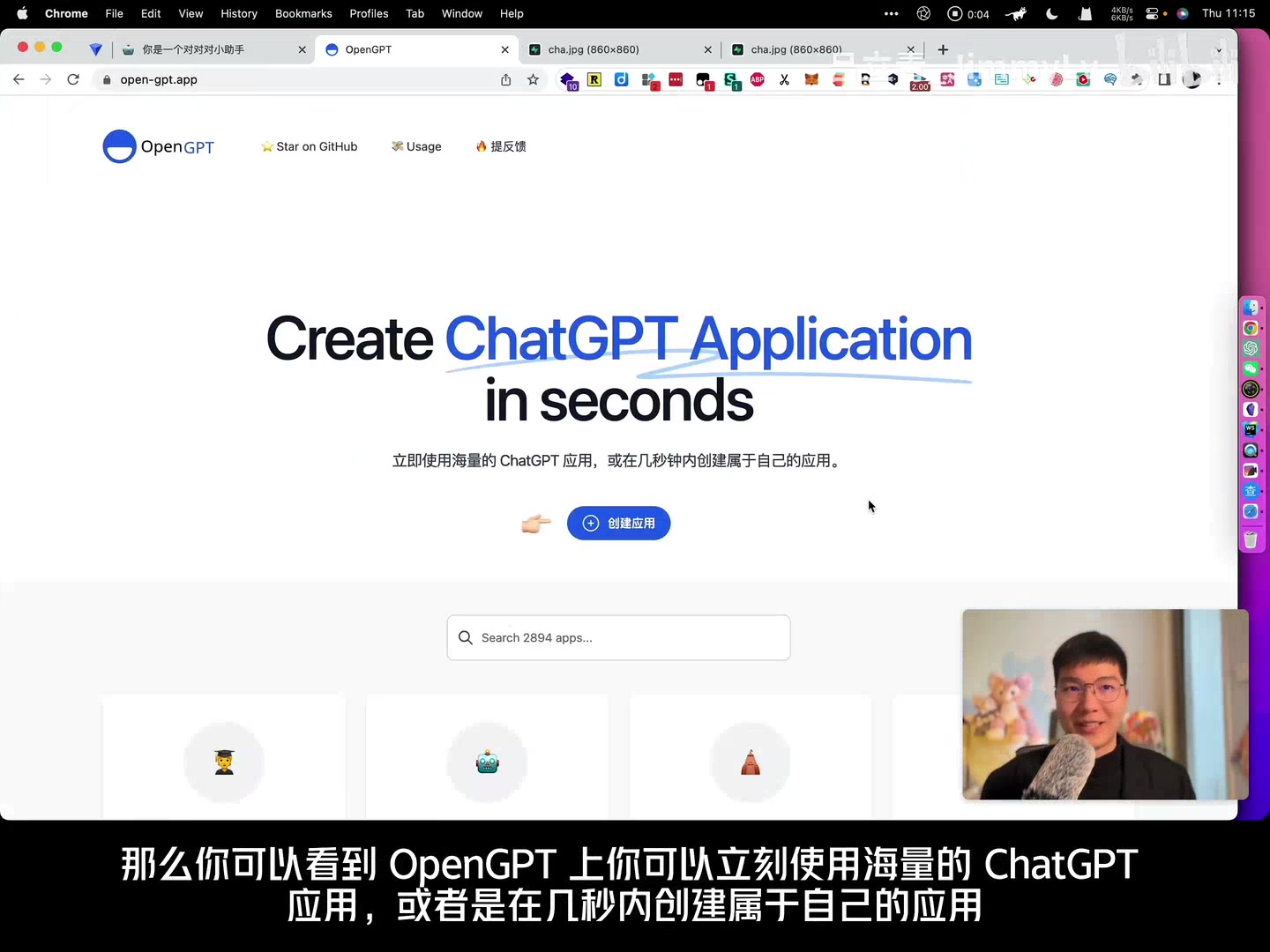 OpenGPT homepage
Core capabilities:
- Community app library – explore apps published by other creators.
- Quick creation flow – supply a name, description, prompt, and sample input to spin up your own app.
- Custom icons – assign emojis for at-a-glance differentiation.
- Immediate testing – preview responses before publishing.
- Easy sharing – distribute your app with a single link.
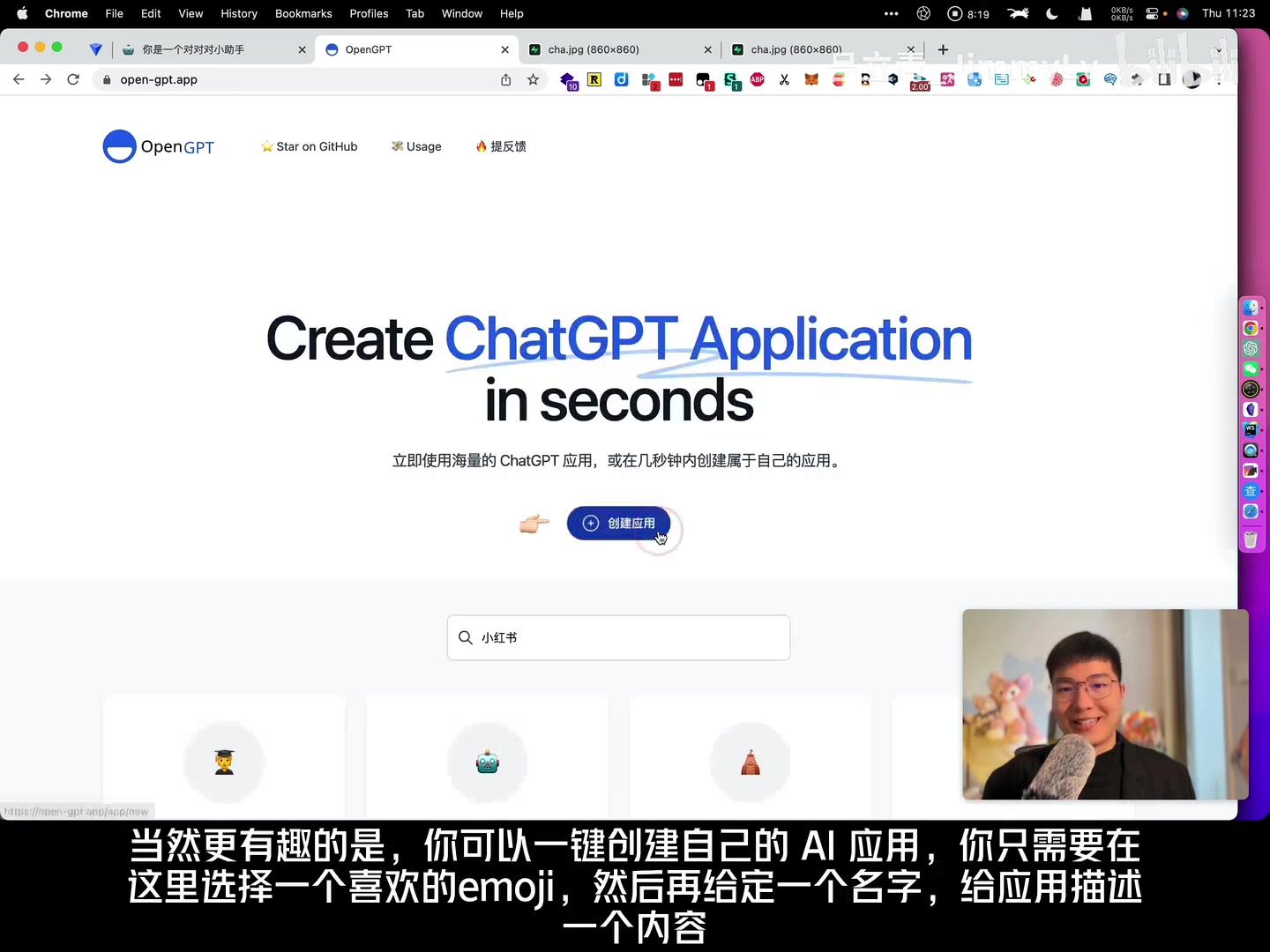 Creating an AI app on OpenGPT
Together, ChayaCha and OpenGPT represented our first steps toward an AI app ecosystem.
Mofa.si: A Community for AI Magic
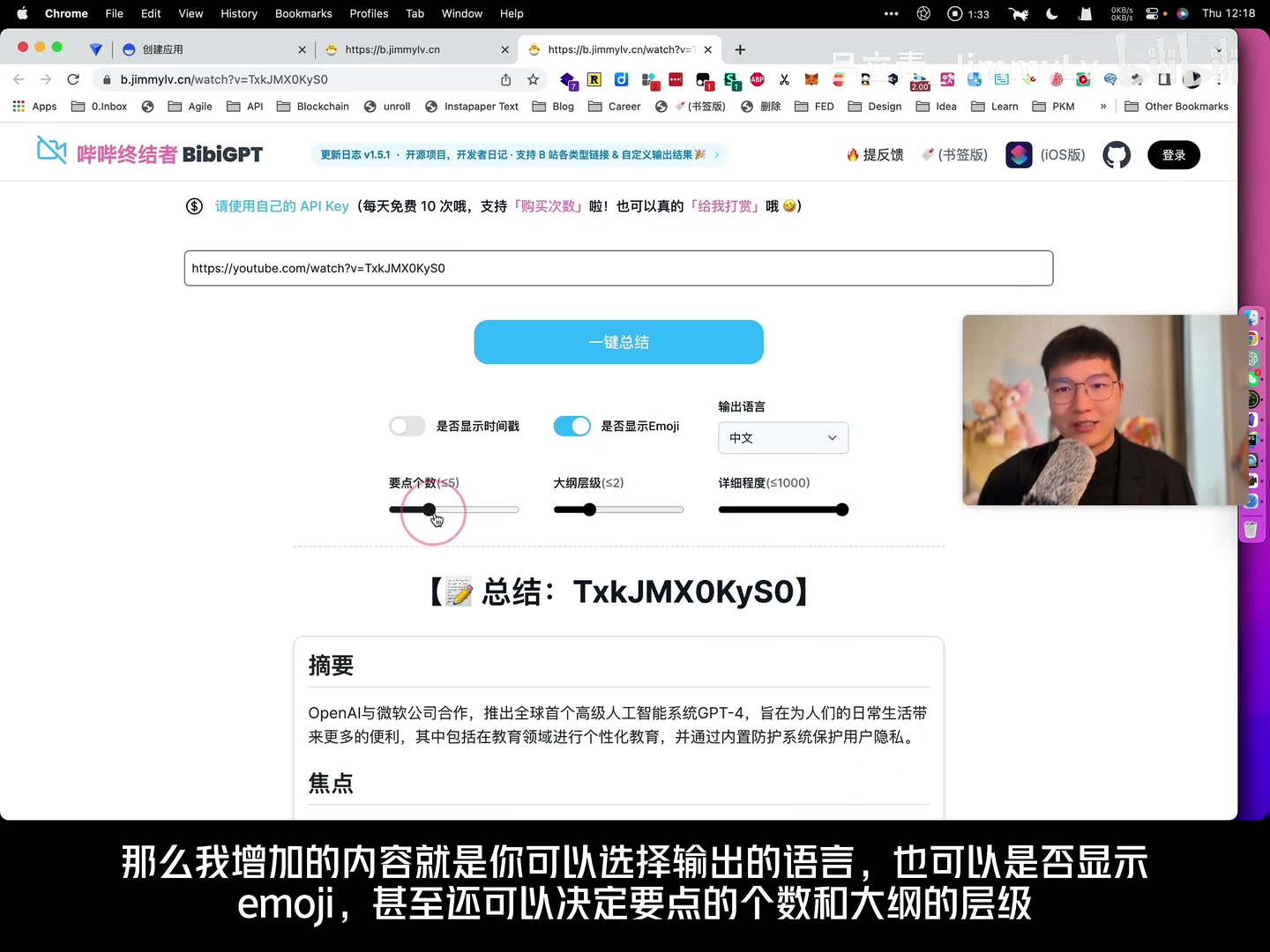
The video also introduced Mofa.si, a community space for learning “AI spells.” Our broader vision: combine BibiGPT, ChayaCha, OpenGPT, and Mofa.si into an ecosystem where everyone can learn, build, and apply AI in their day-to-day work and life.
Looking Back
The “Build AI Apps in One Click” update marked a shift from standalone tool to platform mindset. ChayaCha and OpenGPT were experiments in democratizing AI creation—while the interfaces have changed, the mission remains the same: make AI accessible to everyone.
Thanks for reading. Stay tuned for the next chapter in the BibiGPT Growth Series!
Original video: “BibiGPT, ChayaCha, OpenGPT—Explosive Update!”