
Microsoft Build 2025: AI Agents, Open Platforms, and the Next Wave of Developer Tools
Highlights from Microsoft Build 2025, including the Open Agentic Web vision, updates across Visual Studio, VS Code, GitHub, Microsoft 365 Copilot, and new Azure/Windows AI infrastructure.
Microsoft Build 2025: AI Agents, Open Platforms, and the Next Wave of Developer Tools
Microsoft used Build 2025 to lay out an ambitious roadmap for an Open Agentic Web—a world where AI agents move from experiments to mainstream products. CEO Satya Nadella framed the shift as a move away from vertically integrated apps and toward open, extensible agent platforms that run at global scale.
 Satya Nadella at Build
Building the Open Agentic Web
The vision: every layer of Microsoft’s stack (infrastructure, data, AI models, apps, and agents) should empower developers to craft customised agent experiences. Think of it as an internet that responds, reasons, and completes tasks on your behalf.
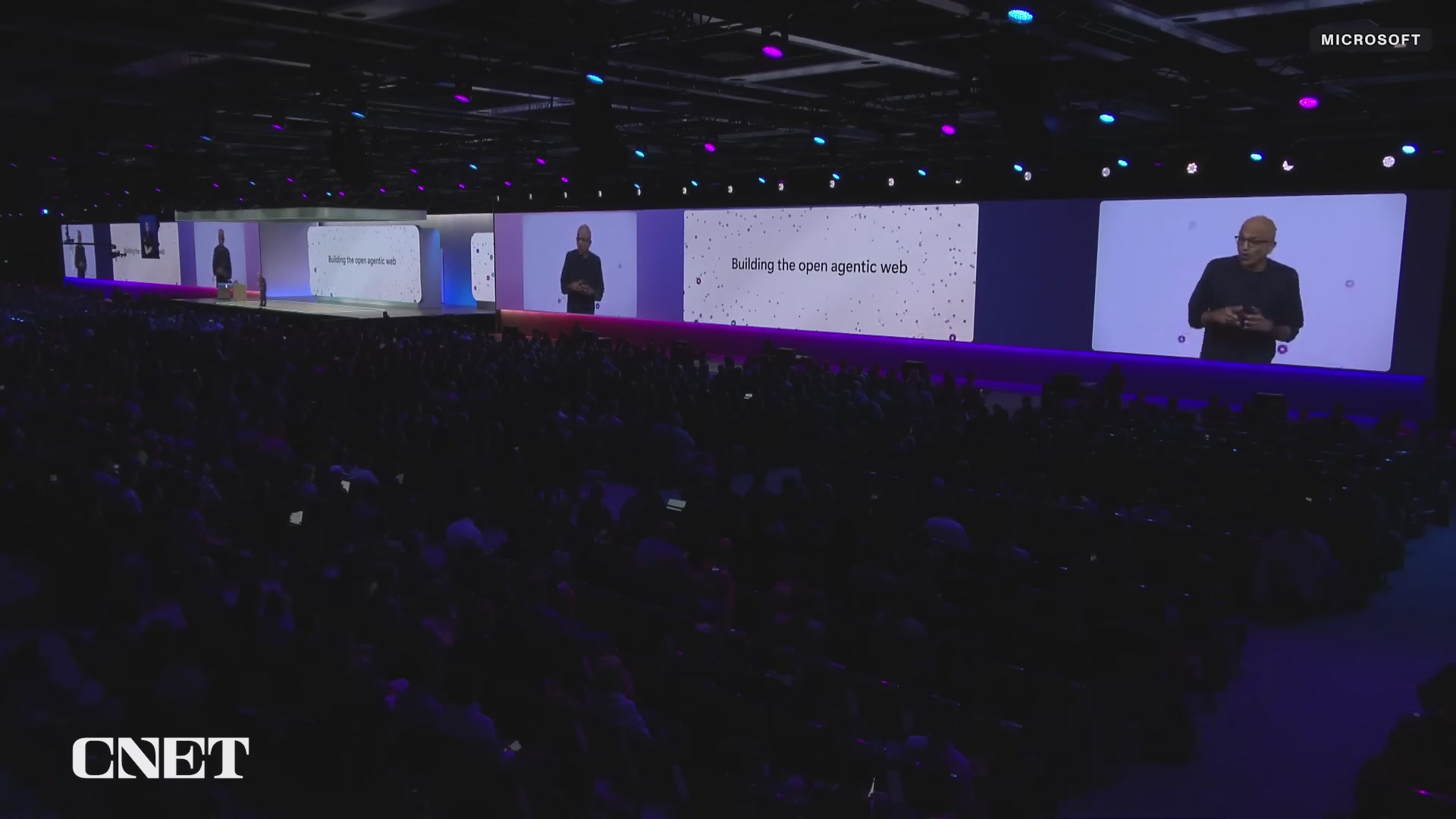 Open agentic web concept
Developer Tools: Visual Studio, VS Code, GitHub
- Visual Studio adds .NET 10 previews, real-time design surfaces, improved Git tooling, plus upgraded debugging for cross-platform C++.
- VS Code celebrates its 100th open-source release with better multi-window support and commits to open-sourcing the Copilot Chat extension so the community can inspect and extend it.
- GitHub positions Copilot as a full coding agent—capable of bug fixes, feature scaffolding, test generation, documentation, and even framework migrations (Java 8 → 21, .NET 6 → 9). An Azure SRE agent now handles incident triage, RCA, and GitHub issue creation automatically.
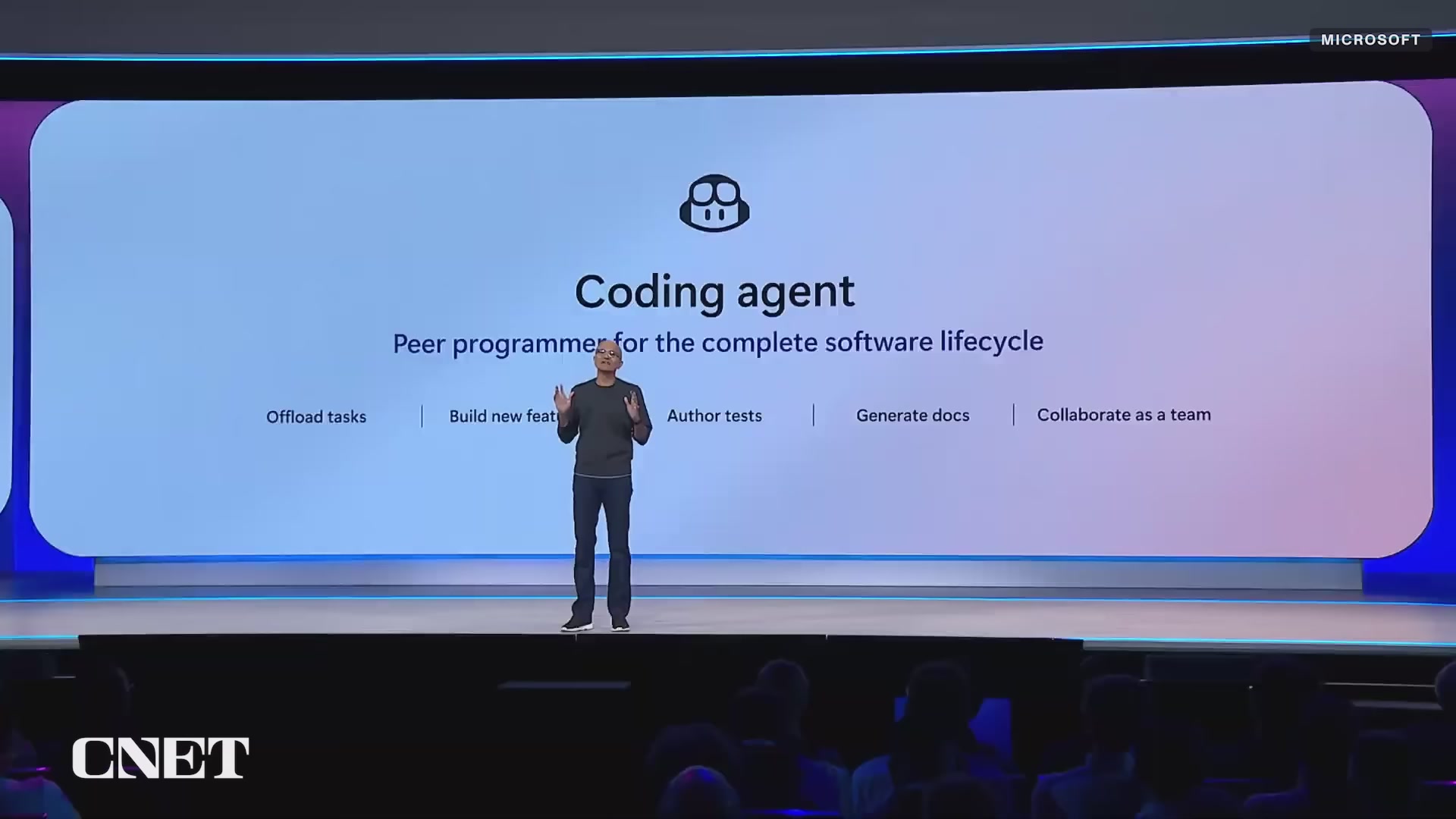 GitHub coding agent
Microsoft 365 Copilot and Teams
Microsoft 365 Copilot rolls chat, search, notebooks, creation, and agent automation into a unified canvas—arguably the most significant update since Teams launched. Users get context-aware chat over web + work data, semantic search across Confluence/Google Drive/Jira, and notebook-style multi-modal reasoning. Custom agents can be built inside an agent studio with guardrails, scripting, delegation, and monitoring tools.
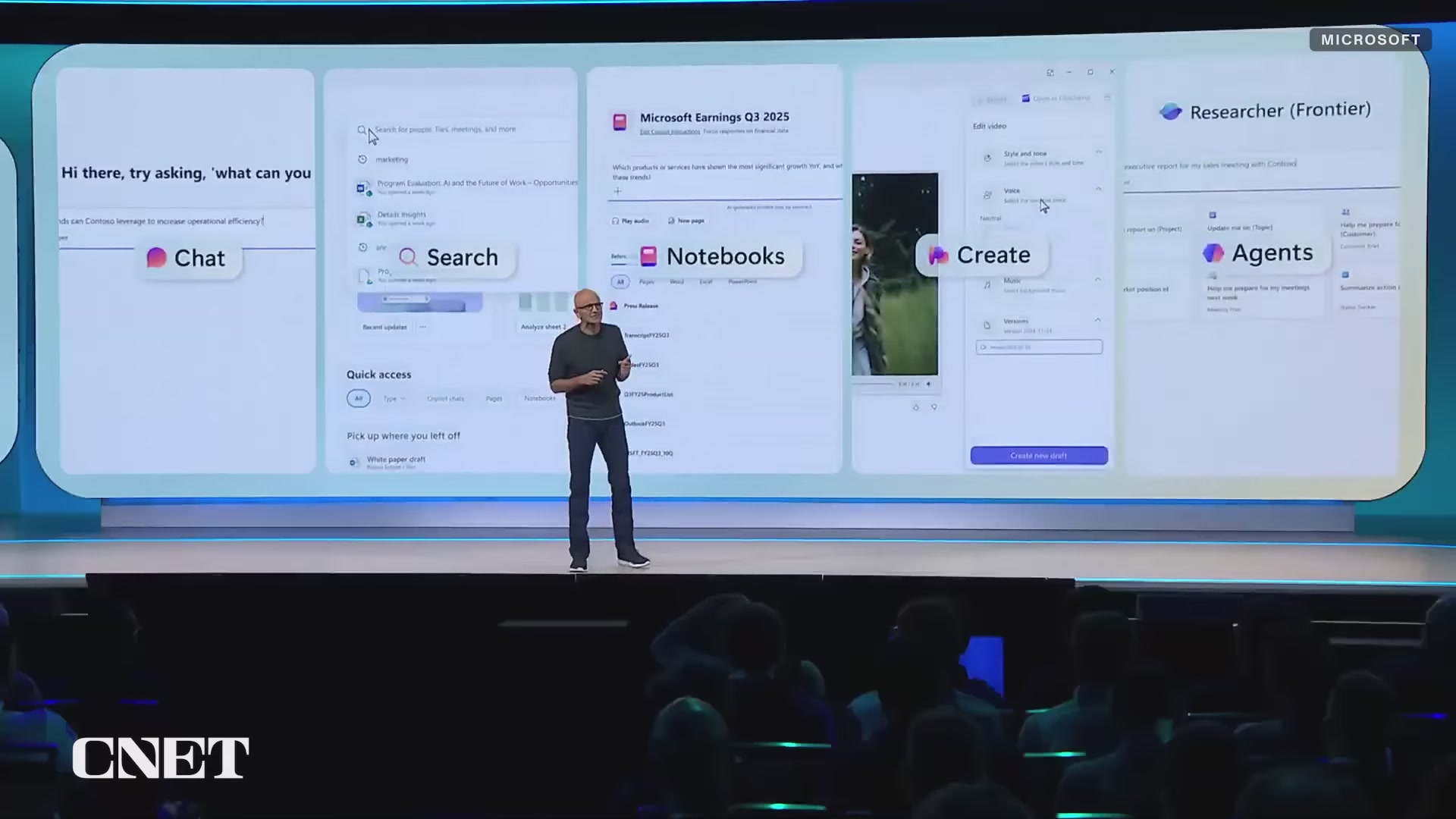 Microsoft 365 Copilot integrated experience
Azure AI Foundry and Model Innovation
Azure AI Foundry becomes the go-to console for building, evaluating, and shipping AI systems:
- Prompt flow adds human-in-the-loop review and automatic prompt optimisation.
- Realtime Azure OpenAI debuts, combining speech, vision, and text in a single streaming API.
- A new Phi-4 family (mini, medium, vision) provides lightweight open models via ONNX, TensorFlow, and PyTorch.
- Two additional OpenAI o-series models arrive with better reasoning and coding benchmarks.
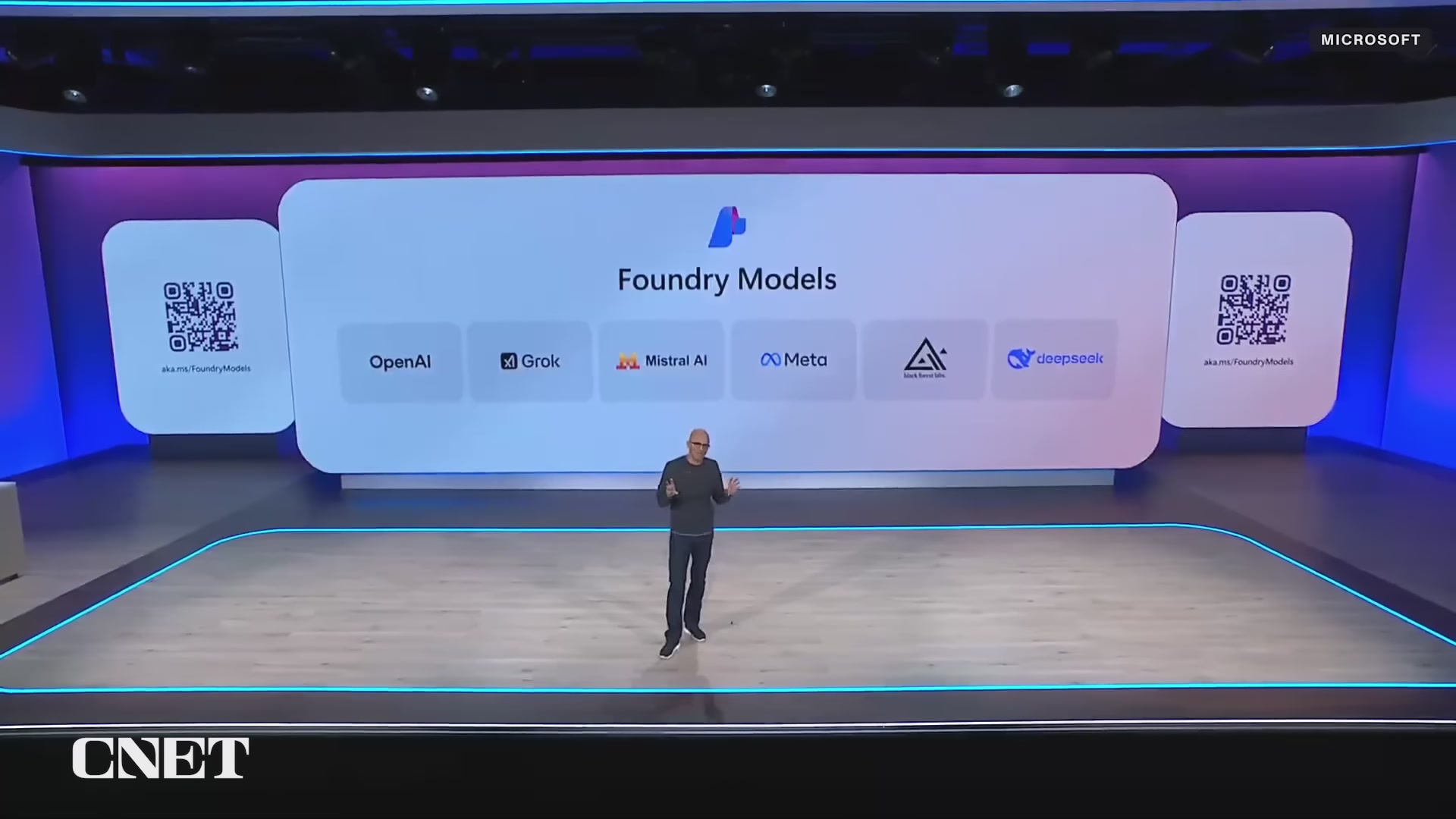 Azure AI Foundry
Windows AI Foundry and NLWeb
Microsoft extends the tooling to the edge with Windows AI Foundry, optimising on-device deployment across CPU, GPU, and NPU. Windows Subsystem for Linux (WSL) goes fully open source, and a new NLWeb project helps any website or API expose agent-ready MCP-compatible interfaces.
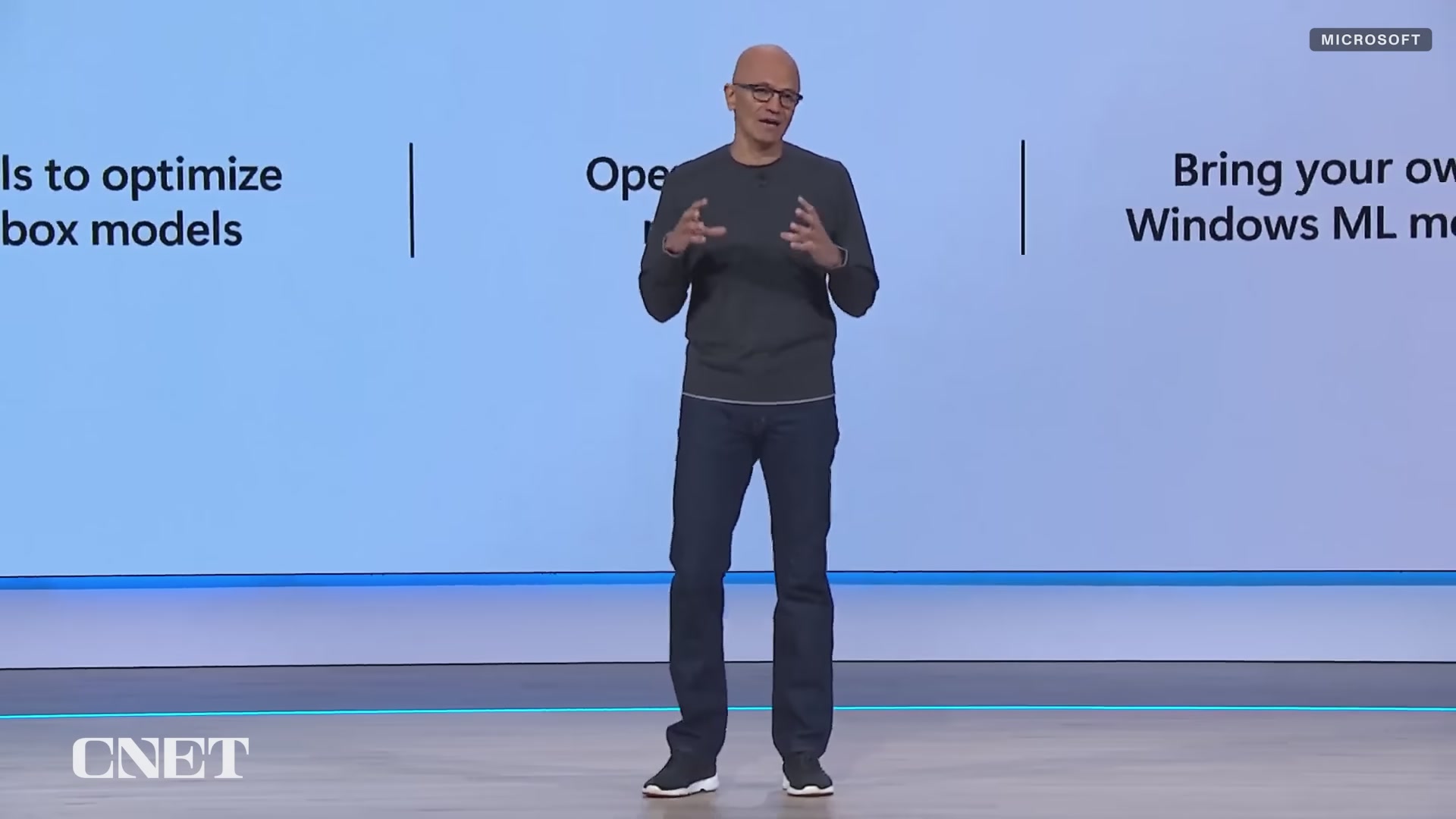 Windows AI Foundry overview
Data Platform Upgrades
- Cosmos DB plugs directly into Fabric so AI agents can query semi-structured operational data alongside analytics.
- Digital Twin Builder arrives inside Fabric for modelling physical systems.
- OneLake shortcut transforms add AI-powered ETL templates that accelerate ingestion.
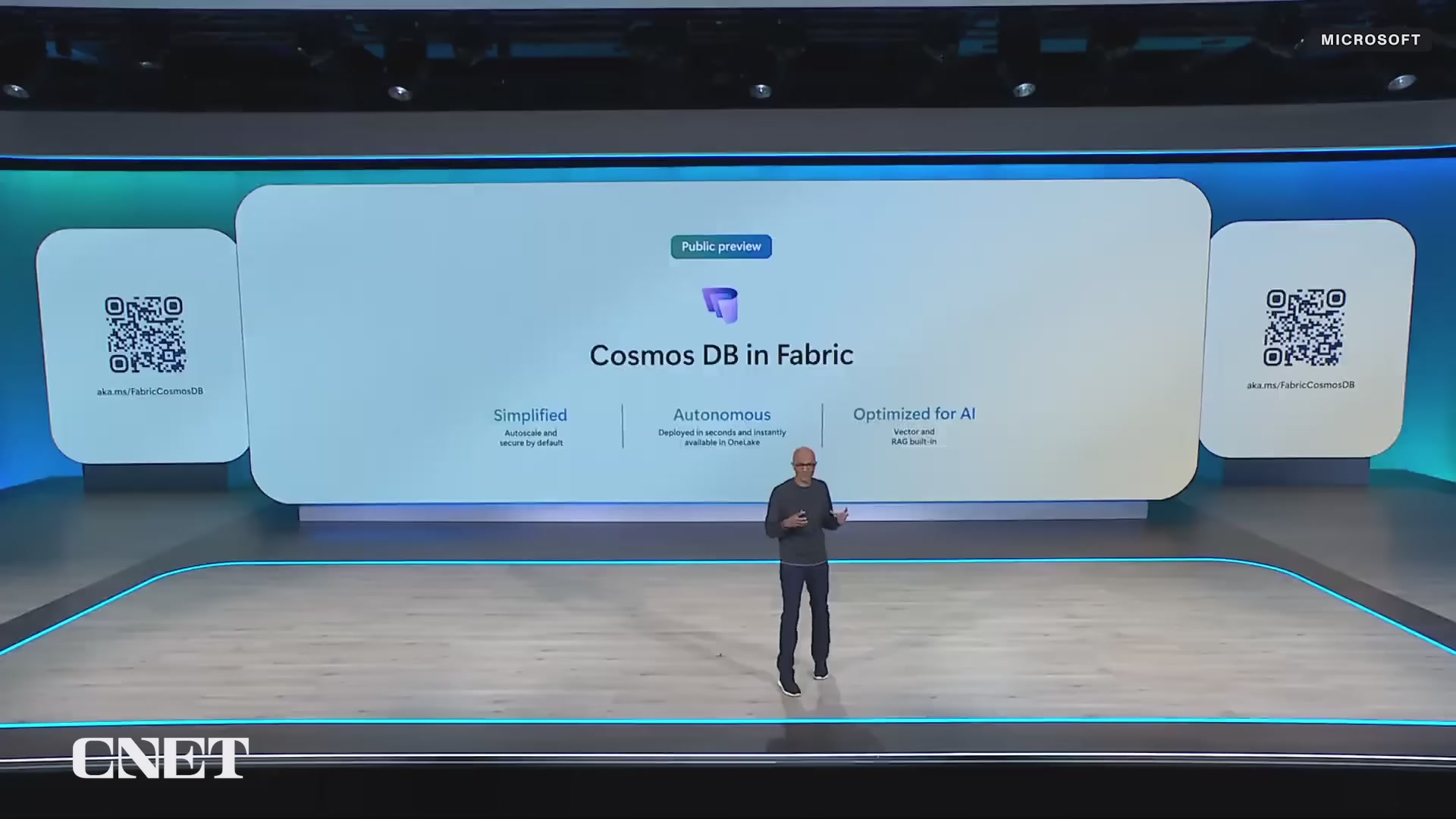 Fabric + Cosmos DB integration
Hardware Partnerships and Science
Azure will host the world’s largest GB200-based supercomputer in partnership with NVIDIA. Microsoft also introduced the Discovery Platform—a suite of specialised agents geared toward R&D in chemistry, life sciences, and physics.
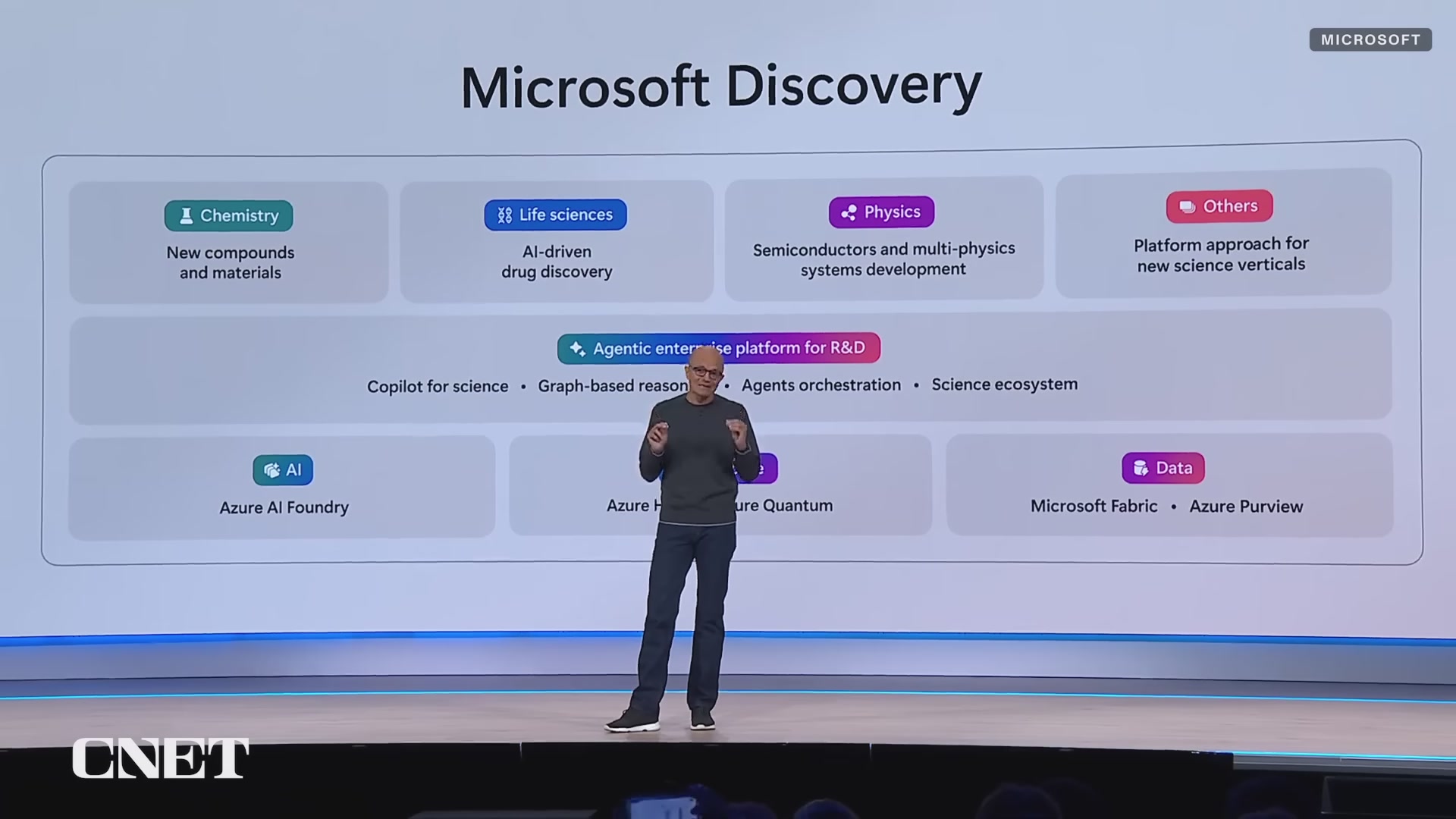 Discovery platform
Keep Pace with BibiGPT
Build 2025 underscored Microsoft’s strategy: expand developer reach with agents, offer end-to-end tooling, and provide the infrastructure to run it all. Want to stay on top of events like this without watching hours of keynotes? Feed them into BibiGPT to get timestamped transcripts, structured highlights, and exports to your favourite note app. In the AI era, a smart summariser is indispensable.