Gemini Embedding 2 × BibiGPT
Google released Gemini Embedding 2 on 2026-04-22 — a single embedding model that maps text, image, video, audio, and PDF into the same vector space. For BibiGPT, this is a direct upgrade path for video / podcast retrieval and cross-modal RAG: a French podcast and a Chinese lecture slide can now sit next to each other in the same index, and a text query can pull the right second-mark from either.
Key facts (90-second read)
Google released Gemini Embedding 2 on 2026-04-22 as a multimodal embedding model — text, image, video, audio, and PDF map into the same vector space. Cross-modal retrieval becomes a single nearest-neighbor lookup instead of a fan-out across separate indexes. For BibiGPT, this is a direct upgrade path for video / podcast retrieval and cross-modal RAG over a multilingual library.
Features
What is Gemini Embedding 2?
Google's 2026-04-22 GA release — a multimodal embedding model that turns text, image, video, audio, and PDF inputs into vectors in a shared semantic space, callable from the standard Gemini embedding endpoint.
Five modalities, one embedding space
Text snippets, JPEG / PNG images, MP4 video clips, audio waveforms, and PDF documents all map into the same vector space. Cross-modal search becomes a single nearest-neighbor lookup instead of a fan-out across separate indexes.
Native multilingual coverage
Inherits Gemini's broad language support for the text branch — zh, en, ja, ko, fr, de, es and more — so an English query can retrieve a Japanese audio clip or a Spanish PDF page if the semantic content matches.
Direct GA, no separate model name
Shipped through the existing Gemini embedding API surface as a generally-available upgrade, not a beta preview. Existing embedding pipelines opt in by routing supported modalities at call time.
Why this matters for BibiGPT users
BibiGPT already turns YouTube, Bilibili, podcast, and uploaded audio into searchable transcripts and summaries. Multimodal embeddings reshape what 'searchable' means.
Cross-content RAG search
Ask a natural-language question over your BibiGPT library and pull the matching second-mark from a video, a chapter from a podcast, or a slide from a lecture PDF — all from one embedding index instead of three siloed ones.
Tighter mind-map and visual notes
BibiGPT's visual analysis (slide → social card, frame → mind-map node) benefits from image-and-text-in-the-same-space embeddings — visual cues and spoken transcript anchor each other instead of drifting.
Cross-language podcast discovery
A user listening to English podcasts can find topically-related Japanese or French clips already in their library without needing pre-translated transcripts. The embedding space carries the meaning across the language barrier.
5 key changes (90-second read)
Headline shifts from the Gemini Embedding 2 GA on 2026-04-22.
- 1
Five modalities, one embedding space
Text, image, video, audio, and PDF all embed into the same vector space. Text-to-audio, image-to-PDF, video-to-text searches collapse into one nearest-neighbor query.
- 2
GA, not preview
Released as generally-available through the existing Gemini embedding endpoint — production traffic eligible from day one, not a beta with throughput caveats.
- 3
Inherits Gemini multilingual coverage
Text branch carries Gemini's broad language support (zh / en / ja / ko / fr / de / es and more), so an English query can retrieve a Japanese audio clip if the semantic content matches.
- 4
Re-embedding required to switch from v1
Embedding 1 vectors and Embedding 2 vectors live in different spaces. Migrating means dual-indexing, A/B routing traffic, and then dropping the old index — not a drop-in version bump.
- 5
Routing-layer absorbed for BibiGPT users
If you consume retrieval through BibiGPT instead of integrating Gemini directly, the routing layer handles the migration. End users see better cross-modal search without writing migration code.
3 typical scenarios for BibiGPT users
Where multimodal embeddings pay off most for BibiGPT's user base.
Cross-content library search
A creator with hundreds of saved BibiGPT summaries asks one natural-language question and pulls the matching second-mark from a video, the relevant chapter from a podcast, and the matching slide from a PDF — all from a single embedding index, not three siloed lookups.
Visual notes with anchored transcripts
BibiGPT's mind-map and social-card flows turn slide images and spoken transcript into the same artifact. Multimodal embeddings let visual cues and transcript anchor each other in the same vector space — fewer drifted nodes, more faithful chapter art.
Cross-language podcast discovery
A user listening to English fintech podcasts asks 'what about Japanese coverage of this?' and the library returns topically-related Japanese clips without pre-translated transcripts. The embedding space carries meaning across the language barrier — exactly the problem BibiGPT's multilingual users hit weekly.
Loved by creators, students & researchers
Why people use BibiGPT to turn videos into text every day.
Trusted by 50,000+ users worldwide
“I paste a link and get clean captions in seconds — it saves me hours of retyping every single week.”
Maya R.
Content Creator · Repurposes short videos
“Exporting the transcript lets me review new words at my own pace instead of pausing the video constantly.”
Daniel K.
Language Learner · Studies with real videos
“Accurate, timestamped text I can quote directly. It has quietly become part of my daily workflow.”
Priya S.
Researcher · Cites public talks
FAQ'S
Frequently Asked Questions
Ask us anything!
Popular guides
 1
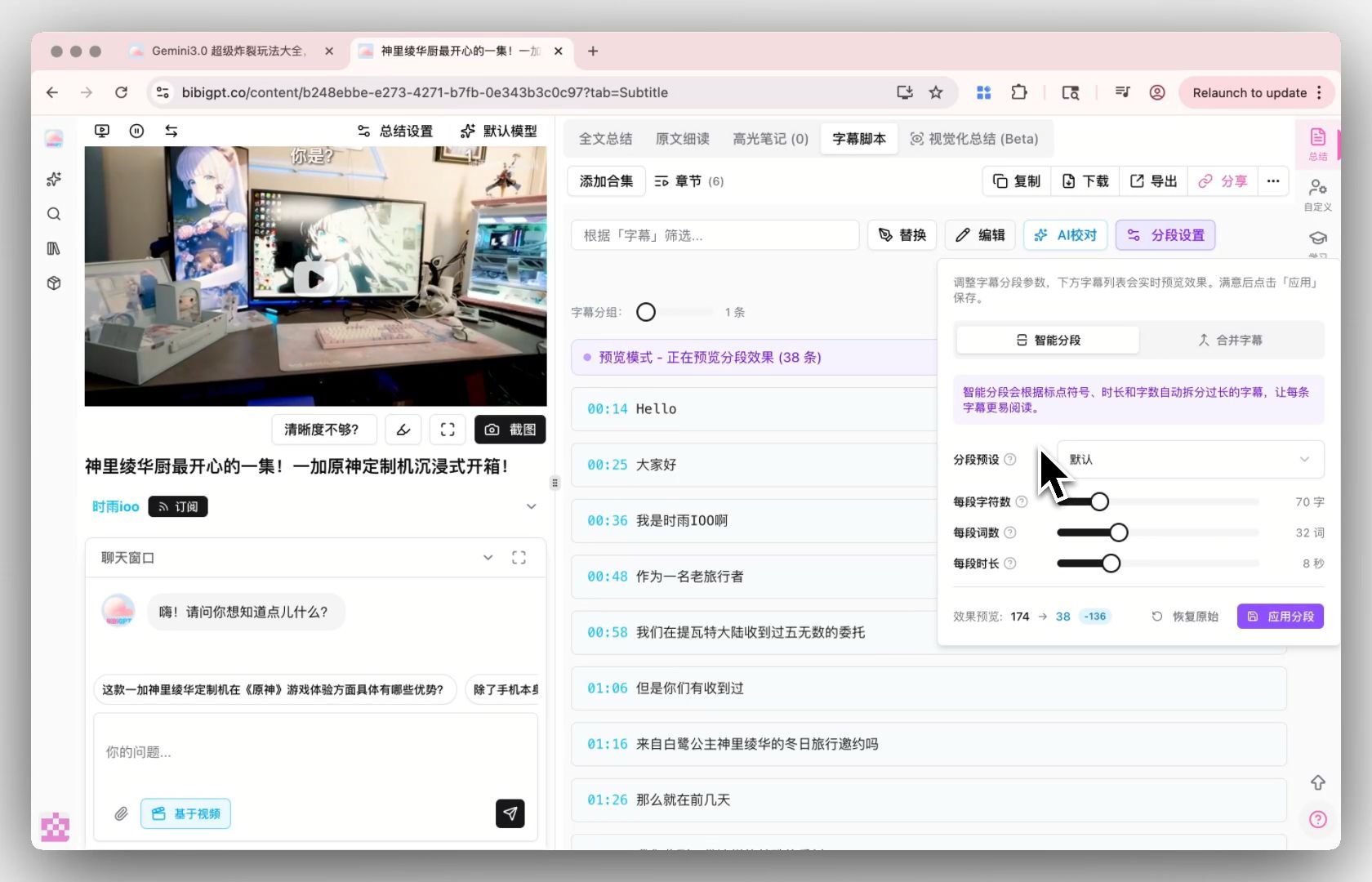
1 Bilibili AI Video Summary Tool: BibiGPT Summarizes 30+ Platforms Instantly (2026)
Best Bilibili AI video summary tool in 2026? Paste any link for an instant summary, mind map, and key points across 30+ platforms. See the top 5 compared.
 2
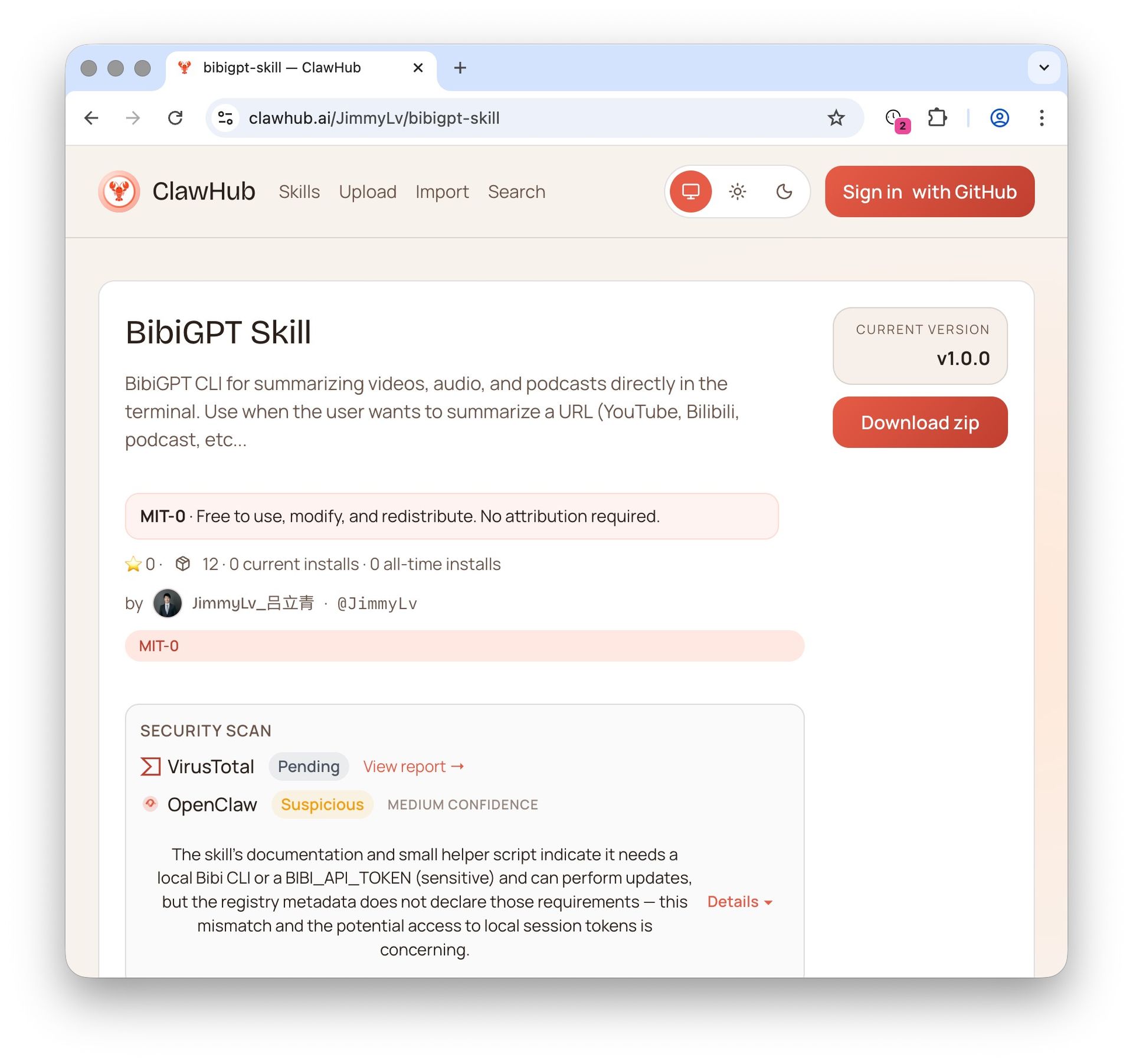
2 OpenClaw + BibiGPT Skill 2026: AI Video Summary for Bilibili, Xiaohongshu & 30+ Platforms
OpenClaw's native summarize skips Bilibili, Xiaohongshu, Douyin. bibigpt-skill is the one command that adds 30+ platform support for Claude Code / OpenClaw, plus highlight notes, collection summary and flashcards. Updated June 2026.
 3
3 Bilibili Transcript Tools Compared: Best Subtitle Extractors in 2026
Looking for the best bilibili transcript tool? We compare 5 top subtitle extractors for Bilibili videos — from free downloaders to AI-powered tools like BibiGPT that handle transcription, translation, and summarization.
Use BibiGPT for cross-modal video search — backed by multimodal embeddings
BibiGPT auto-routes between Anthropic, OpenAI, and Google embedding models for video summarization, podcast retrieval, and library search. You get the right embedding for the job without managing modality routing or migration paperwork yourself.