BibiGPT Blog
Free AI guides — summarize YouTube, Bilibili, podcasts & lectures in 30 seconds. Tool comparisons, hands-on tutorials, and BibiGPT release notes.
Featured
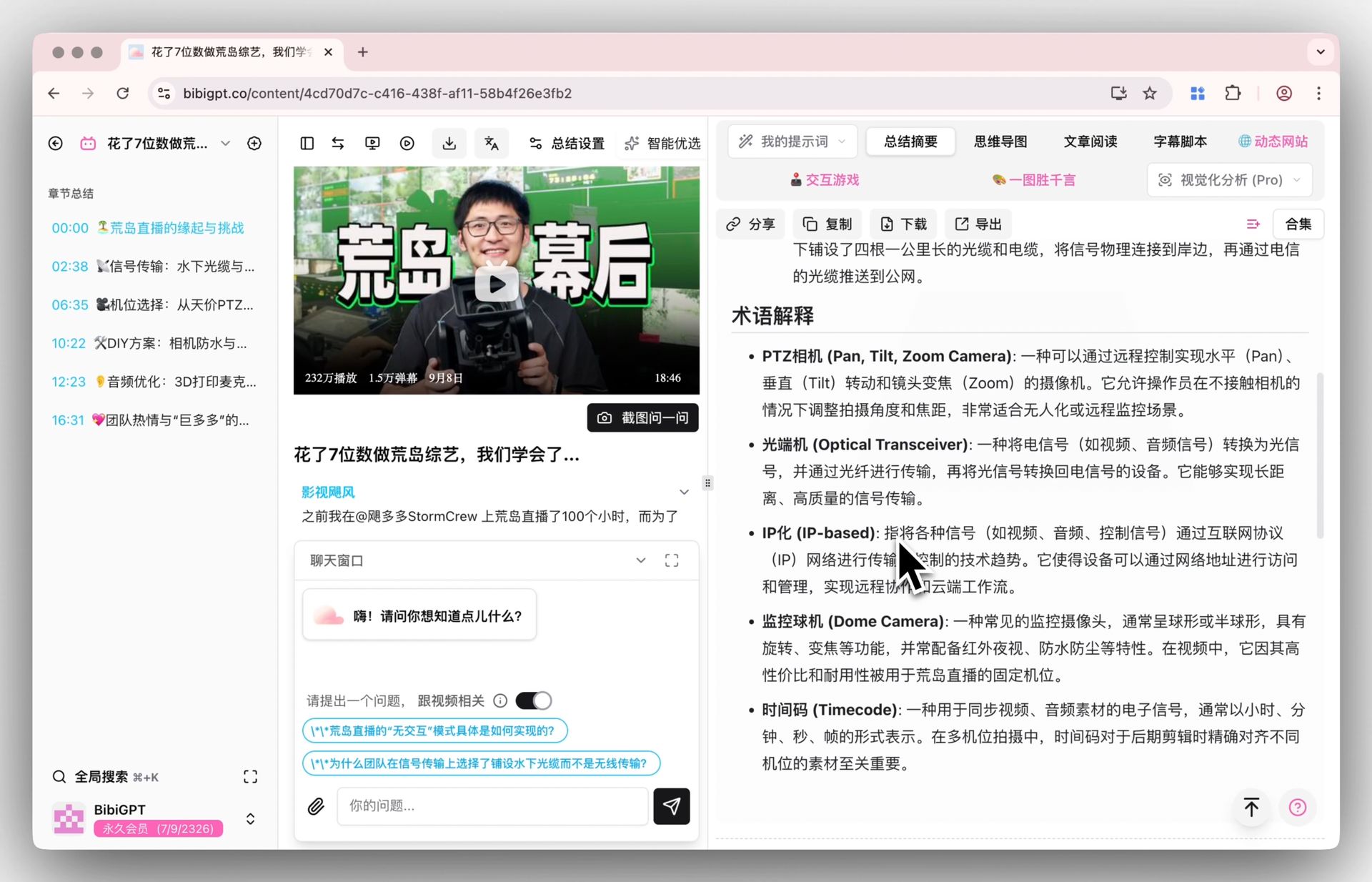
7 Best NotebookLM Alternatives for Video Summarization in 2026 (Tested & Compared)
Published
NotebookLM only reads existing YouTube captions — it never watches the video. We compare 7 NotebookLM alternatives for video summarization in 2026, from free picks to batch tools, so you can choose in five minutes.
Read more →All posts
All posts →-
Guides ·
How AI Helps Students Learn from Online Lectures and Course Videos (2026 Complete Guide)
Over 90% of students are already using AI for learning in 2026 — but most are only using it to shortcut assignments. This guide shows you how to turn YouTube lectures, Zoom recordings, and Coursera videos into structured summaries, mind maps, and flashcards, so AI actually helps knowledge stick — not just get submitted.
-
Release notes ·
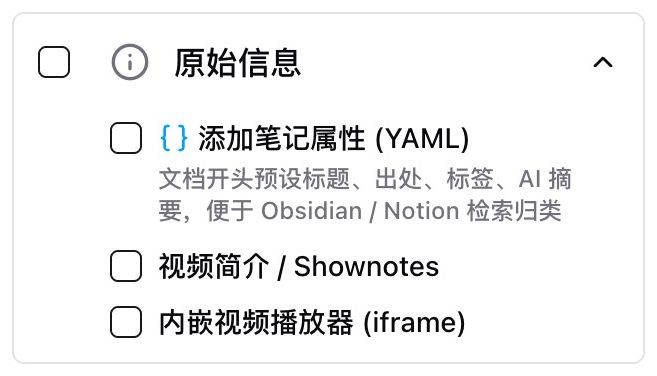
BibiGPT v4.505.0 Update: 618 Group-Buy Rewards Open + Export Dialog Upgrade + Multi-Level Collection Folders
Thanks for the 618 support — group-buy rewards are now open to claim. This issue lands mostly in 'find it' and 'put it to work': a big export-dialog upgrade (YAML properties, video shownotes, timestamp backlinks to the source), multi-level collection folders, collection-bound summary prompts, any-RSS subscriptions, and library batch highlights — plus a round of polish.
-
Trending ·
After "Ask Xiaoyuzhou": As Every Podcast Platform Races to Add AI, How Can Anyone Turn Any Podcast into a Readable, Listenable Summary (2026)
Xiaoyuzhou launched "Ask Xiaoyuzhou" — AI-powered search with timestamp navigation. AI has shifted from a nice-to-have to a must-have in the podcast industry. This article explains what is really happening in this wave of podcast AI adoption, and how anyone can turn any podcast, video, or long audio into a structured summary they can read or listen to in one click.
-
Reviews ·
WeChat's Native AI Assistant Xiaowei Is Here — But for External Video and Podcast Summaries, You Still Need BibiGPT (2026 Hands-On Comparison)
WeChat's native AI assistant Xiaowei expanded its beta in June 2026, accessible from the top-left corner, with the ability to summarize files, group chats, Official Account articles, and Channels videos. But it only covers content within the WeChat ecosystem — it can't handle external audio/video from Bilibili, YouTube, Douyin, or podcasts. This article compares both tools' content-summary boundaries with real testing, and gives you a clear scenario-based checklist.
-
Trending ·
The AI Audio Briefing Wave: From Forbes Daily Top 3 to Turning Any Long Content Into a Listenable Podcast (2026)
By June 2026, Forbes, Amazon Alexa, and the Washington Post are all turning "long content → AI audio summaries" into a new distribution standard. This article traces the rise of the AI audio briefing wave and explains how anyone can distill any podcast, video, or long article into a listenable summary with one click.
-
Guides ·
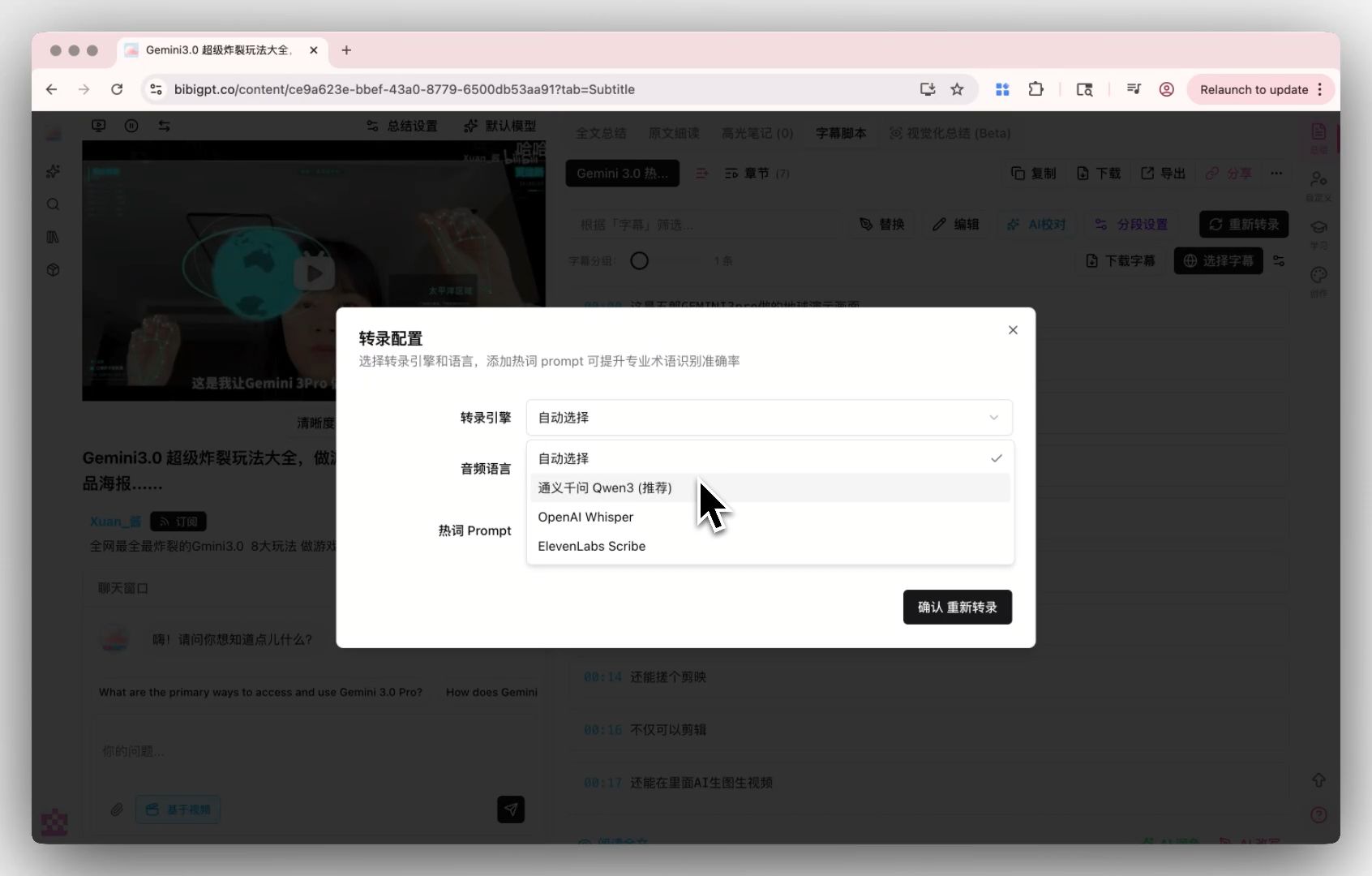
YouTube to Text: The Complete Guide (2026) — Turn Any Video into Searchable, Editable Transcripts
Want to convert YouTube videos into searchable, editable text? This guide covers free methods vs. tools, accuracy, multilingual support, long videos, and batch processing — plus a complete workflow from subtitles to AI summaries so you can get a clean transcript in 5 minutes.
-

Release notes ·
BibiGPT v4.494.0 | 618 Sale — Final Day (Ends Today): Lowest Prices of the Year + Group-Buy Bonus
BibiGPT's 618 half-price sale got extended — originally ending June 20, it's been pushed two more days, and today (June 22) is the real last day. Plus and Pro are 50% off, the lowest prices of the year. Buy solo at half price, or team up with friends on an annual plan and everyone gets up to 6 extra months. The group-buy page also added member-to-member email this week. Plus a few product updates at the end.
-
Release notes ·
BibiGPT v4.482.0: 4 New Features + 618 Sale — Last Few Days (Ends June 20)
BibiGPT v4.482.0 brings 4 new features: paste a YouTube link in the web app and pick a Gemini model, and AI reads the whole video directly — no waiting for a download; press H during subtitle playback to instantly highlight the current line; customize flashcard topics and count to match your learning goals; and export your AI chat Q&A along with your other notes. The 618 half-price sale is also in its final days — 50% off everything, ending June 20, the lowest prices of the year.
Popular guides
- 01 Bilibili AI Video Summary Tool: BibiGPT Summarizes 30+ Platforms Instantly (2026)
- 02 OpenClaw + BibiGPT Skill 2026: AI Video Summary for Bilibili, Xiaohongshu & 30+ Platforms
- 03 Bilibili Transcript Tools Compared: Best Subtitle Extractors in 2026
- 04 Turn Xiaohongshu Videos into Notes with BibiGPT: Stop Letting Your Favorites Collect Dust
- 05 OpenClaw v2026.3.22 Release Guide: 45 New Features + 13 Breaking Changes You Need to Know
Popular tools
About BibiGPT
BibiGPT is your AI assistant for understanding audio and video. It summarizes Bilibili, YouTube, podcasts, and local files, produces mind maps, transcript timelines, and long-form rewrites, and supports multiple large language models with personalized output styles.
Unlike typical summary tools, BibiGPT can reason about on-screen visuals, publish image-rich newsletter-style articles, and keeps you in "watch faster, search smarter, reuse better" mode alongside Notion, Obsidian, and other knowledge bases.
01
Watch faster
Skim long-form media without losing access to the full context.
02
Search smarter
Transcripts and highlights stay fully searchable with jump-back timestamps.
03
Use better
Chat with any media, draft target articles, and reuse insights without manual formatting.