Active Recall for Video Learning: Actually Remember What You Watch (2026)
Active Recall for Video Learning: Actually Remember What You Watch (2026)
Quick answer: Active recall is the learning method that turns information from “passively seen” into “actively pulled from your memory.” Applied to video learning, the core is three steps: ① list the questions you want answered before watching; ② cover any notes after watching and force yourself to recount the key points; ③ test yourself with AI-generated Q&A, and rewatch the original for anything you can’t answer. With BibiGPT’s thought Q&A and AI follow-up chat, you can run this retrieve-feedback loop fast and precisely.
Why You Always “Remember Watching It But Can’t Recall What It Said”
YouTube has a vast library of top open courses, lectures, and tutorials. But here’s a counterintuitive fact: watching videos is one of the least efficient ways to learn — if all you do is “watch.”
Cognitive science has a repeatedly validated conclusion: passive re-input (watching again, reading again) barely improves long-term memory, while actively retrieving from memory (active recall) is the key to carving knowledge into your brain. This is the famous “testing effect” — every effort to recall strengthens that neural pathway.
Video is a “disaster zone” because it creates the illusion of “I get it”: smooth visuals, clear explanations, nodding along as you watch. But that’s only “recognition,” not “recall.” Recognition is far easier than recall, so you think you’ve mastered it, yet you can’t recount it once the video is closed.
Practical rule: “Being able to recognize it” isn’t “being able to recall it.” The only test of whether you truly understand a video is whether you can explain it after closing it.
The Three Steps of Active Recall for Video Learning
Step 1: Before watching, list questions (Prime)
Don’t open a video and passively receive. Spend 30 seconds asking yourself: what answers do I want from this video?
For a video on “compound interest,” list first: how does compound differ from simple interest? How big is time’s effect on compounding? What are common misconceptions? Watching with questions makes your brain actively search for answers instead of scrolling blankly.
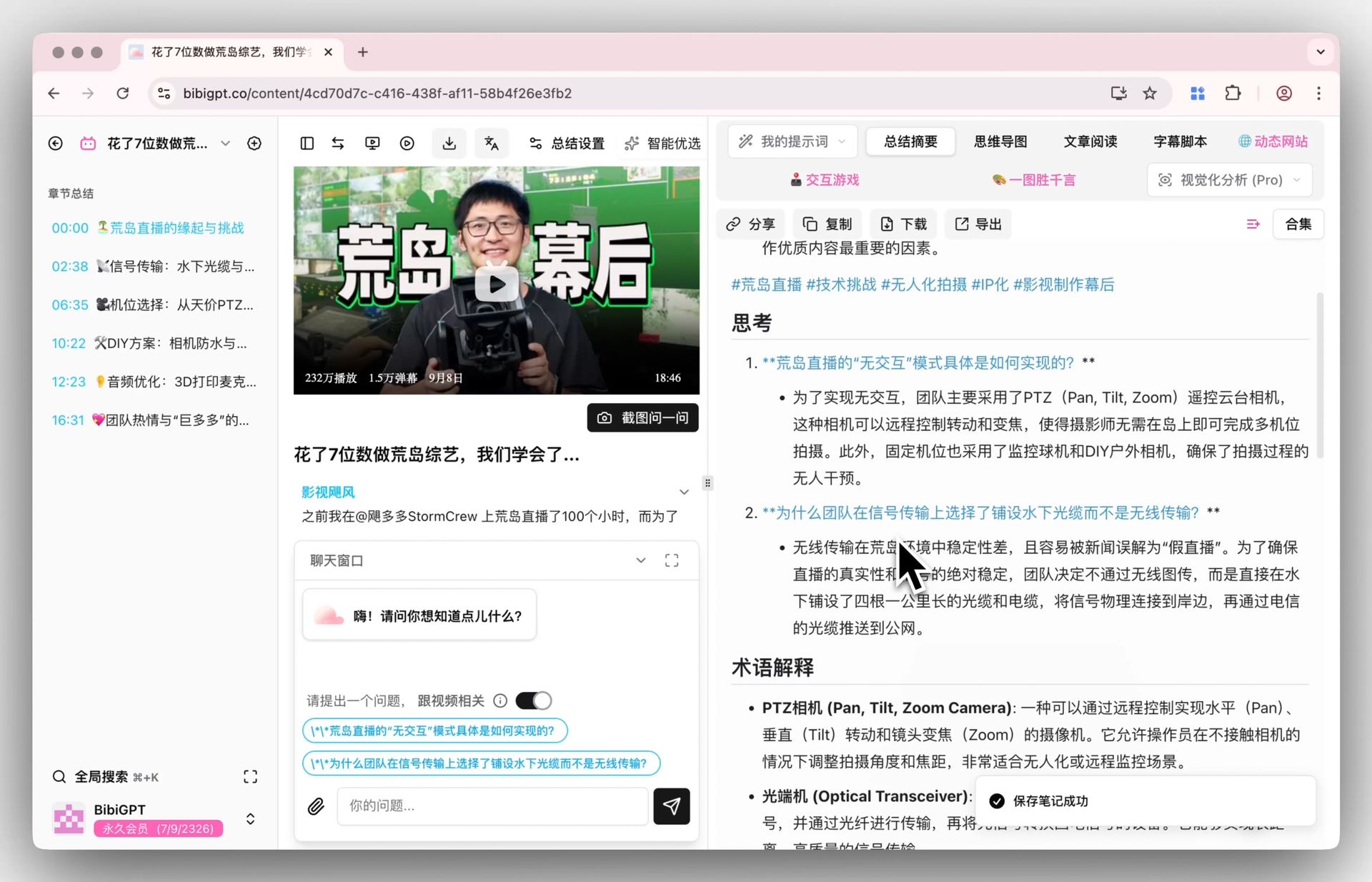
The hard part here is “not knowing what to ask” — especially with unfamiliar topics. A video summary helps you build the whole picture fast: read the AI-generated Smart Deep Summary to see which parts the video covers, then list the questions you want to dig into.
Step 2: After watching, cover everything and recount (Retrieve)
Right after watching, do one thing: cover all notes and summaries, and recount the core content from memory.
It can be telling yourself, writing on paper, or recording a voice note. The point isn’t a perfect recount — it’s to find where you get stuck. Those points you can’t recall or can’t explain are your real blind spots. This step instantly drops you from “I think I got it” back to reality.
This is exactly the essential difference between active recall and plain note-taking: note-taking is “moving information from video to paper,” still passive; recounting is “pulling information out of your brain,” which is active retrieval.
Step 3: Test yourself with AI Q&A + fill gaps with follow-ups (Feedback)
After recounting, you need objective feedback: what you got right, missed, or misunderstood.
BibiGPT’s Smart Deep Summary auto-generates thought Q&A — a set of stimulating questions about the video content. Treat it as a ready-made self-test: cover the answers and answer first, then check against them. The questions you can’t answer are exactly what to focus on rewatching next round.
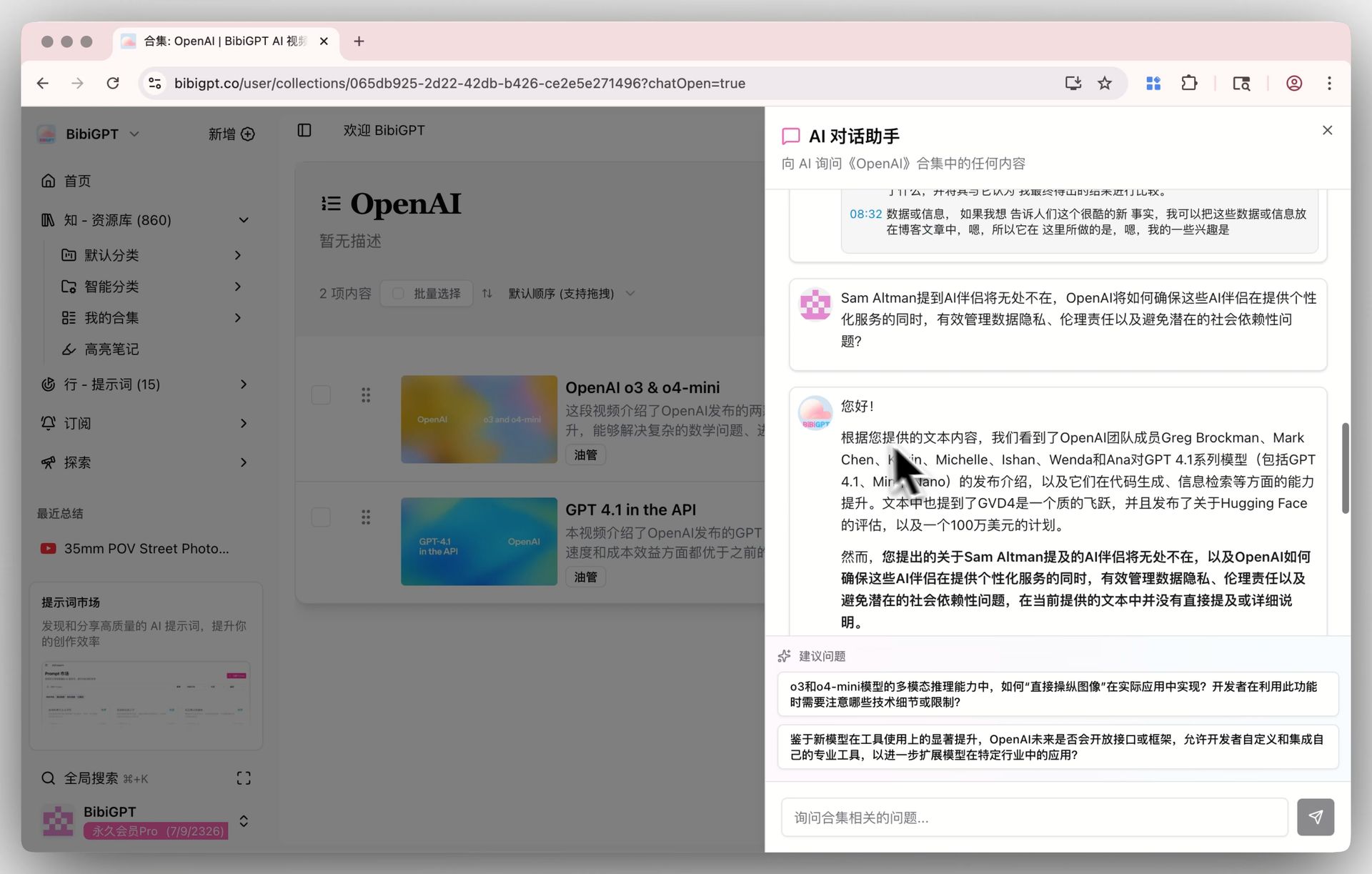
Further, for concepts you didn’t get, use AI follow-up chat to ask directly. BibiGPT answers based on the video content and jumps to the corresponding timestamp in the original, letting you verify against the actual explanation — connecting “self-test finds blind spots” and “precise rewatch fills gaps” into a complete feedback loop.
Why This Method Only Works With AI
Active recall isn’t a new concept, but applying it to video learning always had a practical hurdle: video is linear, so it’s hard to quickly locate “where I didn’t get it” in the original.
Doing this manually means dragging the progress bar back and forth — patience gone in minutes. AI removes that friction:
- Question starting points ready-made — no racking your brain for questions; thought Q&A hands you a self-test.
- Blind spots traceable — concepts you got wrong jump back to the original timestamp; rewatch a few dozen seconds instead of the whole segment.
- Repeatedly testable — next review, run the thought Q&A again; skip what you can answer, rewatch what you can’t — every round is active retrieval.
Practical rule: A tool’s value isn’t learning for you — it’s lowering the friction of “active retrieval” enough that you’ll do it every time. The less friction, the more you persist, the better you remember.
Compared to Passive Learning
| Dimension | Passively watching | Active Recall + AI |
|---|---|---|
| While watching | Nodding along, feels clear | Actively searching for answers with questions |
| After watching | Forget it when closed | Cover and recount, expose real blind spots |
| Verification | ”I should get it, right?” | Thought Q&A self-test, objective feedback |
| Gap-filling | Rewatch the whole segment | One-click timestamp jump, precise rewatch |
| Long-term memory | Mostly gone in days | Every retrieval reinforces it |
FAQ
Q1: What’s the difference between active recall and note-taking? Note-taking moves information from video to paper — still passive reception; active recall is recounting and self-testing from memory after closing the video — active retrieval. The former records, the latter makes you remember.
Q2: Do I have to do this for every video? No. It’s worth it for core content you need to truly master (specialized courses, exam material); for pure entertainment or one-off info, watching once is fine. Spend energy on what you want to keep long-term.
Q3: Can AI-generated thought Q&A replace a teacher’s questions? It’s a great self-test starting point covering the video’s core concepts. For deeper application problems or real exam questions, combine it with textbooks and exercises. They pair best together.
Q4: What videos suit this method? Any learning-oriented video: YouTube open courses, MIT/Stanford lectures, skill tutorials, industry talks, and more.
Try It Now
Pick a YouTube open course or lecture you’ve always wanted to truly learn, paste it into BibiGPT, and get the thought Q&A as a self-test first — cover the answers and see how much you can recount.
Paste a video and generate your active recall self-test
BibiGPT Team