
GPT-5 Is Here: Everything You Need to Know from OpenAI’s Summer Update
A comprehensive breakdown of OpenAI’s summer keynote—covering GPT-5’s breakthroughs in media summarization, safety, developer tooling, and what the AGI era means for intelligent audio/video analysis.
📹 AI Summary Note: This article was generated by BibiGPT using the official livestream from OpenAI’s Summer Update event. Want the same super-fast summaries for any audio or video? Try BibiGPT now and let AI surface the core ideas in minutes.
Table of Contents
- OpenAI Summer Update: GPT-5 Ushers in the AGI Era
- Safety and Developer Breakthroughs in GPT-5
- GPT-5 in Action: Dashboards to 3D Games
- What It Means for AI Media Summaries
- Conclusion
OpenAI Summer Update: GPT-5 Ushers in the AGI Era
OpenAI’s summer keynote lived up to its hype. Sam Altman took the stage to announce GPT-5, framing it as a decisive step toward artificial general intelligence. The flagship model is faster, smarter, and more useful than anything released before—and signals the arrival of “software on demand” powered by a pocket-sized team of PhD-level experts.
 OpenAI Summer Update keynote
From ChatGPT to GPT-5: A Rapid Evolution
Altman opened with a whirlwind tour of ChatGPT’s growth: 32 months since launch, hundreds of millions of users, and seven hundred million weekly active interactions. What started as a curiosity is now the default way people tap into AI for work, study, and creativity.
 Sam Altman on stage
Against that backdrop, GPT-5 takes the baton. Altman’s analogy:
- GPT-3 felt like a high-school student—brilliant at times, incomplete at others.
- GPT-4 was a strong college student—genuinely intelligent and useful.
- GPT-5? A doctorate-level expert on call for any domain.
 GPT-5 announcement
The goal: deliver intelligence, speed, intuition, and usefulness in one package.
Core Capabilities: Beyond Question and Answer
What makes GPT-5 special isn’t just better answers—it is the ability to execute. Altman coined the phrase “software on demand”: ask GPT-5 to build an application, and it writes the code, hooks up the data, and ships a working experience.
 Explaining GPT-5’s abilities
Need an event plan, a breakdown of complex healthcare decisions, or a personalized study path? GPT-5 orchestrates the steps, bringing the “pocket expert team” vision to life.
Looking Ahead: Empowering Developers and Enterprises
GPT-5 isn’t just a ChatGPT upgrade. OpenAI is targeting developers, enterprises, and platform builders with richer APIs, improved safety tooling, and a more predictable pricing model. The keynote promised sweeping gains for individual makers and Fortune 500 companies alike.
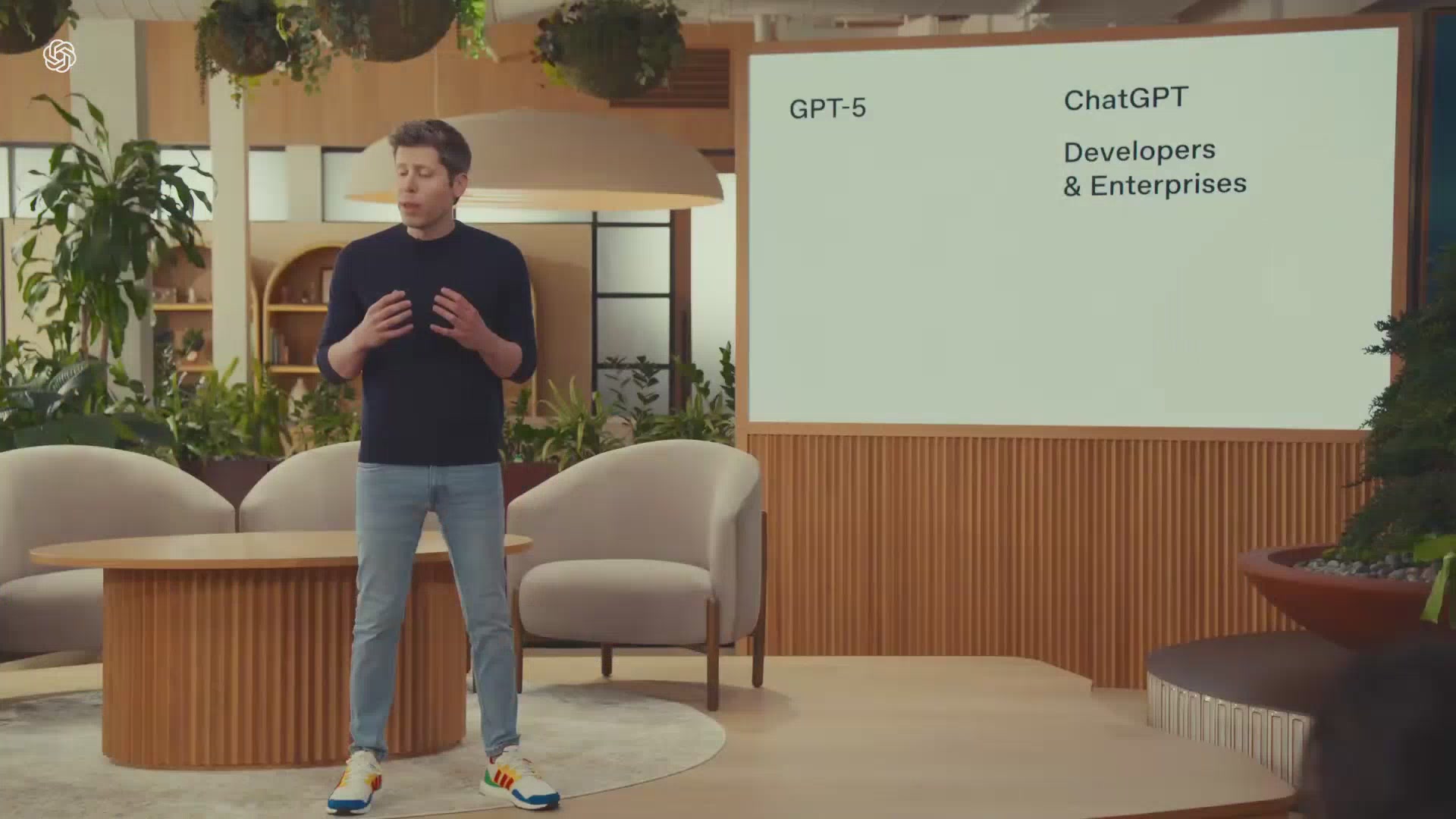 GPT-5 applications
Safety and Developer Breakthroughs in GPT-5
No More Deception: A Leap in Alignment
OpenAI reiterated that GPT-5 was trained to resist deceptive outputs. Internal testing shows a dramatic drop in “cheating” behavior—critical for regulated industries and enterprise deployments.
Safety Completion: A New Interaction Paradigm
One marquee update is “safety completion.” Instead of stonewalling when a user asks for risky content, GPT-5 guides the interaction toward helpful, compliant responses. It redacts the dangerous portion, supplies a safer alternative, and keeps the conversation constructive.
Supercharging Builders: Coding Upgrades and API Rethinks
Developers get a refined coding stack, faster iteration loops, and revamped APIs. GPT-5 handles complex repositories with fewer hallucinations, reasons across architecture diagrams, and generates documentation that reads like a senior engineer wrote it.
GPT-5 in Action: Dashboards to 3D Games
Autonomous Agents: Iterating with Precision
Live demos showed GPT-5 acting as a multi-step agent—planning tasks, revising outputs, and shipping production-grade results without constant human nudges.
One-Click Dashboards: Enterprise Analytics in Minutes
In one segment GPT-5 became “InBotics AI,” spinning up a polished finance dashboard. The AI ingested plain-language requirements and produced a fully interactive analytics hub with KPIs such as ARR, cash flow, gross margin, and NRR.
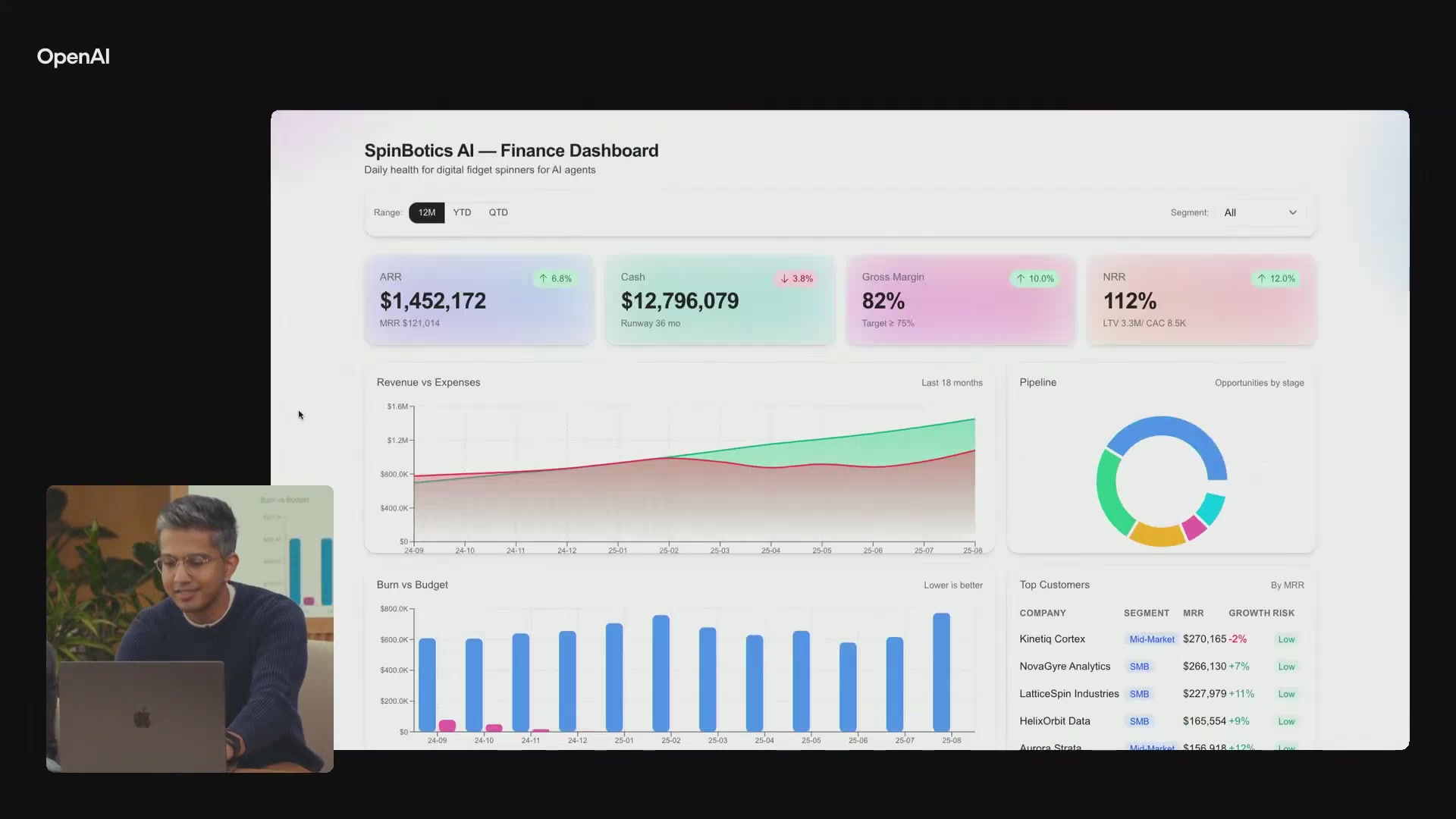 AI-generated finance dashboard
Charts respond to hover states, filters slice customer cohorts, and users can dial in different time ranges—all generated from natural language prompts.
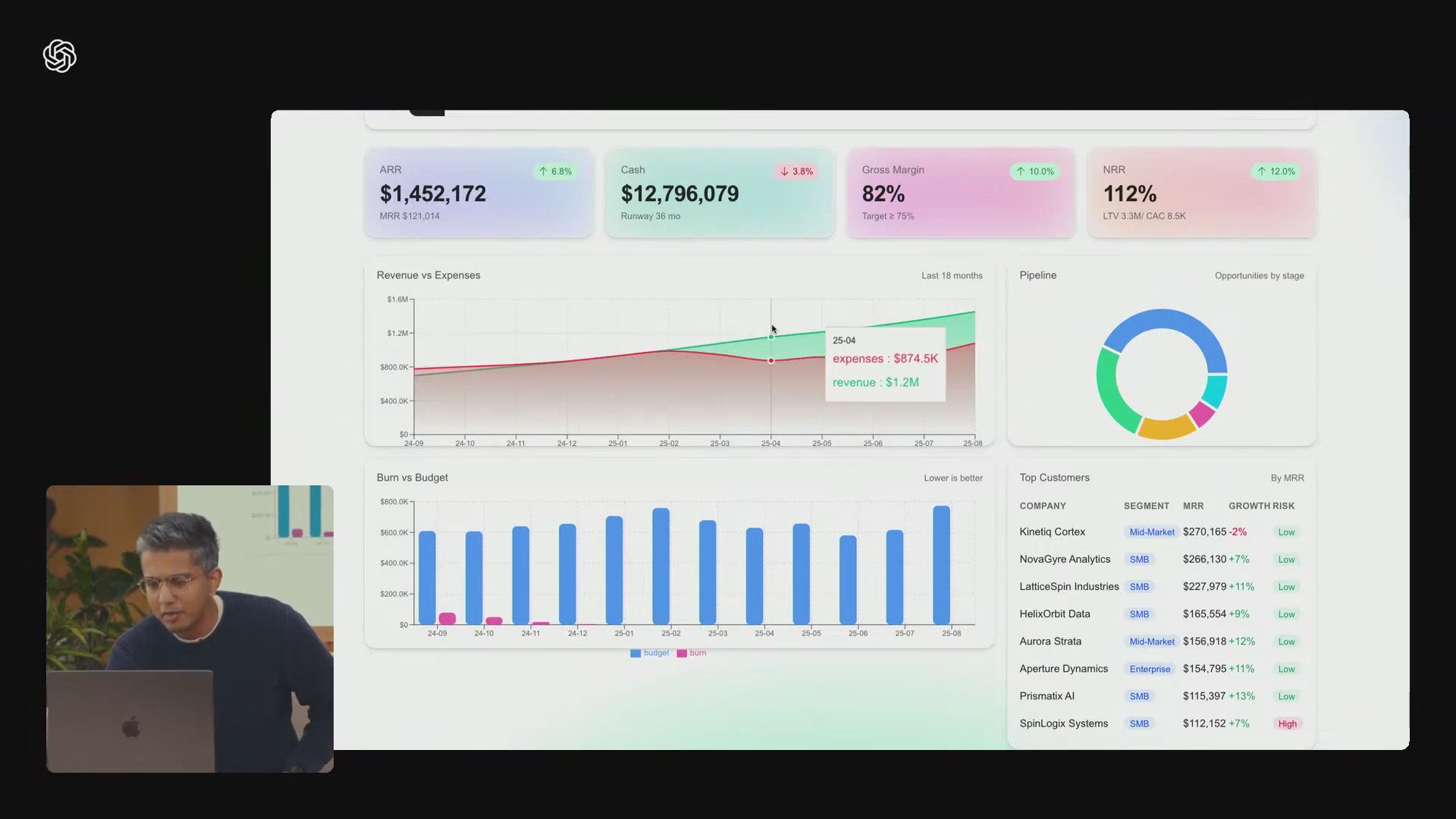 Interactive chart hover
Unleashing Creativity: Build a 3D Game with Natural Language
The demo then pivoted to pure creativity: “build an epic fairytale castle perched on a mountaintop, with guards on the walls firing cannons, horses roaming the courtyard, fog rolling through the sky, and a balloon-popping mini-game with sound effects and a scoreboard.”
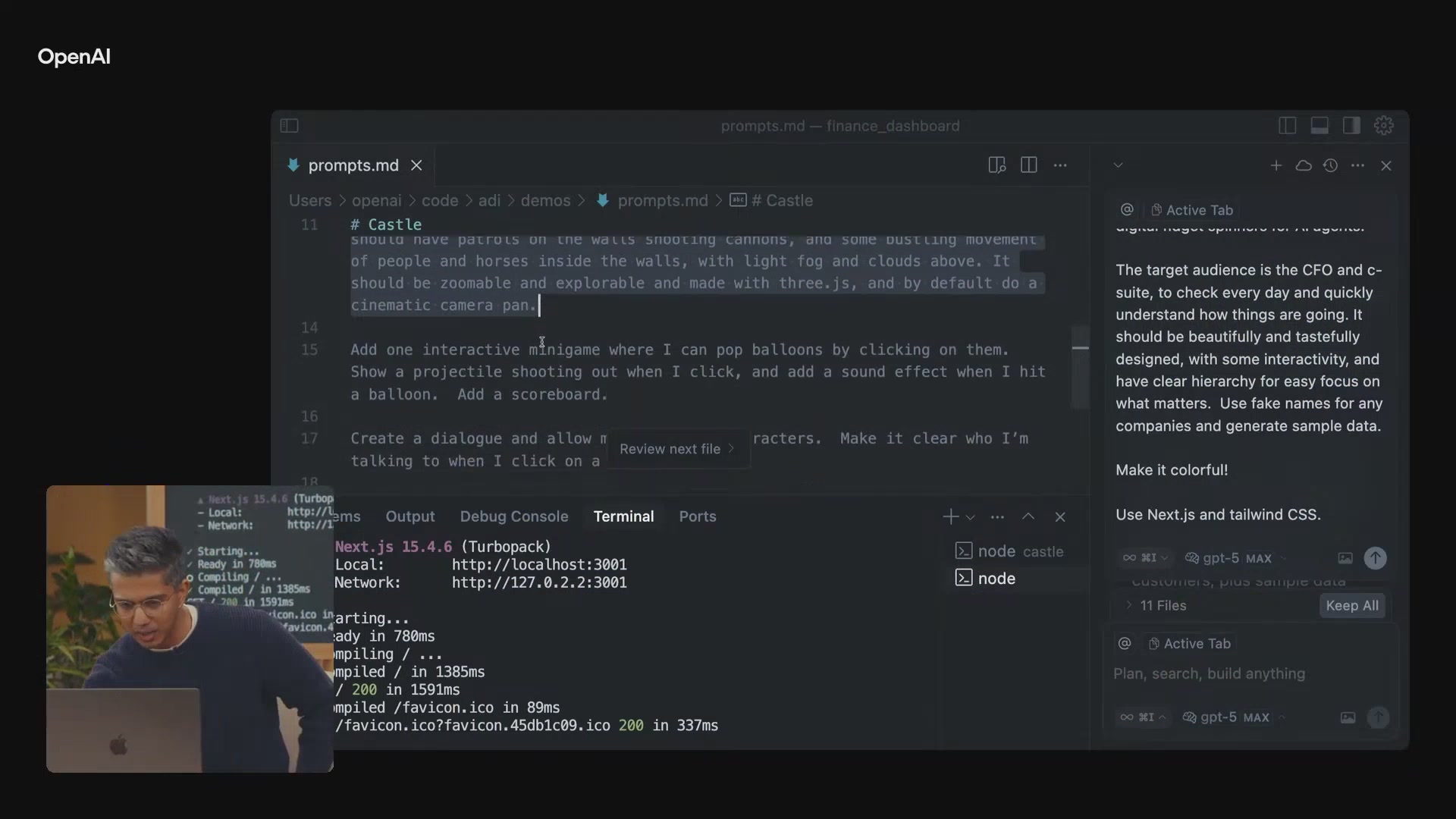 Natural language prompt for 3D castle
GPT-5 synthesized the entire experience: a floating mountain, richly detailed castle, NPC conversations, and a balloon game where every pop triggers audio feedback and score updates.
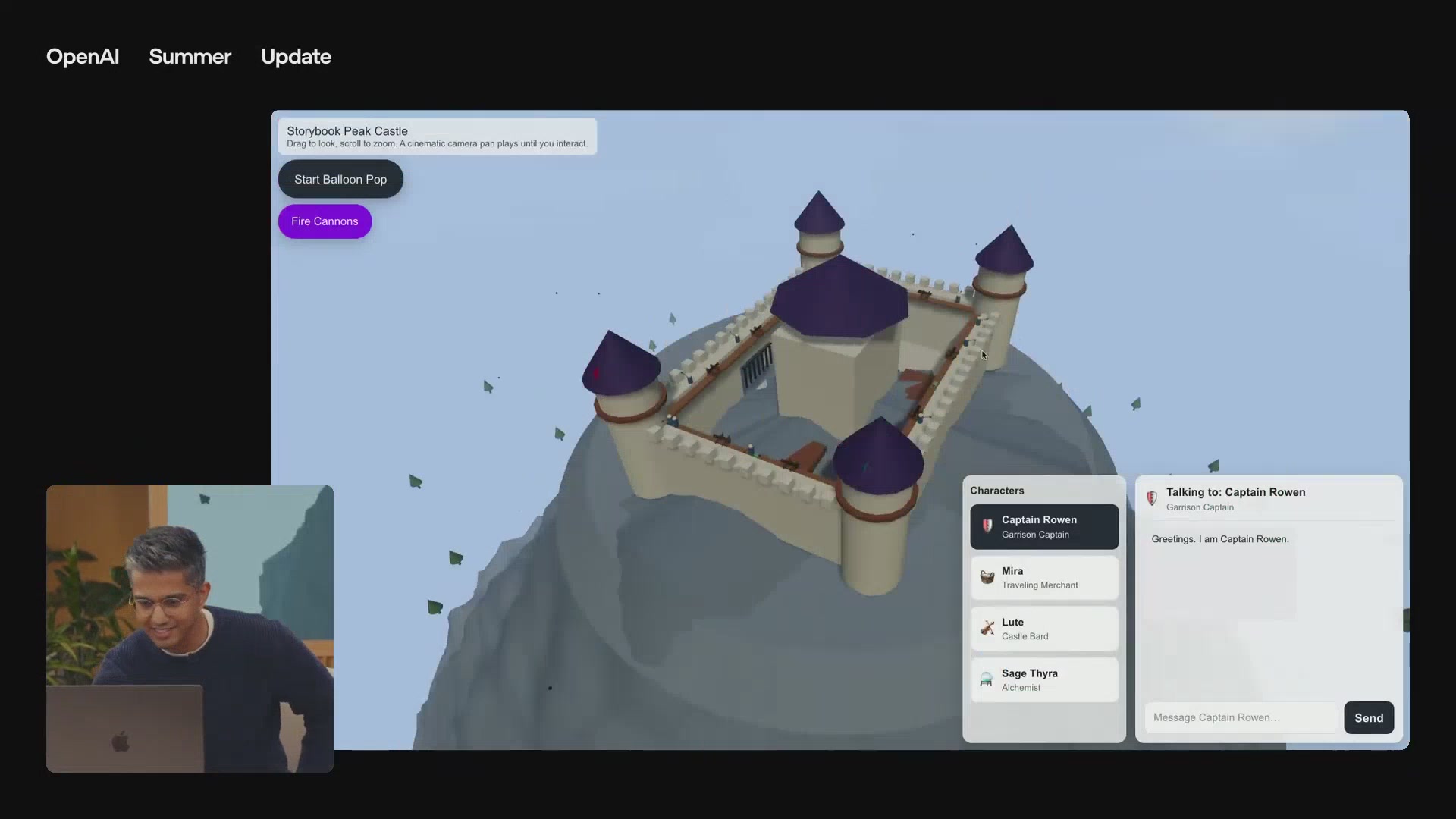 AI-generated 3D castle
 Balloon mini-game demo
From concept to playable prototype, GPT-5 demonstrated genuine creative execution—an unprecedented glimpse of AI as a game engine.
What It Means for AI Media Summaries
-
Multimodal mastery: GPT-5’s grasp of complex instructions hints at richer, more context-aware audio/video summaries. Expect smarter topic detection, narrative mapping, and visual context integration.
-
Safety as a feature: With safety completion, media summarization tools can provide nuanced guidance for sensitive topics instead of blunt refusals—vital for compliance-heavy domains.
-
Ecosystem momentum: Expanded APIs and tooling mean developers can build more advanced summarization workflows on top of GPT-5, accelerating innovation across education, research, and media intelligence.
Conclusion
GPT-5 is a milestone: a model that understands, reasons, builds, and creates. For audio and video analysis, it signals a future of smarter, safer, and more creative AI assistants.
BibiGPT is on the same mission—to help you “watch faster, find smarter, act better.” We support Bilibili, YouTube, podcasts, and local files with one-click transcripts, summaries, mind maps, and AI dialogues. Unlike generic tools, BibiGPT interprets visuals, produces illustrated recaps, and even generates dynamic websites and interactive experiences.
Ready to see what’s next? Experience BibiGPT and transform any media into actionable insight.