Muse Voice Transcribe Explained — What Meta Shipped on 2026-09-01
As of 2026-09-07, Meta Superintelligence Labs released Muse Voice Transcribe on 2026-09-01: real-time streaming ASR in 80ms chunks, diarization for 20+ speakers, and endpointing in one model. Meta reports first place on Artificial Analysis streaming speech-to-text as of 2026-09-01. If you just need to transcribe audio from a file or a lecture link, try it below — you do not open a Meta API console.
As of 2026-09-07, Meta Superintelligence Labs released Muse Voice Transcribe on 2026-09-01. It is a real-time audio perception model: 80ms streaming ASR, 20+ speaker diarization, and endpointing in one pass. Meta reports first place on Artificial Analysis streaming speech-to-text as of 2026-09-01. List price is $0.18 per audio hour on Meta Model API. Last updated 2026-09-07.
Features
What Muse Voice Transcribe actually is
A hosted real-time audio perception model from Meta Superintelligence Labs, in the Muse Spark family. It is not the same product as Muse Image. Meta documents it as muse-voice-transcribe-1.0 on Meta Model API.
80ms streaming ASR (2026-09-01)
Audio is processed in 80ms chunks at 12.5 Hz. The model decides when to keep listening versus emit a text token. Meta calls this adaptive delay: a reinforcement-learning policy that trades a little wait for a cleaner word.
Diarization and endpointing in the same pass
Speaker tags cover 20+ speakers. Endpoint tokens mark when speech starts and stops. Meta says no separate post-processing step is required. The research page is the source for those claims.
$0.18 per audio hour, API only
Meta's speech-to-text docs list $0.18 per hour of processed audio ($3 per 1,000 minutes), same price for streaming and file upload. No open weights. Voice dictation in Meta AI for Mac and Muse Code already uses this model.
What this means if you work with long audio
A real-time ASR API helps teams building voice agents. It does not replace a product that files a timestamped transcript, chapters, and follow-up Q&A for a human who just pasted a link.
You should not have to open a Model API console
Paste a lecture or podcast URL, or drop an MP3. The job is the transcript you can search — not a WebSocket handshake at wss://api.meta.ai/v1/asr/realtime.
A transcript is the interface, not the product
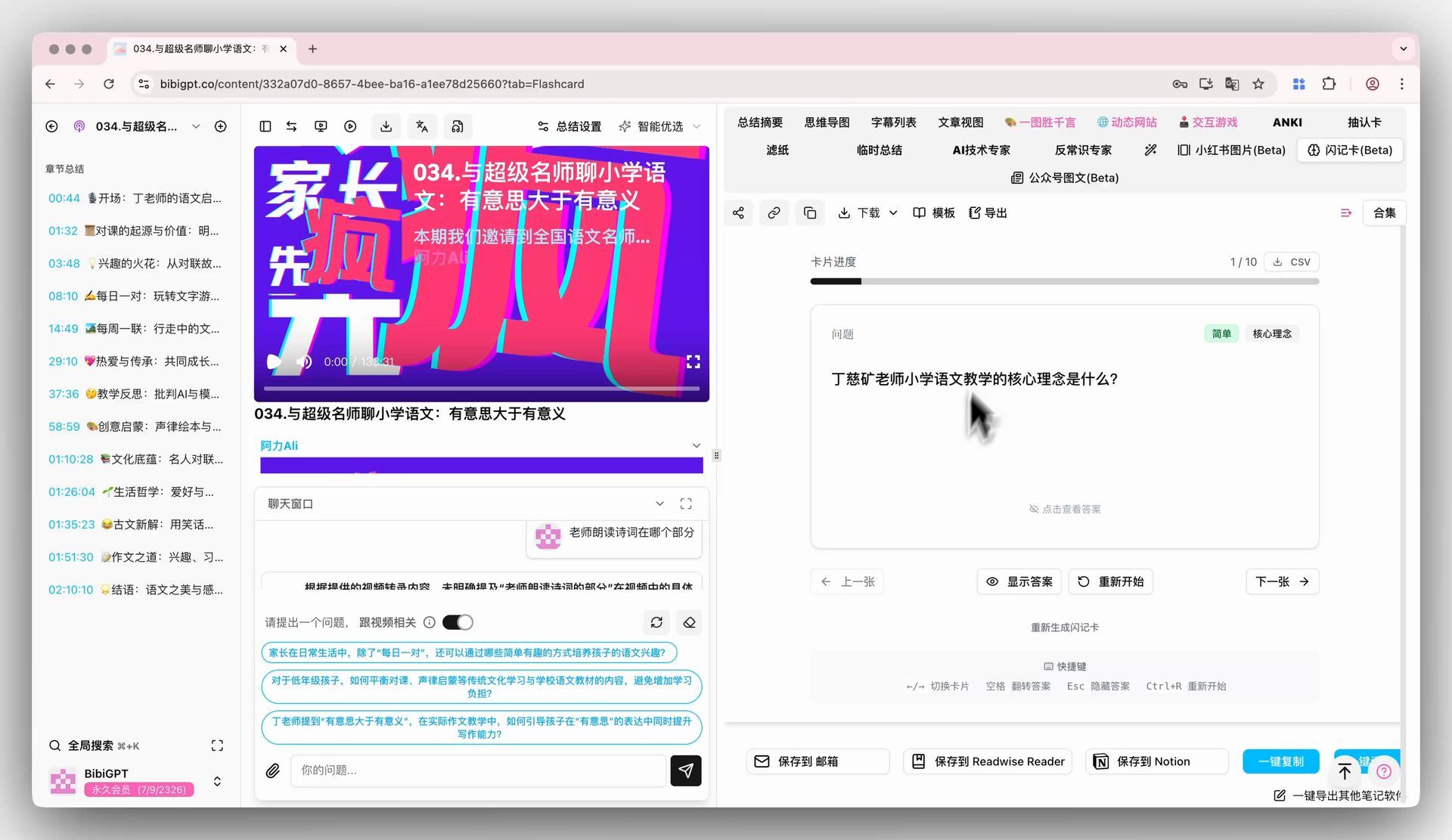
Raw streaming text still has to be read. BibiGPT takes the same file or link and returns chapters, a timestamped transcript, and notes you can ask questions against.
This is Voice Transcribe, not Muse Image
Muse Image is a different 2026 Meta release. Keep each intent on its own URL. This page covers the 09-01 speech model only.
5 key changes (90-second read)
Headline facts from Meta's 2026-09-01 Muse Voice Transcribe launch.
1
Released 2026-09-01, hosted only
Meta Superintelligence Labs shipped Muse Voice Transcribe as muse-voice-transcribe-1.0. It is live on Meta Model API, Meta AI for Mac, and Muse Code. No open weights. Hold Fn on Mac to dictate through Meta AI.
2
80ms chunks and adaptive delay
Audio is tokenized every 80ms (12.5 Hz). The model chooses whether to keep listening or emit text. Adaptive delay is trained with reinforcement learning that multiplies a word-error reward by a delay reward, so hard words wait longer.
3
Diarization and endpointing share the ASR pass
Special tokens mark speaker switches, speaker tags A–Z (20+ speakers), speech onset, and speech endpoint. Meta says long audio over one hour needs no extra post-processing pipeline.
4
70+ languages trained, 25 verified
Meta recommends the 25 extensively verified languages at launch, with more available. Intra-sentence and inter-sentence code-switching is native. Language, keyword, and context biasing can raise accuracy on names and jargon.
5
$0.18/hour and an independent streaming rank
Meta docs list $0.18 per hour of processed audio. Meta reports first place on Artificial Analysis streaming speech-to-text and on public diarization benchmarks as of 2026-09-01. VentureBeat quotes a 3.1% final-transcript word error rate on AA-WER Streaming from Meta's launch charts.
3 typical scenarios for BibiGPT users
Where a real-time ASR API matters — and where a link-to-notes product is the actual job.
You are building a voice agent
A team that needs WebSocket partials and model-detected turn boundaries can evaluate Meta Model API. Then still dump the finished recording into BibiGPT so humans get chapters, not a raw event stream.
You just need to transcribe audio from class
A 90-minute lecture does not need an ASR realtime socket. Paste the URL or drop the M4A, export the timestamped transcript, and keep asking questions. That is the product path.
You are tracking 2026 speech releases
Muse Voice Transcribe is Meta's 09-01 streaming ASR. Granite Speech 5.0 Turbo CTC is IBM's English throughput checkpoint. Gemini 3.5 Transcribe launched 2026-08-26 with separate live and file endpoints. Keep one URL per family; do not merge them into a single 'ASR 2026' page.
Related BibiGPT tools
Transcription and notes workflows that pair with this release.
Launch claims come from Meta's own posts. Independent coverage of list price and the published streaming chart is cited separately.
On 2026-09-01 Meta Superintelligence Labs introduced Muse Voice Transcribe as the first real-time audio perception model in the Muse Spark family, with 80ms streaming ASR, 20+ speaker diarization, endpointing, 70+ training languages (25 verified), native code-switching, and long audio over one hour. Meta reports first place on Artificial Analysis streaming speech-to-text as of 2026-09-01.
Meta's speech-to-text docs list model muse-voice-transcribe-1.0, realtime WebSocket and file POST endpoints, $0.18 per hour of processed audio, turn-level timestamps (not word-level), and 25 evaluated languages with code-switching.
VentureBeat (2026-09) reports the $0.18 per hour list price and quotes Meta's launch chart: 3.1% final-transcription word error rate on Artificial Analysis AA-WER Streaming, ahead of the other listed streaming systems on that chart.
Gemini 3.5 Transcribe (2026-08-26) is a separate Google launch: Artificial Analysis, cited by Google, listed streaming WER 4.0% and non-streaming WER 2.6%, with 85+ languages. Live and file are different endpoints. asOf 2026-08.
Streaming automatic speech recognition turns audio into text while the audio is still arriving, instead of waiting for the file to end. Partial tokens show up first; a later pass can revise them. It is a latency design, not a brand name.
What is speaker diarization?
Speaker diarization labels who spoke when in a recording. The system assigns speaker tags to turns so a meeting transcript can separate voices. A 20-plus-speaker claim means the tag set is large enough for crowded calls, not that every name is identified.
What is endpointing in speech recognition?
Endpointing marks the start and end of a spoken turn so a voice agent knows when to stop listening and start answering. It is turn-taking, not punctuation. Models emit onset and endpoint tokens instead of a human pressing a stop button.
Loved by creators, students & researchers
Why people use BibiGPT to turn videos into text every day.
Trusted by 50,000+ users worldwide
★★★★★
“I paste a link and get clean captions in seconds — it saves me hours of retyping every single week.”
Maya R.
Content Creator · Repurposes short videos
★★★★★
“Exporting the transcript lets me review new words at my own pace instead of pausing the video constantly.”
Daniel K.
Language Learner · Studies with real videos
★★★★★
“Accurate, timestamped text I can quote directly. It has quietly become part of my daily workflow.”
Priya S.
Researcher · Cites public talks
FAQ'S
Frequently Asked Questions
Ask us anything!
More Free Tools
Explore our other browser-based tools — all free, no signup required.
Paste a YouTube, Bilibili, or podcast link — or drop an MP3, WAV, or M4A. BibiGPT returns a timestamped transcript, an AI summary, and notes you can search. Last updated 2026-09-07.