
What is Claude Haiku 5.5?
Claude Haiku 5.5 is Anthropic's lightweight high-speed model released on 2026-10-07 with 1M context and $0.10/$0.50 pricing.
TL;DR — Anthropic shipped Claude Haiku 5.5 on 2026-10-07 with 1M context, 128K max output, and $0.10 input / $0.50 output per million tokens under 100k ($0.01 cache reads). Designed for high-volume text compaction, it does not ingest audio or video files directly. Pair raw models with BibiGPT notes.
Paste a podcast, lecture, or meeting URL — BibiGPT converts audio and video into chapters, full transcripts, and interactive Q&A.
As of 2026-10-16, Anthropic released Claude Haiku 5.5 on 2026-10-07. 1,000,000 context, 128K generation, $0.10 input / $0.50 output per million tokens under 100k, $0.01 cache read. Text compaction focus, no direct audio/video ingestion.
Public facts from the official Claude Haiku 5.5 release — not an integration claim for BibiGPT.
Claude Haiku 5.5 expands context to 1,000,000 tokens with up to 128,000 tokens of generation.
For prompts up to 100k tokens: input $0.10 / output $0.50 per million tokens, cache read $0.01.
Anthropic positions Haiku 5.5 for high-volume summarization, data extraction, and subagents.
Haiku 5.5 is a text reasoning engine. Recordings and streams still need transcription, timestamps, and structure.
Haiku 5.5 does not parse raw MP4, YouTube, or podcast links. An ASR layer like Whisper or Qwen3-ASR must produce clean text first.
Laxis 2026: knowledge workers average 21.7 meetings weekly. Timestamped meeting notes turn recordings into searchable archives.
Edison 2026: listeners consume 8+ hours of weekly audio. BibiGPT timestamps key moments so you never miss decisions.
Facts verified from official releases as of 2026-10-16.
Anthropic launched Claude Haiku 5.5 as the high-throughput model in the Claude 5 family.
1,000,000 tokens context window allows processing entire document libraries.
Under 100k tokens: $0.10 input and $0.50 output per million tokens.
Prompt cache reads drop to $0.01 / MTok (~75% reduction vs Haiku 4.5).
Haiku 5.5 excels at text compaction; BibiGPT provides the multimedia transcription bridge.
How knowledge workers pair high-speed LLMs with multimedia notes.
Listeners spend 8.4 hours weekly on audio (Edison 2026). Use BibiGPT to generate timestamped chapters.
Knowledge workers average 21.7 meetings weekly (Laxis 2026). BibiGPT archives calls into searchable meeting notes.
Paste lecture URLs to get structured outlines and exported Markdown notes.
Explore related model updates and AI productivity tools.
Launch details verified from official releases as of 2026-10-16.
Anthropic released Claude Haiku 5.5 on 2026-10-07. 100k tokens or fewer: $0.10/$0.50 MTok, cache read $0.01. Context 1M, output 128K.
Anthropic — Claude Haiku 5.5 Model Card (2026-10-07) ↗Laxis State of Meetings 2026: knowledge workers attend 21.7 meetings weekly (~30% of work week).
Laxis — State of Meetings 2026 ↗Edison Research 2026: US podcast listeners average 8 hours 24 minutes weekly across 6.8 shows.
Edison Research — The Infinite Dial 2026 ↗Claude Haiku 5.5 is Anthropic's lightweight high-speed model released on 2026-10-07 with 1M context and $0.10/$0.50 pricing.
매일 영상을 텍스트로 바꾸는 데 BibiGPT가 선택받는 이유.
전 세계 50,000명 이상이 신뢰하는 서비스
“링크만 붙여넣으면 몇 초 만에 깔끔한 자막 텍스트가 나와서 매주 몇 시간씩 걸리던 받아쓰기가 사라졌어요.”
Maya R.
콘텐츠 크리에이터 · 숏폼 영상 재활용
“스크립트를 내보낼 수 있어서 영상을 계속 멈추지 않고 제 속도로 새 단어를 복습할 수 있습니다.”
Daniel K.
어학 학습자 · 실제 영상으로 공부
“타임스탬프가 달린 정확한 텍스트를 바로 인용할 수 있어요. 어느새 매일 쓰는 워크플로의 일부가 됐습니다.”
Priya S.
연구원 · 공개 강연 인용
FAQ
무엇이든 물어보세요!
 1
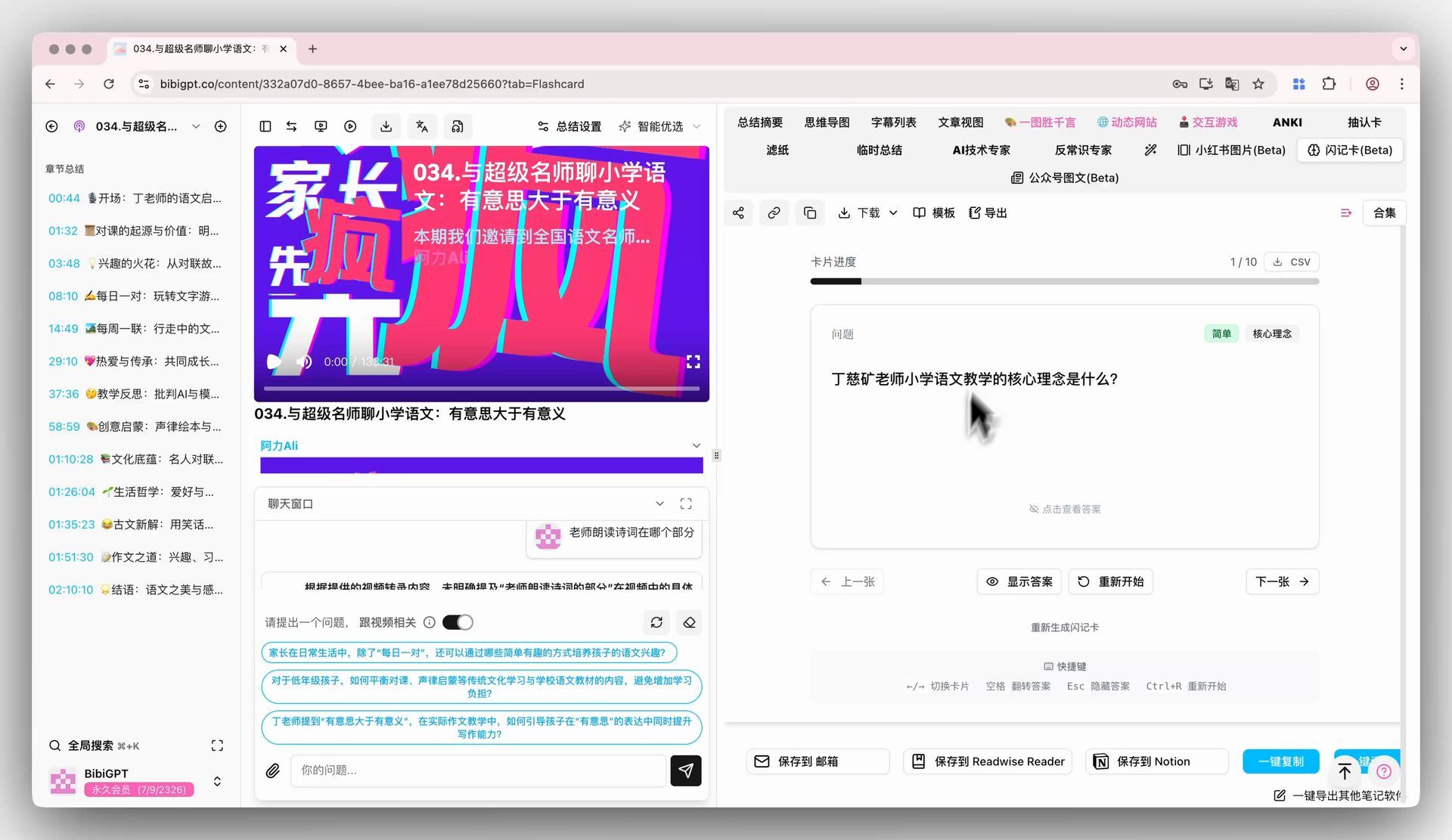
1 2026 학생용 AI 학습 워크플로: Microsoft Study and Learn Agent, Laxu AI, NotebookLM Education, BibiGPT 비교와 조합 사용법. 강의 영상을 Anki 플래시카드로 만드는 5단계 실전 가이드.
 2
2 2026년 최고의 Bilibili AI 동영상 요약 도구는? 링크를 붙여넣으면 30개 이상 플랫폼에서 구조화된 요약, 마인드맵, 핵심 포인트를 즉시 받을 수 있습니다. 상위 5개 도구를 비교합니다.
 3
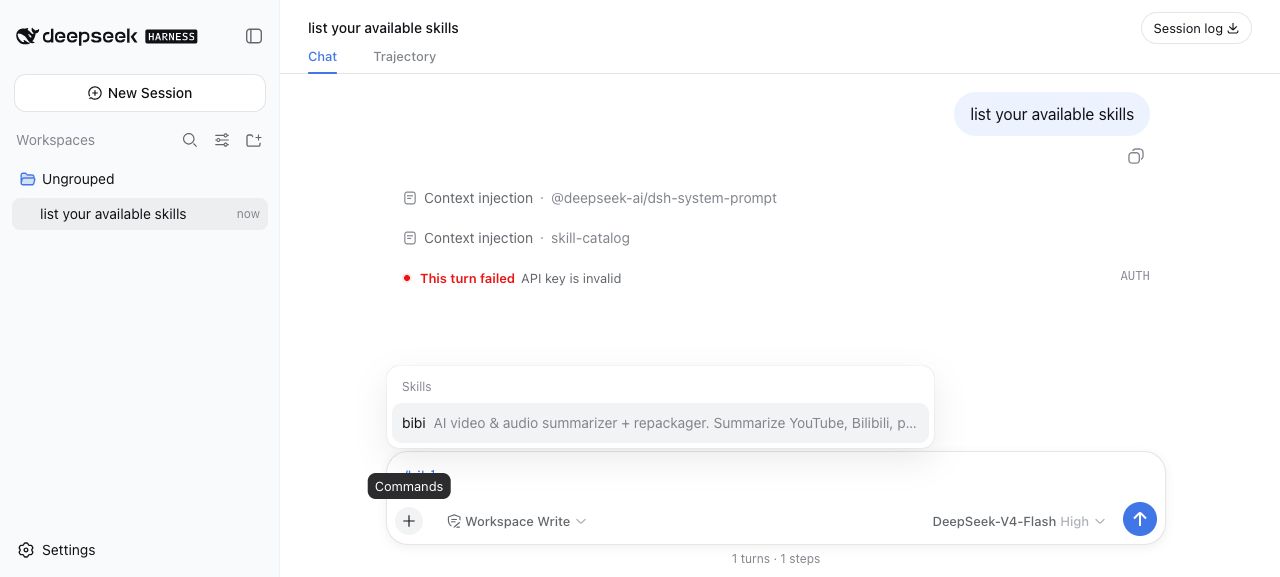
3 DeepSeek Harness에 영상 요약 skill을 넣는 건 디렉터리를 복사하면 끝——SKILL.md는 Claude Code와 같습니다. dsh 없이 브라우저에 Bilibili나 YouTube 링크만 붙여도 타임스탬프 요약이 나옵니다.
Paste a podcast, lecture, or meeting recording into BibiGPT to get structured chapters, transcripts, and follow-up Q&A.