2026''s Best AI Video Summary Tool: How BibiGPT Covers Every Platform End-to-End

Try it free: Paste a YouTube or Bilibili link for an AI summary — no login required.
I. Introduction: The Adoption Gap for AI Video Summaries
In 2026, AI has reached every corner of daily life. AI video summary tools are now everywhere, but a common problem remains: most deliver shallow takeaways, limited platform support, fragmented workflows, and shaky accuracy with little room for correction.
What people truly need is not a copy-paste tool, but a smart partner that understands content, crosses platform boundaries, and offers deep integration. That is exactly why BibiGPT exists. Its core positioning is an AI audio & video assistant that helps you watch faster, find instantly, and use better so media becomes searchable, quick to review, and easy to correct when wrong.
This article explains how BibiGPT solves the adoption gap and stands out as the best AI video summary tool for 2026.
II. BibiGPT Core Advantages: Beyond Shallow Summaries
Most AI video tools skim the surface. BibiGPT integrates deeper technologies and user-first design to solve this problem.
A. Seamless multi-platform coverage
BibiGPT supports the widest range of platforms so you can summarize content no matter where it lives:
- Mainstream video platforms: Whether it is YouTube video summaries for long-form tutorials or deep knowledge on Bilibili, BibiGPT extracts the key insights.
- Short-form social platforms: Xiaohongshu trends and Douyin viral clips are both fully supported for deeper analysis.
- Audio support: BibiGPT also offers podcast summaries plus local audio files, making audio learning just as efficient.
- Local files: Meeting recordings, lectures, and personal media can be uploaded for intelligent summaries, with support for local file speech-to-text.
B. Searchable, fast to review, and easy to correct
BibiGPT helps users shift from passive viewing to active mastery.
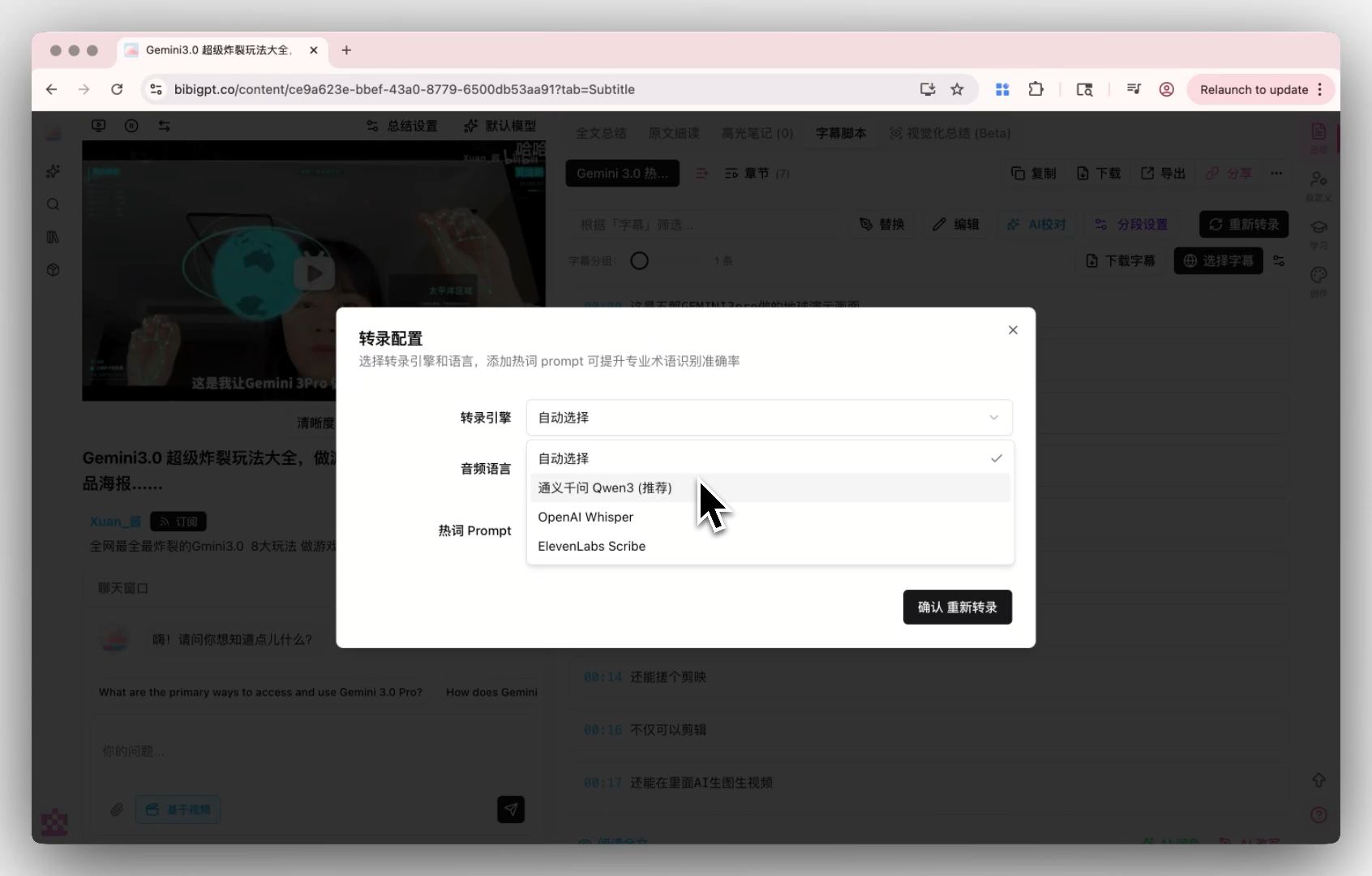
- Accurate transcription and multilingual support: BibiGPT uses high-quality speech-to-text engines such as ElevenLabs Scribe for strong accuracy. It also supports multilingual transcription and translation, breaking language barriers for global meetings and overseas courses.
- More than transcription: BibiGPT analyzes visuals, structure, and narrative logic to deliver summaries that reflect context, not just words.
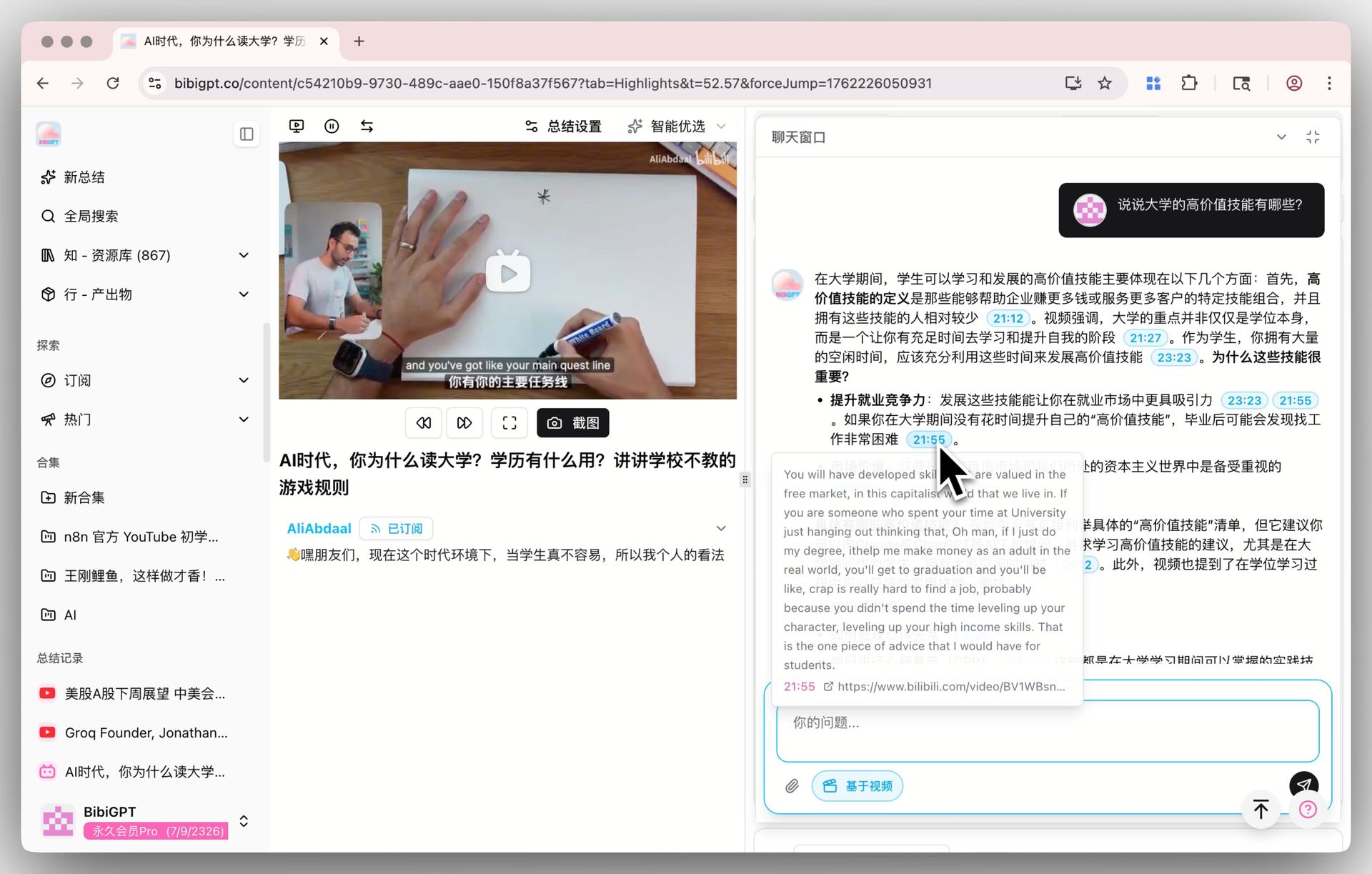
- Smart correction and tracing: BibiGPT’s AI dialog and source tracing, paired with an AI Q&A assistant, lets every answer include clickable timestamps and source previews so users can verify and correct details.
III. Empowering Different Roles: Scenario-Driven Value
BibiGPT is more than a tool. It adapts to different user roles and use cases.
A. Efficient learners: Build a personal audio-video knowledge base
For students, researchers, and lifelong learners, BibiGPT is an efficiency amplifier:
- Extract key points fast: Summarize long courses, lectures, and tutorials into core concepts and arguments.
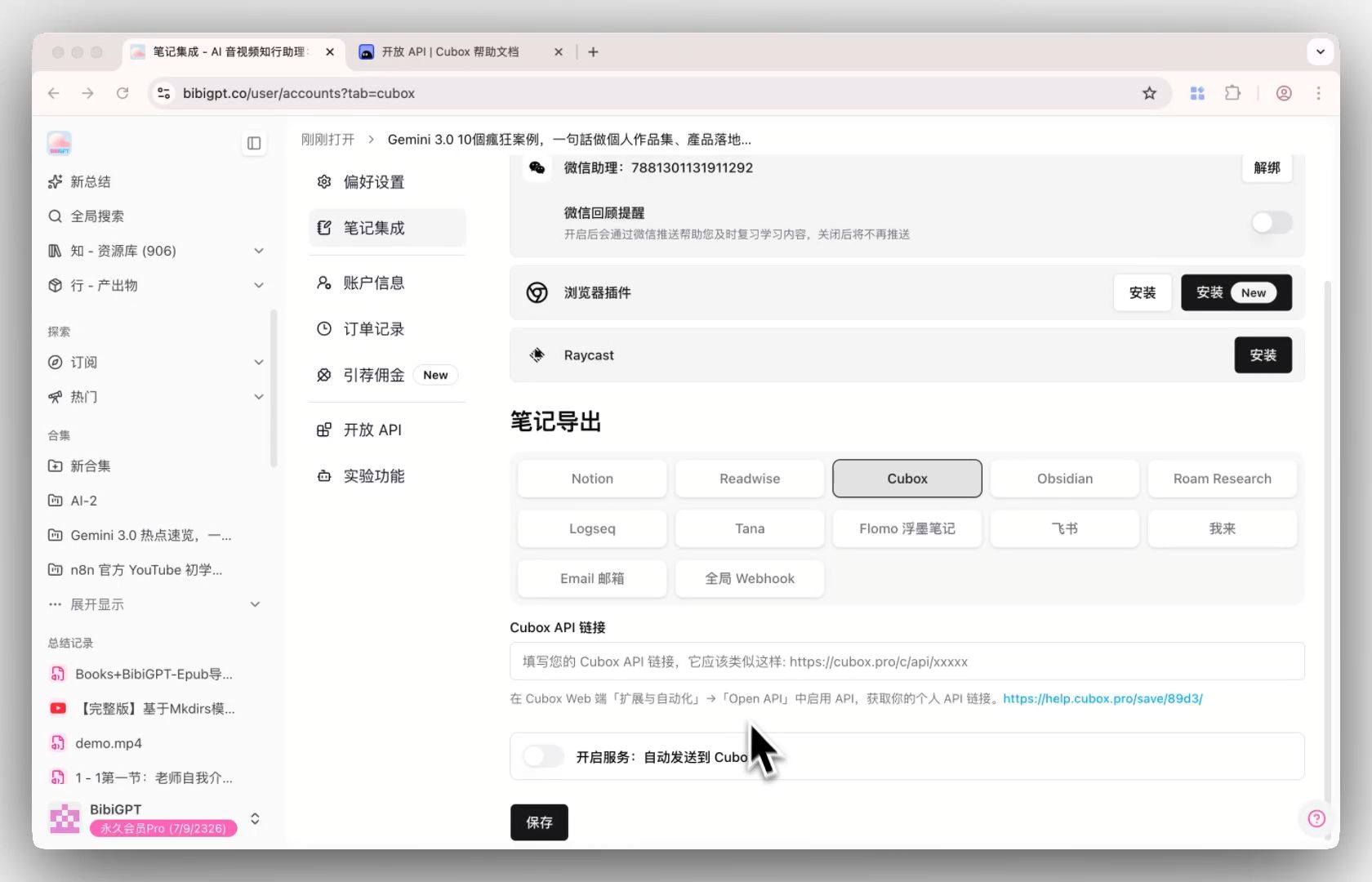
- Create a personal knowledge base: Convert videos into structured notes, outlines, and highlights, then sync to Notion, Obsidian, and Readwise. Your media becomes searchable knowledge assets.
- Review and search instantly: BibiGPT summaries let you revisit and search quickly, saving hours of rewatching.
B. Content creators: Build a high-efficiency idea library
For creators, marketers, and brand teams, BibiGPT unlocks faster ideation and production:
- Multi-platform transcription: Turn YouTube analysis, Bilibili reviews, Xiaohongshu notes, and Douyin shorts into editable text.
- Not rewriting, but a content library: BibiGPT turns media into reusable ideas and insights, not direct copying.
- Unlimited creativity: Use AI video-to-article workflows to transform transcripts into polished articles, social posts, and new formats.
IV. Advanced Capabilities: From Understanding to Output
BibiGPT goes far beyond basic summaries with advanced outputs that turn media into structured knowledge assets.
A. Visual knowledge construction
- Mind maps: Auto-generate clear mind maps from video structure, making complex topics easy to grasp.
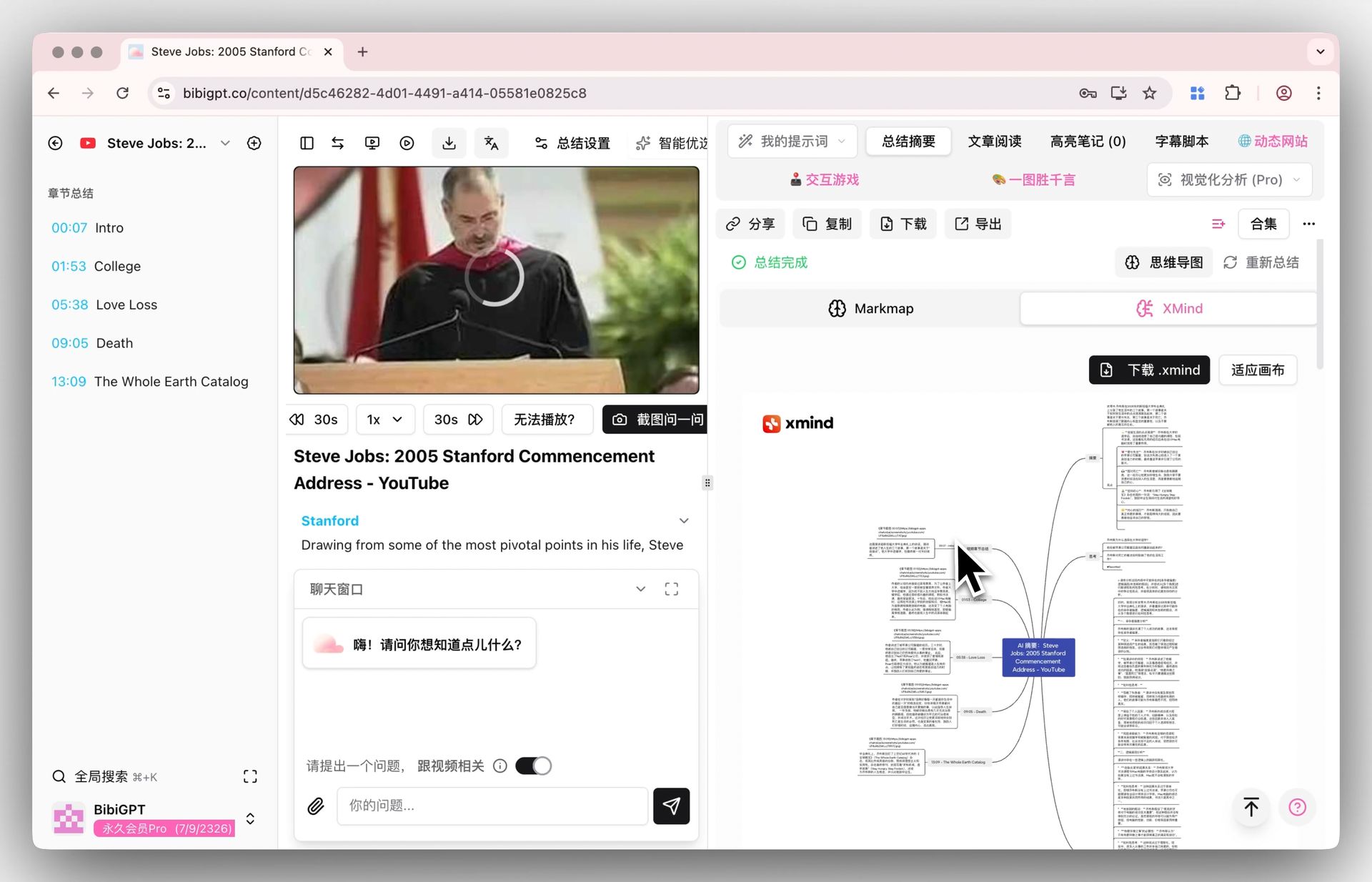
- Concept visuals: Minimalist diagrams reveal knowledge structure at a glance.
- Dynamic web pages: Turn summaries into shareable, long-term pages for distribution and archiving.
B. Knowledge management and output loop
- Deep note integrations: Sync summaries, outlines, and highlights into Notion, Obsidian, and Readwise.
- Flashcards: Auto-generate Q&A cards and export to Anki for efficient review.
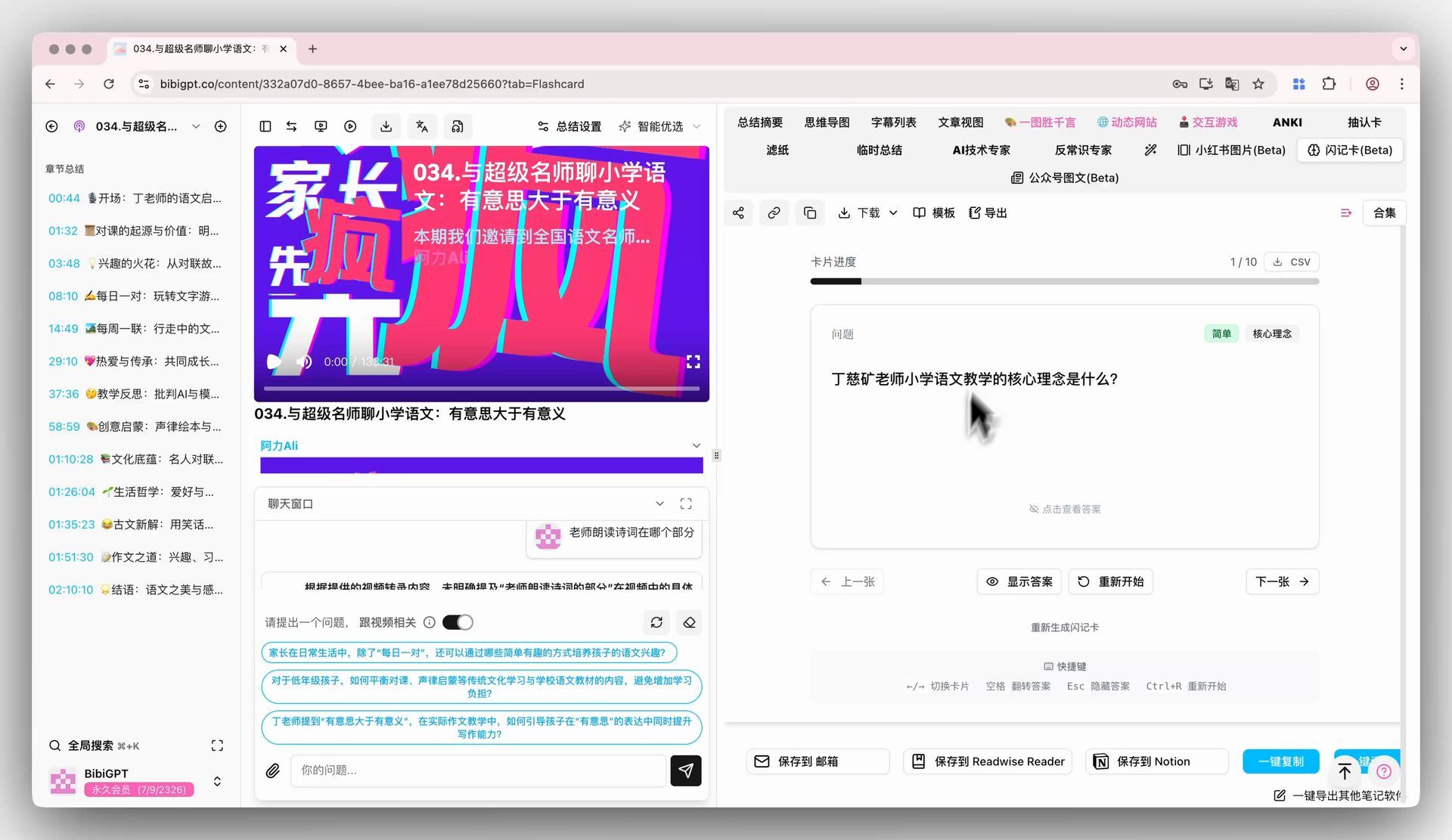
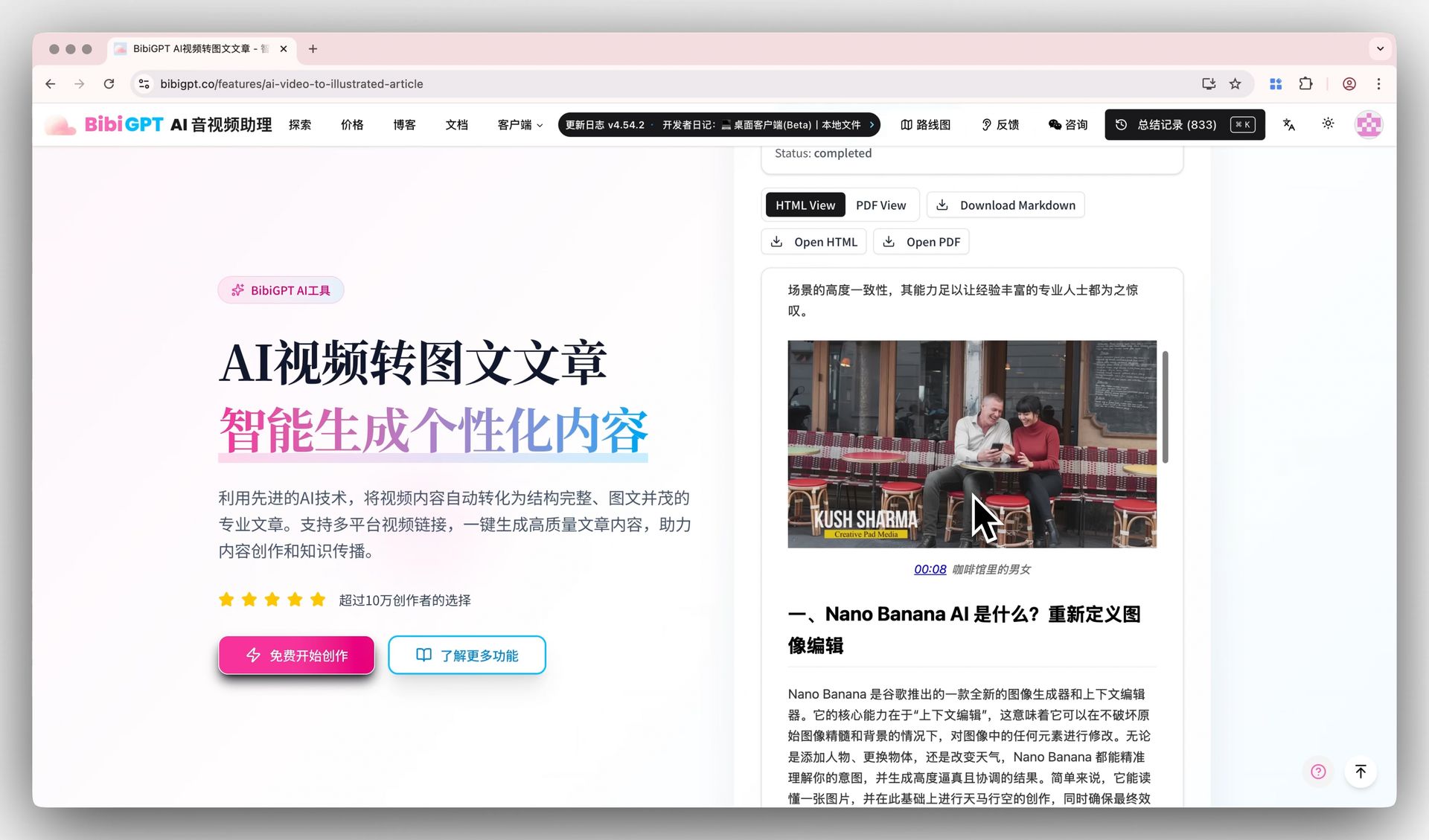
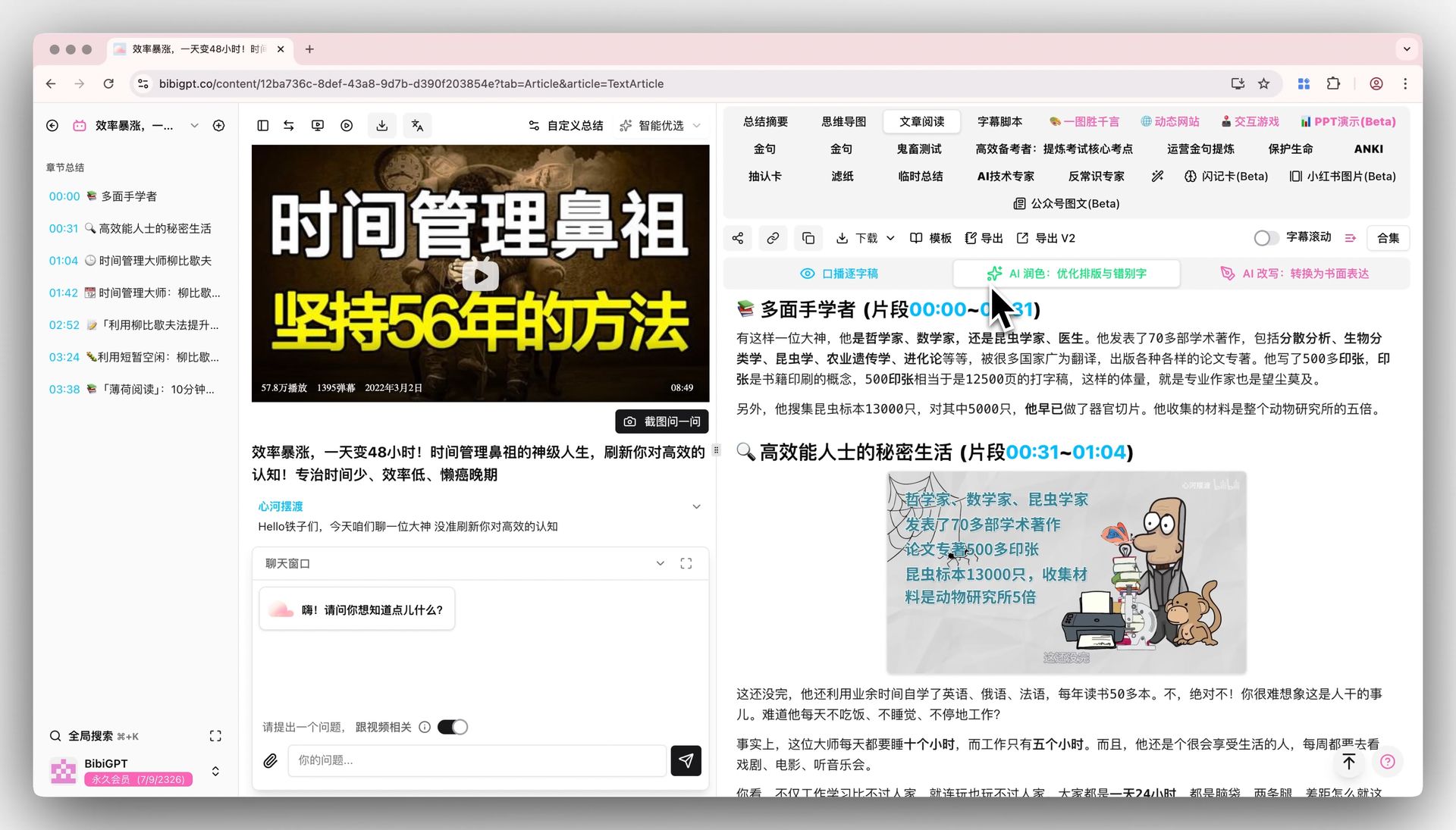
- Article and multimedia outputs: Polish transcripts into illustrated articles and export to PDF or Markdown.
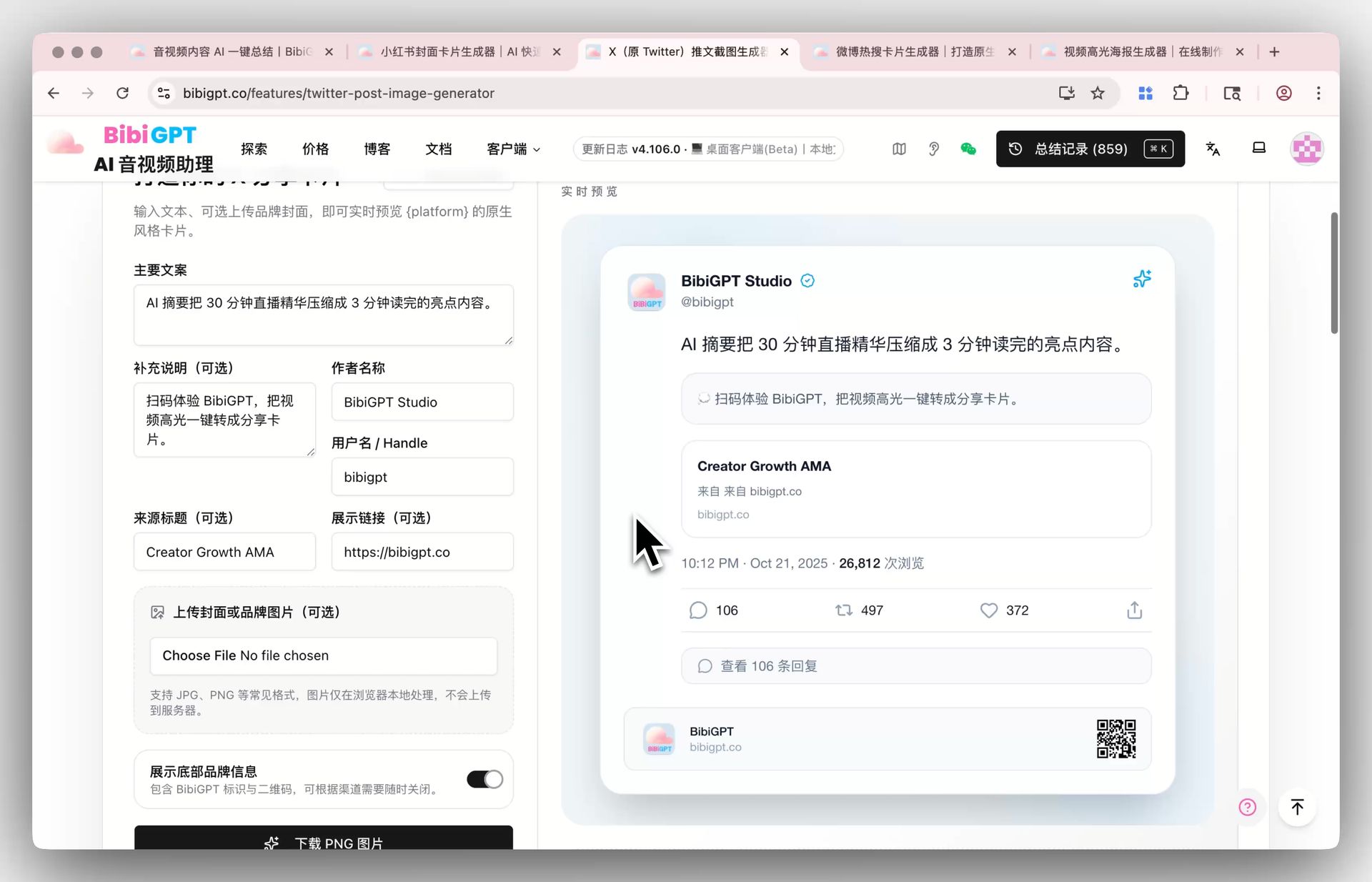
 BibiGPT also creates shareable posters for multiple platforms with one click.
C. Always evolving
These features are just the start. BibiGPT continues to ship new capabilities and integrates advanced domestic models such as Zhipu and Kimi, alongside high-quality open-source options. The product evolves with user feedback and the latest research so you stay ahead.
V. Why BibiGPT Is the Best AI Video Summary Tool in 2026
A. Technical depth
BibiGPT does not just summarize; it deeply understands and structures content for higher accuracy and value.
B. Seamless workflows
From multi-platform input to multi-format output, BibiGPT removes tool switching and boosts productivity.
C. Learning and creativity
BibiGPT helps users learn faster, create more, and build personal knowledge systems.
D. User-driven iteration
We keep improving based on real feedback and the latest advancements.
VI. FAQ: Common Questions About BibiGPT
A. How does BibiGPT ensure accuracy and traceability, and support corrections?
BibiGPT combines high-quality transcription with deep content understanding. Its AI dialog and tracing attach timestamps and source clips to every answer so users can verify and correct details.
B. Which platforms and file formats are supported?
BibiGPT supports YouTube, Bilibili, Xiaohongshu, Douyin, podcasts, and local media uploads. It works with MP4, MOV, MP3, WAV, and more.
C. What are the strengths of multilingual transcription and translation?
BibiGPT handles multilingual transcription and intelligent translation, ideal for global meetings, overseas courses, international news, and multilingual creation.
D. How do learners and creators build a knowledge base with BibiGPT?
Learners can turn videos into structured notes and mind maps that sync to Notion or Obsidian. Creators can convert video text into idea libraries and publish articles or social posts faster.
E. What is BibiGPT’s unique value compared to other tools?
BibiGPT’s core advantage is its AI audio-video assistant positioning: fast to review, easy to search, and designed for real use. Its visualization, note integrations, and tracing features create a full loop from input to output.
VII. Conclusion: Move Beyond Shallow Summaries
In the age of information overload, efficient knowledge capture and reuse define competitiveness. BibiGPT is built for this moment. It is not just an AI video summary tool, but a partner that helps you move from knowing to doing.
Visit BibiGPT (https://bibigpt.co/en/new/video?utm_source=growth-pages&utm_medium=blog-inline-cta&utm_campaign=best-ai-audio-video-summary-tool-bibigpt) or download the desktop app (https://bibigpt.co/download/desktop) to experience the 2026-leading AI audio and video summary toolkit and transform how you learn and create.
Popular tools
More in this series
- AI Competitive Intelligence Workflow: Build Industry Monitoring with BibiGPT Video Summaries
- Lessons From Shipping BiliGPT: Two Cold-Start Growth Tactics Behind a GPT-3 Side Project
- [BibiGPT Growth Series] Episode 1 | How AI Summaries for Bilibili Were Born
- BibiGPT Advanced Guide 2026: Download + AI-Summarize Videos from WeChat Channels, RedNote, TikTok, and Enterprise Intranet Sites
- Chat with Any Video: How to Ask AI Questions About Videos Instead of Watching the Whole Thing (2026)