
Douyin AI Video Summarizer: BibiGPT + Feynman Technique for Active Short-Video Learning
Feynman Technique × Douyin AI short video tool — BibiGPT's global search (Pro) lets you actively search Douyin content instead of waiting for algorithm recommendations, turning passive feed-scrolling into intentional topic-driven learning paths.
Douyin AI Video Summarizer: BibiGPT + Feynman Technique for Active Short-Video Learning
Quick answer: How to use the Feynman Technique for Douyin knowledge content? The key breakthrough: use BibiGPT's Douyin global search (Pro) to actively search topics you want to learn — instead of waiting for algorithm recommendations. This step itself is Feynman Step 1. Then: smart summary structures fragmented information, AI chat traces missing reasoning chains, flashcards verify whether you've actually learned it. You decide what to learn. Not the algorithm.
The four-step Feynman framework is covered in the YouTube overview article. This article focuses on the Douyin algorithm dynamic and active learning strategy.
Douyin's Core Contradiction: Better Content, But the Algorithm Makes Systematic Learning Harder
Douyin's algorithm has one fundamental goal: maximize your time on the platform, not maximize your learning. These two goals are often opposed:
| Algorithm Optimization | Learning Optimization | |
|---|---|---|
| Content selection | What makes you keep scrolling | What you actively decided to learn |
| Knowledge structure | Fragmented, random | Systematic, ordered |
| Attention management | Constant context-switching | Focused on one topic |
| Output verification | None | Feynman test: can you explain it? |
Research shows active retrieval produces 50%+ better learning outcomes than passive reception (Roediger & Butler, 2011). Algorithm recommendations are the most extreme form of passive learning — you haven't even consciously decided what to learn.
BibiGPT provides an anti-algorithm entry point: intentional search.
Douyin Feynman Four Steps: The Anti-Algorithm Edition
Step 1: Identify — Global Search Replaces Algorithm, You Plan Your Learning Path
This is what makes Douyin's approach unique in this series.
Other platforms (Bilibili, YouTube) have users who already know what they want to watch. Douyin users face recommendation feeds, passively accepting.
BibiGPT's "Global Search - Douyin Source" (Pro feature) changes this:
- Open BibiGPT Explore page
- Type the topic you actively want to learn (e.g., "compound interest")
- Switch to the "Douyin" data source tab
- Browse results, actively select the highest-quality content
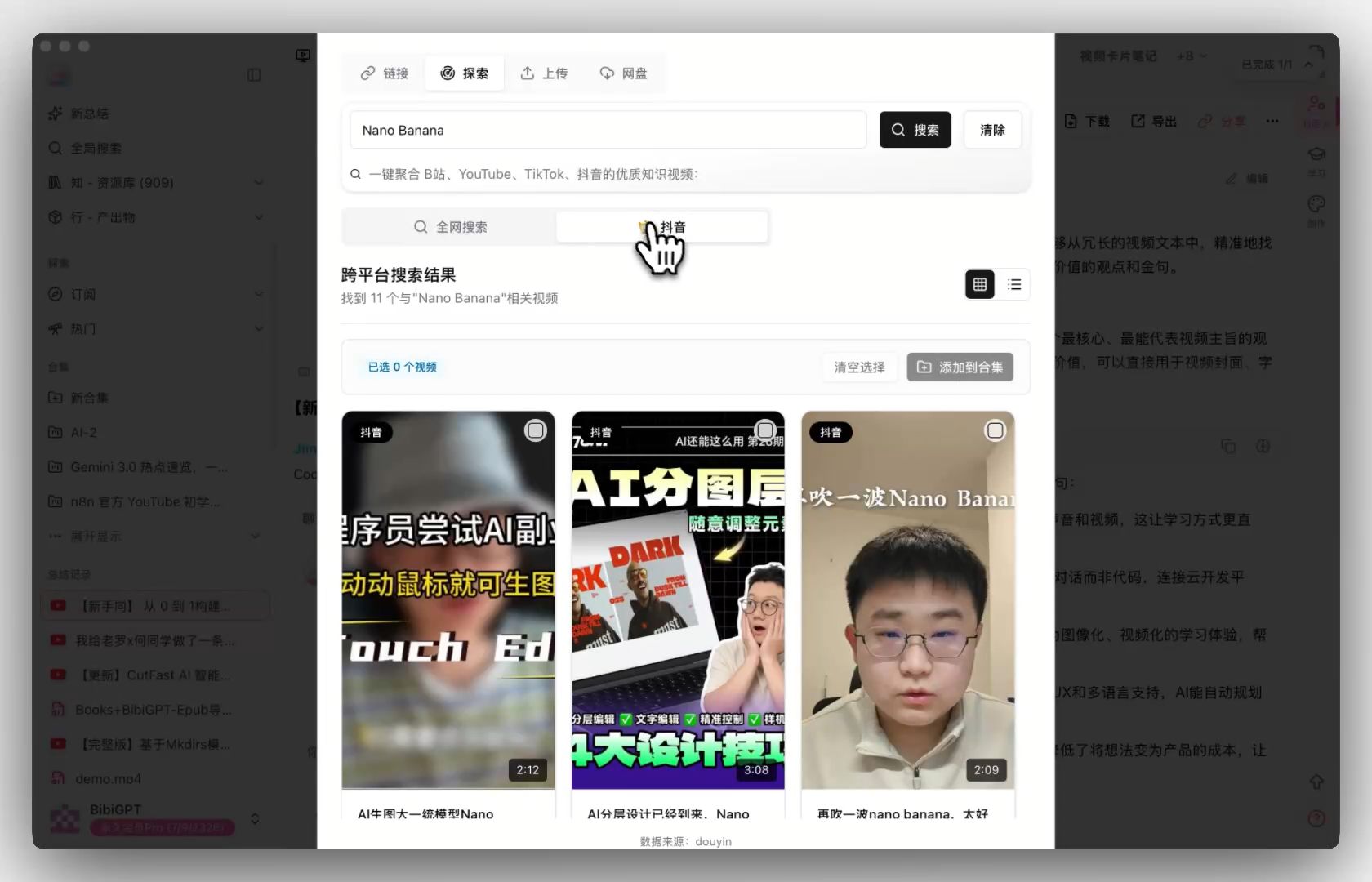 BibiGPT global search: Douyin data source entry
You are deciding "I want to learn compound interest today" — not waiting for the algorithm to recommend a compound interest video someday.
Step 2: Teach — Smart Summary Structures the Fragmented Information
Douyin's short videos have extremely high information density but often implicit structure. In 2 minutes, a creator throws out 5 ideas — each impactful, but the logical relationships between concepts are never explained.
BibiGPT's smart deep summary structures the fragmented content:
- Core arguments: What the creator is actually claiming
- Deep thinking Q&A: Verify whether you understood the logic behind the argument
- Term explanations: Finance/psychology/management jargon explained
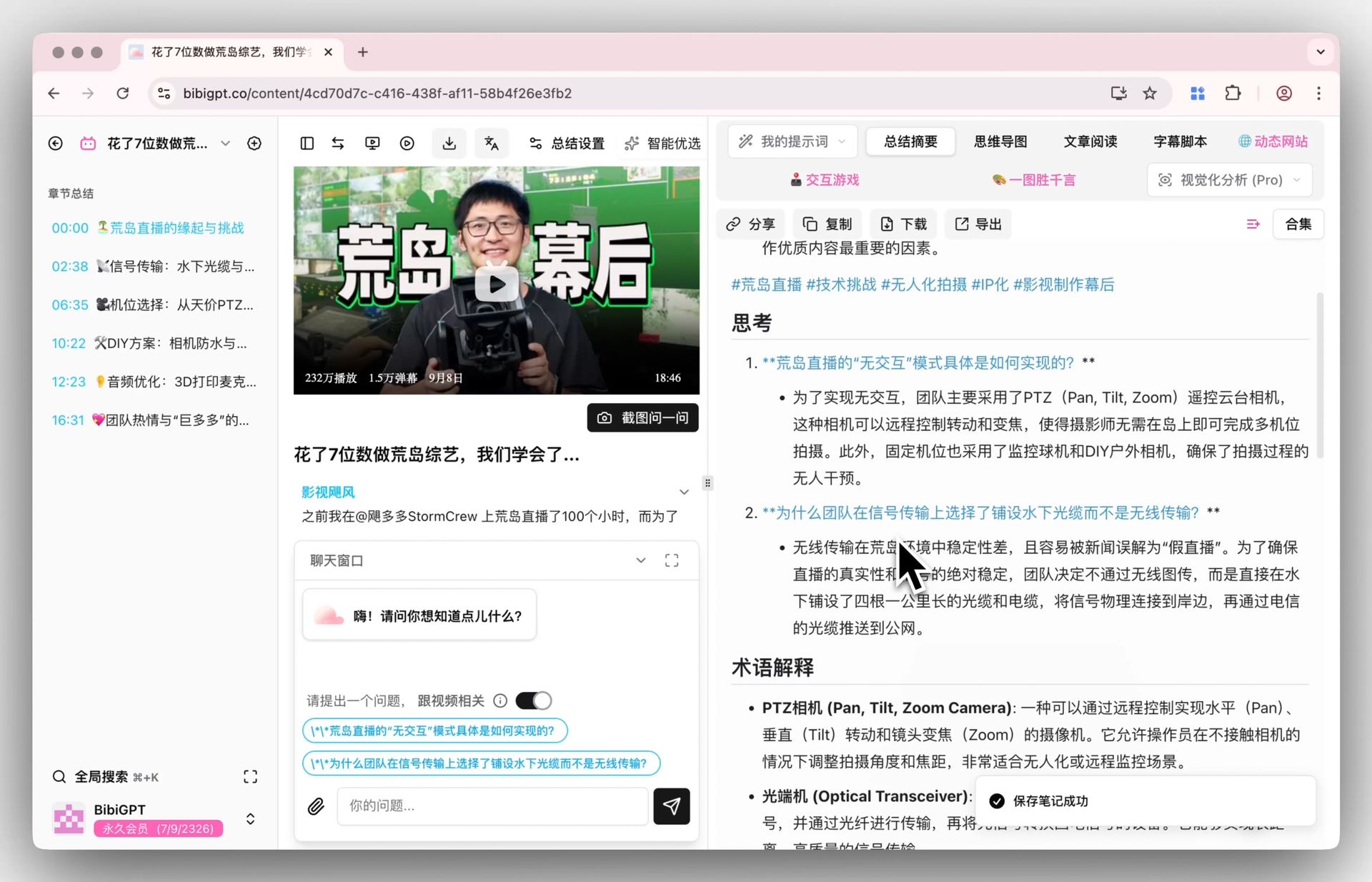 BibiGPT smart deep summary: structure Douyin fragmented content
Step 3: Find Gaps — AI Chat to Trace Missing Reasoning Chains
Douyin creators skip derivations for pacing. This is where Feynman Step 3 exposes gaps fastest:
- Creator says: "Compound interest is the eighth wonder of the world" → Ask: "Why is compound interest so powerful? What's the mathematical explanation?"
- Creator says: "Don't buy actively managed funds" → Ask: "What premises does this conclusion require? What are the exceptions?"
BibiGPT's AI answers with clickable timestamps to verify in the original video.
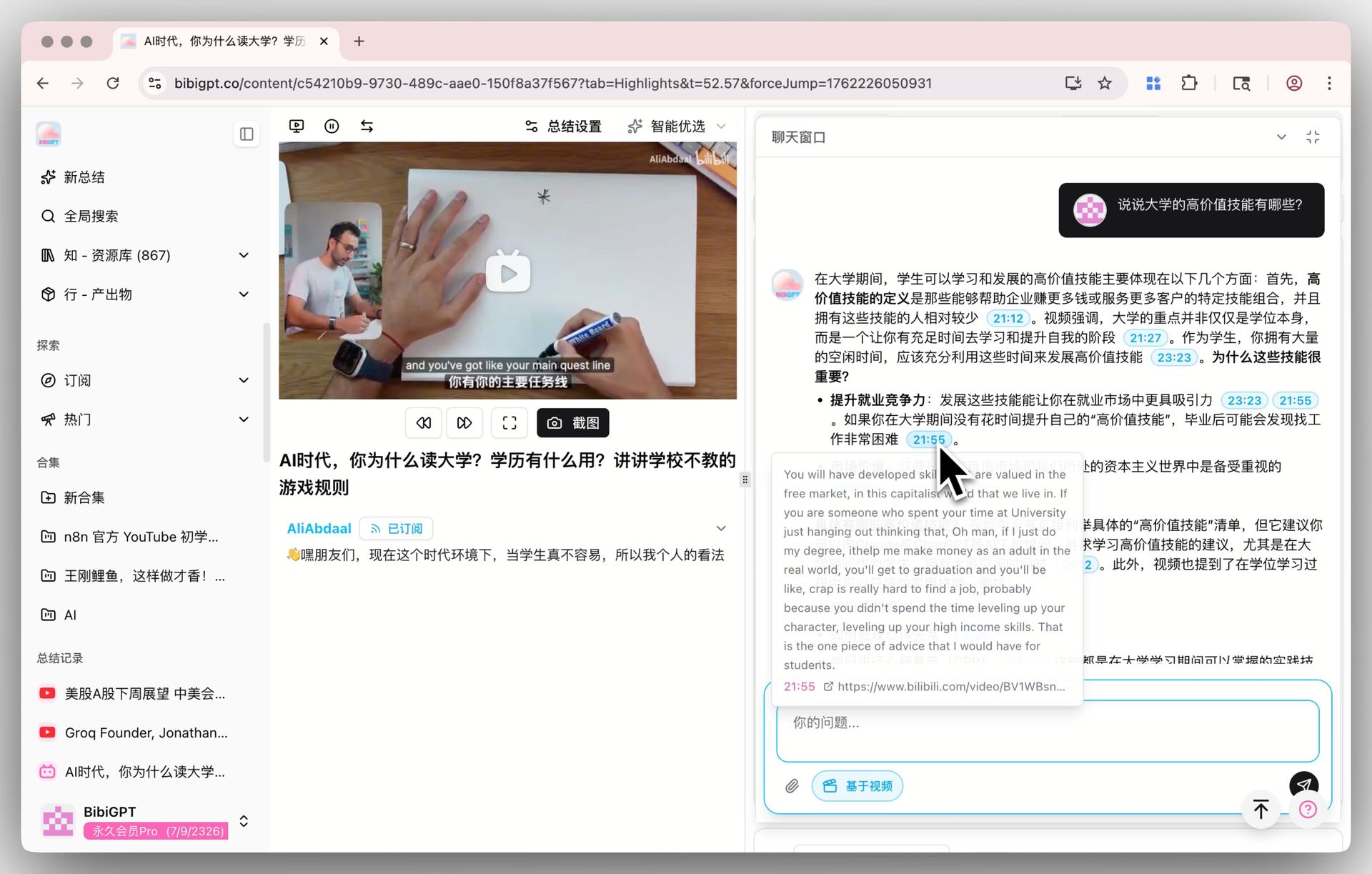 BibiGPT AI chat with timestamp source tracing
Step 4: Simplify — Flashcard Self-Test
Test whether you've actually learned Douyin knowledge:
- "What is the compound interest formula? Under what conditions is the compound effect most significant?"
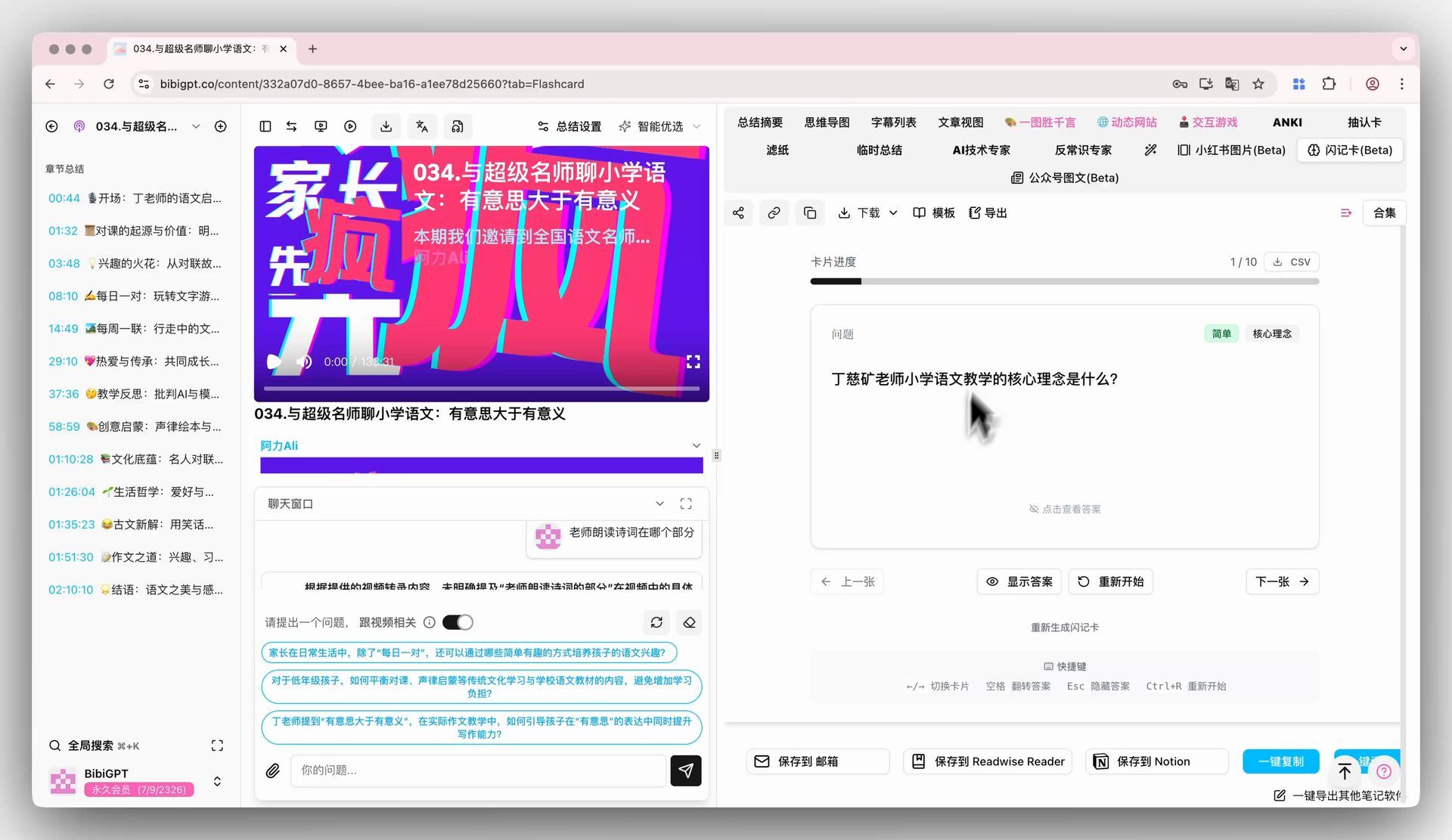 BibiGPT flashcard: question display
Douyin-Exclusive Strategy: Topic-Driven Learning
Using BibiGPT global search enables topic-driven learning:
- Define this week's theme: Systematically understand "compound interest and time value"
- Search + filter: BibiGPT Douyin search "compound interest" → select 3-5 highest-quality videos
- Summarize + trace each: Smart summary + AI chat for each
- Verify: Flashcard test — can you clearly explain it?
This transforms "being fed by algorithms" into "planning your own knowledge menu."
Case Study: Replace Algorithm with Active Search to Systematically Learn "Cognitive Biases"
Background: Occasionally encountered psychology content on Douyin, wanted to systematically understand "cognitive biases" but algorithm recommendations were scattered.
Step 1 (plan):
- BibiGPT Explore → Douyin search "cognitive bias"
- Select 4 quality videos: confirmation bias, anchoring effect, sunk cost fallacy, bandwagon effect
Step 2 (learn 4 videos, 10 min each):
- Each: smart summary → Feynman target → AI trace reasoning
Step 3 (integrate):
- Summarize 4 videos, explain "how cognitive biases affect investment decisions"
- Flashcards: 4 biases' definitions, triggers, countermeasures
Result: From "learn whatever algorithm shows, scattered fragments" to "planned, systematic cognitive bias framework." Feynman test passed.
Feynman × BibiGPT Series
- Full Feynman framework: YouTube overview article
- Podcast commute learning: Xiaoyuzhou + 45-min workflow
- Xiaohongshu: Batch collection to build knowledge system
- TED Talks: Video-to-article + framework extraction
- Bilibili series: Anki export + cross-episode Q&A
Start your AI efficient learning journey now:
- 🌐 Official Website: https://aitodo.co
- 📱 Mobile Download: https://aitodo.co/app
- 💻 Desktop Download: https://aitodo.co/download/desktop
- ✨ Learn More Features: https://aitodo.co/features
BibiGPT Team