
TED Talk AI Summary Tool: BibiGPT + Feynman Technique to Extract Lasting Knowledge
Feynman Technique × TED AI summary tool — BibiGPT's video-to-article extracts speaker frameworks into citable structured content, PPT presentation breaks down core points page by page, turning every TED Talk from "inspiring but fleeting" into a reusable mental model.
TED Talk AI Summary Tool: BibiGPT + Feynman Technique to Extract Lasting Knowledge
Quick answer: How to deeply absorb a TED Talk using the Feynman Technique? Core workflow: ①BibiGPT smart deep summary extracts the speaker's core framework and key terms, ②generate PPT presentation to digest structured points page by page, ③use video-to-article to transform talk insights into a citable, shareable structured piece — the complete path from "inspiring moment" to "lasting asset."
The four-step Feynman framework is covered in the YouTube overview article. This article focuses on TED Talks' unique characteristics and output scenarios.
The TED Talk Paradox: 18 Minutes Changes Your Thinking, But What Do You Remember in 18 Days?
A great TED Talk is one of the most efficiently designed knowledge delivery formats ever created. Simon Sinek's "Golden Circle" reshaped how you think about leadership. Brené Brown's talk reframed vulnerability as courage. Ken Robinson made you question the entire education system.
In the moment, you feel transformed.
Two weeks later, how much do you actually retain?
TED Talks have a unique learning trap: the narrative design is so compelling that it creates the illusion of understanding — but you were moved, not necessarily equipped. The Feynman test is simple: Can you clearly explain Simon Sinek's "Golden Circle" framework to someone who's never heard of it?
TED Feynman Four Steps: BibiGPT's Approach
Step 1: Identify — Smart Summary to See the Framework Beneath the Story
TED Talks are "narrative-driven" — speakers use stories and emotional resonance to convey core points, but the underlying framework is often buried in the narrative. BibiGPT's smart deep summary extracts it:
- Core arguments: What the speaker is actually arguing (not just what they said)
- Key frameworks: The mental models used (Golden Circle, Five Whys, etc.)
- Term explanations: Speaker-invented or specialized concepts
- Deep Q&A: Questions to verify real understanding of the framework
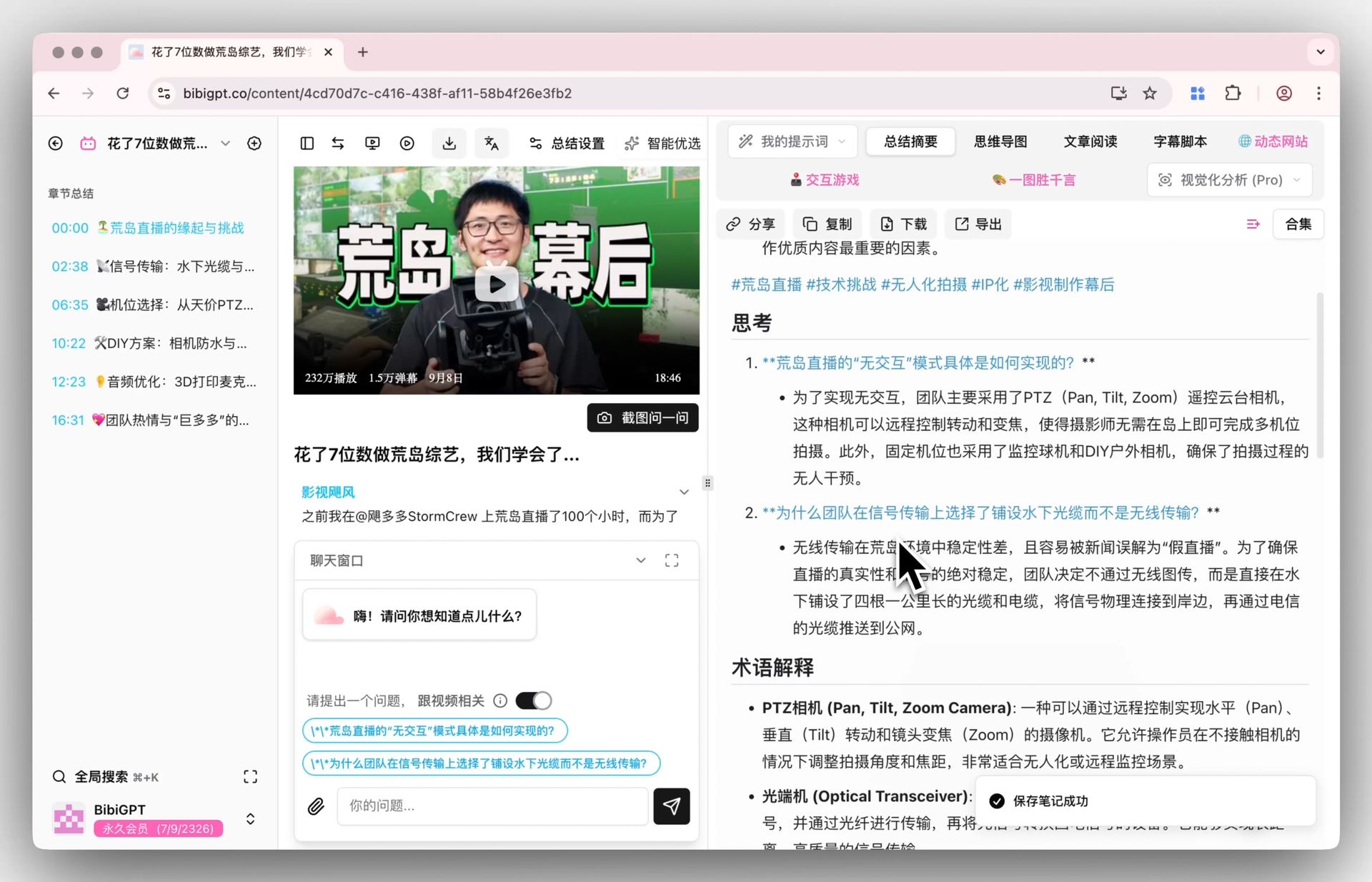 BibiGPT smart deep summary: TED Talk framework extraction
Step 2: Teach — PPT Presentation Turns Talk Logic into a Teachable Structure
This is TED's unique approach in the Feynman series.
TED Talk information is naturally suited for structured output: each talk typically has 3-5 core arguments with a clear narrative arc. Converting this to PPT gives you a teachable presentation framework.
In BibiGPT, click the "PPT Presentation" tab — AI converts the talk into a dynamic, page-by-page slidedeck:
- Each slide covers one core argument
- Key cases and data in bullet form
- Navigate with keyboard arrows or click
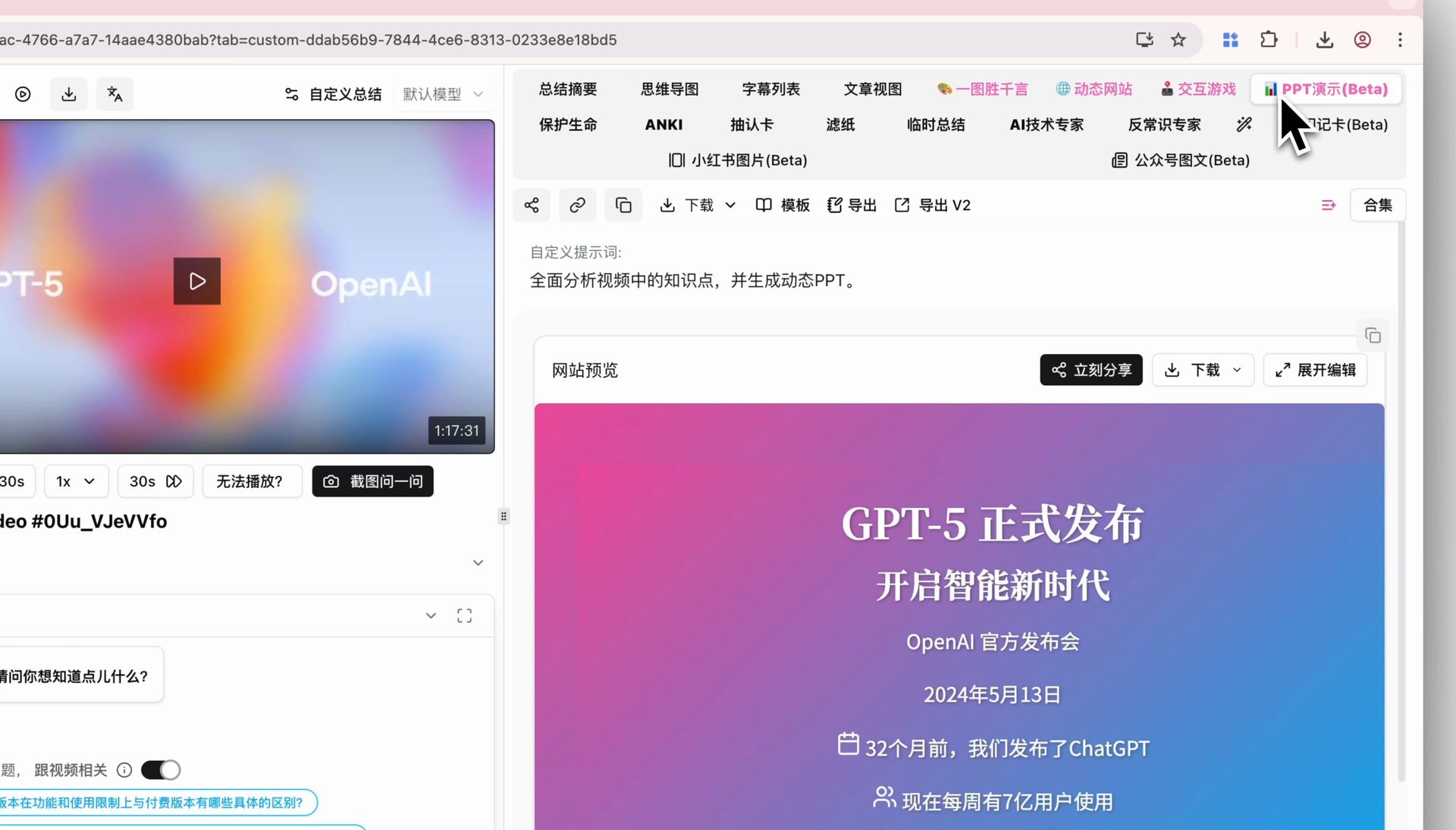 BibiGPT PPT presentation: one-click TED Talk slidedeck
Use this PPT as your "explain to others" practice script — where you stumble is exactly your knowledge gap.
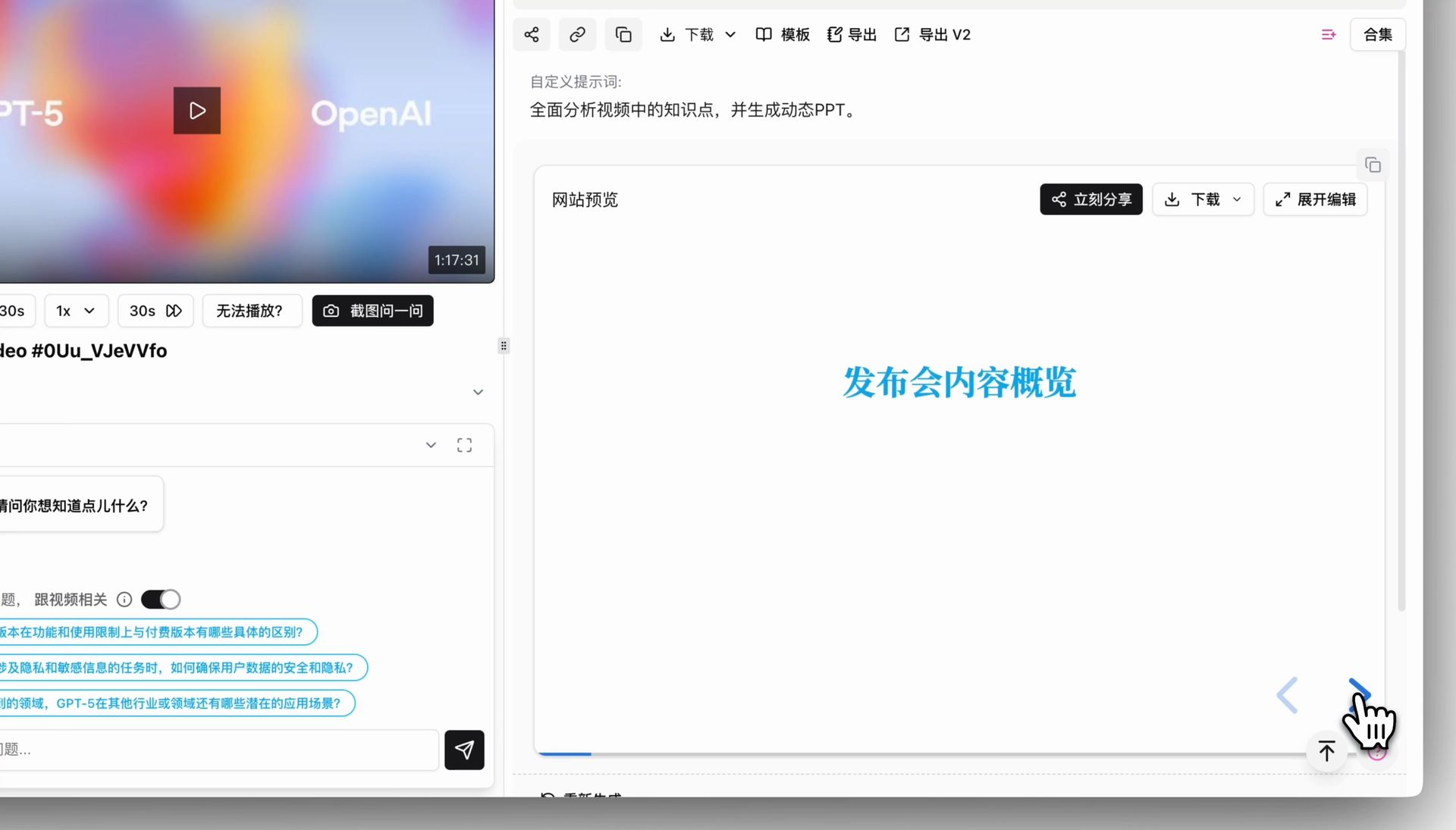 BibiGPT PPT presentation: page-by-page content browsing
Step 3: Find Gaps — AI Chat to Probe the Speaker's Hidden Premises
TED speakers omit derivation and hidden premises to fit 18 minutes. Use BibiGPT to trace what they left out:
- "Does Simon Sinek's Golden Circle apply to all types of organizations? Are there counterexamples?"
- "Brené Brown says 'vulnerability is strength' — under what conditions is this true?"
BibiGPT's AI answers with clickable timestamps to verify the reasoning in the original talk.
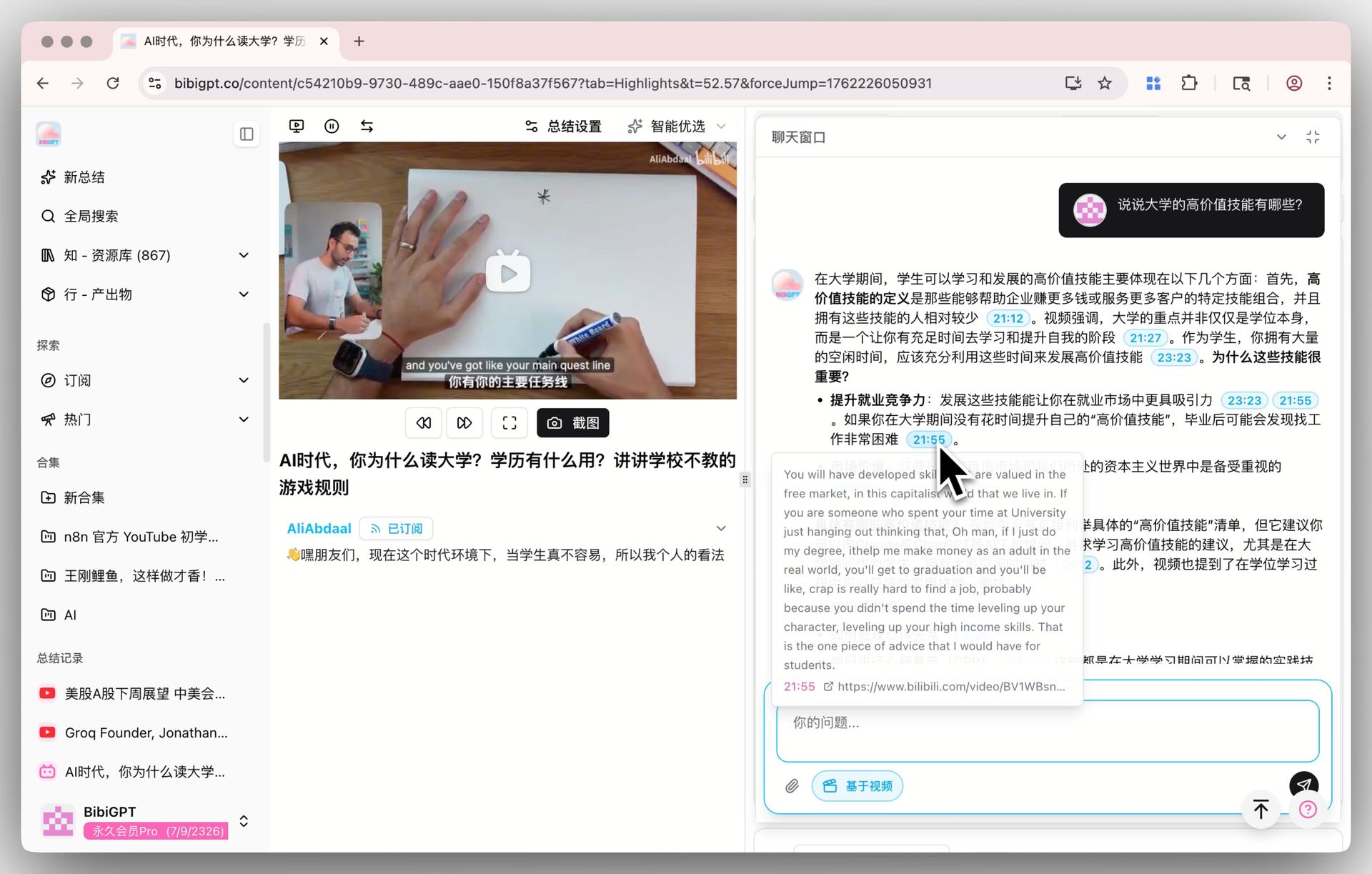 BibiGPT AI chat with timestamp source tracing
Step 4: Simplify — Video-to-Article to Output Your Version
BibiGPT's video-to-article feature converts the talk into a structured article with key screenshots and organized paragraphs. Export as HTML, PDF, or Markdown.
 BibiGPT video-to-article: structured article generation
Use the AI-generated article as a starting draft, then rewrite it in your own words — this is the Feynman "Simplify" step applied to writing.
TED-Exclusive: Speaker Framework → Reusable Mental Model
The most valuable part of a TED Talk isn't "what they said" — it's "what framework they used to think about the problem."
BibiGPT's video-to-article helps you extract this framework and convert it into a mental model you can apply elsewhere:
- Simon Sinek's Golden Circle: Why → How → What → apply to your own product pitch
- Brené Brown's vulnerability research → apply to team management
- Adam Grant's "originals" framework → apply to startup decision-making
Each TED Talk you truly Feynman-process becomes a new tool in your mental toolkit.
Case Study: Feynman Deconstruction of Simon Sinek's "How Great Leaders Inspire Action"
- Extract framework: BibiGPT summary reveals Golden Circle (Why → How → What) as the core model
- Generate PPT: 3 core slides — Golden Circle definition, Apple case, biological explanation
- Page-by-page test: Stuck on "biological explanation" — can't explain why starting with Why activates the limbic system
- Ask AI: "Is Sinek's claim about the limbic system scientifically sound?" → explanation + timestamp
- Write own version: Use video-to-article as base, rewrite as "Golden Circle in product design"
Two months later: still able to clearly explain the Golden Circle to new colleagues with personal examples.
Feynman × BibiGPT Series
- Full Feynman framework: YouTube overview article
- Podcast commute learning: Xiaoyuzhou + 45-min commute Feynman workflow
- Xiaohongshu: Batch multi-link summary to build a knowledge system
- Bilibili technical series: Anki export + series cross-video Q&A
- Douyin: Search-driven learning vs. algorithm recommendations
Start your AI efficient learning journey now:
- 🌐 Official Website: https://aitodo.co
- 📱 Mobile Download: https://aitodo.co/app
- 💻 Desktop Download: https://aitodo.co/download/desktop
- ✨ Learn More Features: https://aitodo.co/features
BibiGPT Team