GPT-6 Astra Explained — What OpenAI Launched on 2026-09-03

TL;DR — On 2026-09-03 OpenAI shipped GPT-6 Astra, its most capable model for the hardest end-to-end work: reasoning, coding, computer use, research, and document creation. Official docs list text and image in, text out. Audio and video are not supported. If you need chapters from a long lecture, paste the link; you do not pick gpt-6-astra.

Limited · 2026-09-03 $10 / $50 Live demo below

Get the notes, skip the Astra dashboard

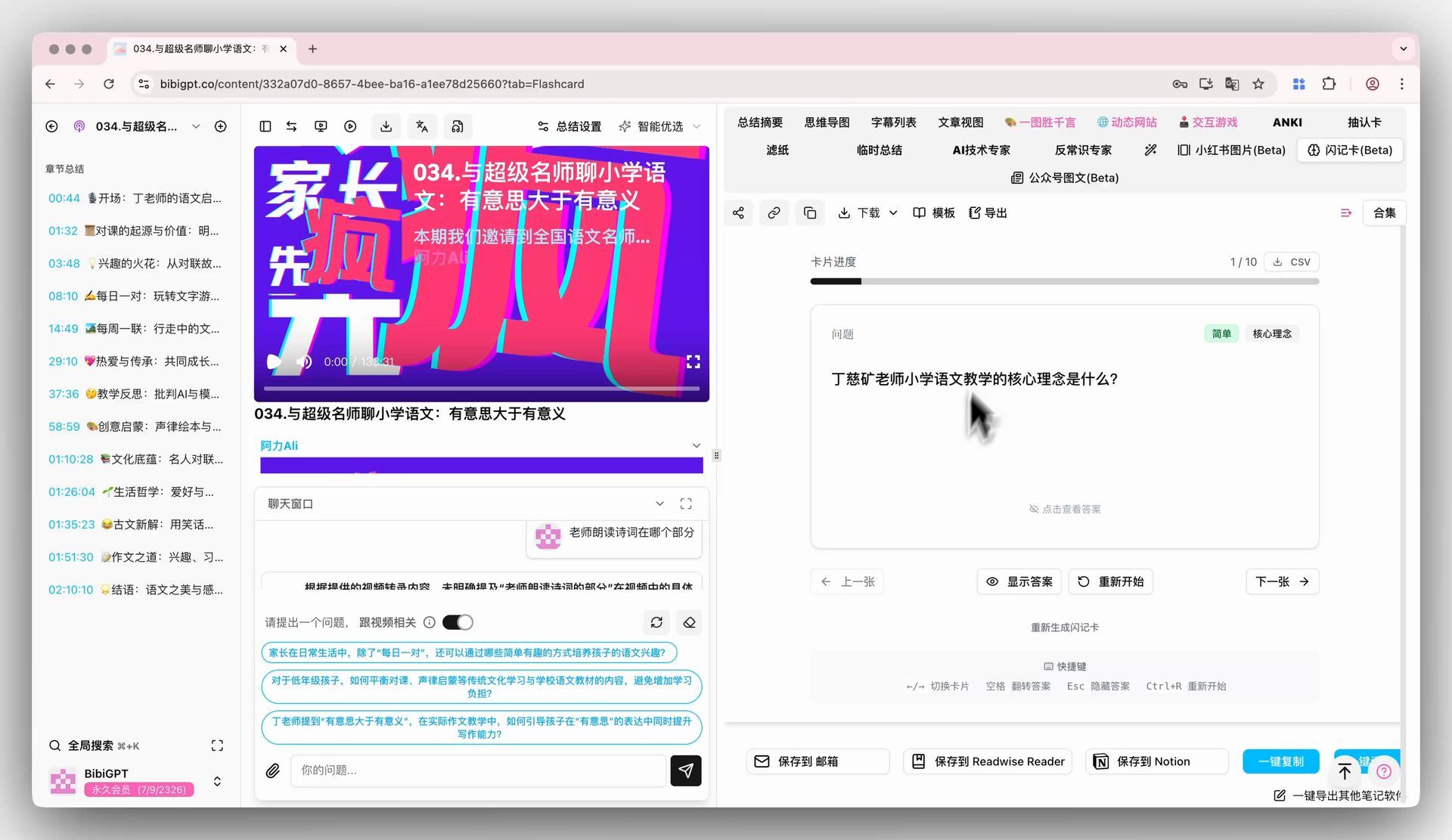
Paste a long-form video URL — BibiGPT turns it into chapters, a transcript, and follow-up Q&A. You never pick gpt-6-astra.

Add BibiGPT as a preferred source on Google See more BibiGPT in Top Stories and AI answers.

Key facts (90-second read)

As of 2026-09-07, OpenAI released GPT-6 Astra on 2026-09-03 as its most capable end-to-end work model. Official docs list reasoning, coding, computer use, research, and documents — not audio or video. If you need a lecture turned into searchable notes, paste the link into BibiGPT instead of picking gpt-6-astra.

Features

What GPT-6 Astra actually is

A flagship work model, not a video SKU. OpenAI positioned it for the hardest end-to-end jobs — then listed audio and video as unsupported on the model card.

Hardest end-to-end work (2026-09-03)

The API changelog calls Astra OpenAI's most capable model for reasoning, coding, computer use, research, and document creation. ChatGPT release notes add templates for documents, spreadsheets, and presentations. That is office work, not a lecture pipeline.

Reasoning is required; sampling knobs are gone

reasoning.effort supports low, medium, high, xhigh, and max. The none level is rejected. Custom temperature, top_p, and logprobs are not supported. Treat it as a reasoning model, not a chat-completions drop-in.

Text and image in. Audio and video out of scope

The official model page lists text and image input, text output, a 1,050,000-token context window, and 128,000 max output tokens. Audio: not supported. Video: not supported. Do not write Astra into a transcription stack.

What this means if you work with long video

A stronger work model helps teams that already run OpenAI themselves. It does not replace a product that files chapters, a transcript, and follow-up Q&A for a human.

You should not have to pick gpt-6-astra

Paste a YouTube or lecture URL, get chapters and a transcript. The point of a video assistant is the artifact — not a model ID on an API dashboard.

Long-running controls are for agents, not lectures

Responses API adds async tool calling, mid-turn steering over WebSockets, and changing reasoning effort mid-conversation. Those are agent-loop controls. A 90-minute course still needs timestamps and export.

Limited rollout, not a consumer video SKU

OpenAI said access is rolling out to a limited set of organizations and is not yet generally available. The Free API tier is unsupported. List price is $10 / $50 per 1M input/output tokens. Do not treat Astra as a public video model.

5 key changes (90-second read)

Headline shifts from OpenAI's 2026-09-03 API changelog.

  1. 1

    A work-model flagship, not a video SKU

    GPT-6 Astra is billed as OpenAI's most capable model for the hardest end-to-end work. Model ID gpt-6-astra. This page is the SKU launch. Official docs do not name audio or video capability.

  2. 2

    Reasoning is on; none, temperature, and logprobs are off

    reasoning.effort supports low, medium, high, xhigh, and max. The none level is not supported. Custom temperature, top_p, and logprobs are not supported. Knowledge cutoff on the model page is 2026-04-30.

  3. 3

    Tool calling needs Responses; long jobs get new controls

    Tool calling requires the Responses API. New controls: async tool calling so the model keeps working while your app runs tools; mid-turn steering over WebSockets; change reasoning effort mid-conversation without dropping the cached prompt prefix.

  4. 4

    Text and image in. Audio and video not supported

    Listed Standard price is $10 / $50 per 1M input/output tokens. Context window 1,050,000 tokens; max output 128,000. Inputs: text, image. Output: text. The model page marks audio and video as not supported.

  5. 5

    Limited rollout plus misalignment monitoring

    OpenAI said access is rolling out to a limited set of organizations and is not yet generally available. Free-tier API is unsupported. Misalignment monitoring can raise safety alerts or pause a conversation for review on supported Responses requests.

3 typical scenarios for BibiGPT users

Where the SKU matters — and where a summarizer is the actual product.

You already run OpenAI yourself

Use Astra on your own agent traces for coding, research, or document drafts. Then still dump the finished lecture into BibiGPT so humans get chapters instead of a raw token dump.

You just need the lecture notes

A 90-minute course video does not need a model ID. Paste the URL, export the transcript, ask follow-up questions. That is the BibiGPT path — a substitute workflow, not an Astra integration.

You are comparing Astra vs GPT-5.6 vs Gemini 3.8

Astra is the 09-03 work-model SKU with no A/V input. GPT-5.6 is the prior family. Gemini 3.8 Flash is the same-week Google SKU that does take video. Keep each intent on its own URL.

Related BibiGPT pages

The summarizer is the product. The other two URLs keep same-week model launches from colliding.

Sources

Launch claims come from OpenAI's own changelog and model card plus independent coverage.

  • On 2026-09-03 OpenAI released GPT-6 Astra as its most capable model for the hardest end-to-end work (reasoning, coding, computer use, research, document creation), with no none reasoning effort, no custom temperature/top_p/logprobs, Responses-only tool calling, async tools, mid-turn steering, and misalignment monitoring.

    OpenAI API — Changelog (September 3, 2026) ↗
  • The GPT-6 Astra model page lists $10 / $50 per 1M input/output tokens, 1,050,000 context, 128,000 max output, Apr 30, 2026 knowledge cutoff, text and image in / text out, and audio and video not supported. Free tier is unsupported.

    OpenAI API — GPT-6 Astra model page ↗
  • TechCrunch reported the 2026-09-03 Astra launch as OpenAI's most capable model yet, with a limited Daybreak-first rollout and a broader paid-plan and API expansion over the following week.

    TechCrunch — OpenAI launches Astra (2026-09-03) ↗

What is GPT-6 Astra?

What is GPT-6 Astra?

GPT-6 Astra is OpenAI's flagship work model launched on 2026-09-03. Official docs position it for reasoning, coding, computer use, research, and document creation. The model card lists text and image input and text output; audio and video are not supported.

Loved by creators, students & researchers

Why people use BibiGPT to turn videos into text every day.

Trusted by 50,000+ users worldwide

★★★★★

“I paste a link and get clean captions in seconds — it saves me hours of retyping every single week.”

Maya R.

Content Creator · Repurposes short videos

★★★★★

“Exporting the transcript lets me review new words at my own pace instead of pausing the video constantly.”

Daniel K.

Language Learner · Studies with real videos

★★★★★

“Accurate, timestamped text I can quote directly. It has quietly become part of my daily workflow.”

Priya S.

Researcher · Cites public talks

Frequently Asked Questions

Ask us anything!

Popular guides

Skip the Astra dashboard. Get the notes.

Paste a long YouTube, lecture, or podcast URL into BibiGPT. You get chapters, a transcript, and follow-up Q&A — without picking GPT-6 Astra, GPT-5.6 Sol, or a Responses API SKU.