
What are GPT-6 Sol and GPT-6 Luna?
They are OpenAI text models launched on 2026-09-22 under GPT-6 Astra. Sol lists at $2/$10 per 1M tokens for harder drafts. Luna lists at $0.10/$0.50 for high-volume notes. Cards list text and image in, text out.
TL;DR — On 2026-09-22 OpenAI shipped GPT-6 Sol and GPT-6 Luna at half the GPT-5.6 promotional price. Sol is $2/$10 per 1M tokens for longer scripts and articles. Luna is $0.10/$0.50 for high-volume notes. Published cards list text and image in, text out. Paste the video link first.
Paste a long-form video or podcast URL. BibiGPT returns chapters and a transcript. Choose GPT-6 Luna for notes or GPT-6 Sol for a longer script.
As of 2026-09-24, OpenAI released GPT-6 Sol and GPT-6 Luna on 2026-09-22 at half the GPT-5.6 promotional price. Sol is the longer-draft model. Luna is the high-volume notes model. Neither card lists audio or video input. Paste the link into BibiGPT, then choose the model for the writing.
Two cheaper GPT-6 text models under Astra. OpenAI priced them at half the GPT-5.6 promotional rates. They write. They do not take the video file.
API id gpt-6-sol. OpenAI positions Sol for complex coding and professional work. List price is $2 per 1M input tokens and $10 per 1M output tokens. In a content workflow that is the model for a full script or article.
API id gpt-6-luna. OpenAI positions Luna for clear, high-volume tasks: summarizing, extracting, and short answers. List price is $0.10 / $0.50 per 1M tokens. That is the model for chapter notes, titles, and show notes.
Vercel's model pages list text and image input, text output, a 1,050,000-token context window, and 128,000 max output tokens. They do not list audio or video input. Do not send a raw lecture file to either id.
BibiGPT turns the link into chapters and a transcript. You then choose which GPT-6 model writes the next artifact. You pick. The link still goes in first.
After the transcript exists, GPT-6 Luna is the cheap choice for many short outputs: chapter blurbs, titles, timestamps, and social lines. It is on the free model list. Sol is marked for paid plans.
A 1,500-word article, a video script, or a course outline needs a longer draft. Choose GPT-6 Sol in the same model list. It costs more than Luna and less than GPT-6 Astra ($10 / $50).
GPT-6 Astra remains the top work model. This launch does not add a GPT-6 Terra. For a finished lecture recap, start from the video link. Gemini 3.8 Flash is the same-month card that does list video input.
Headline shifts from OpenAI's 2026-09-22 launch and the Vercel AI Gateway cards.
OpenAI added GPT-6 Sol (gpt-6-sol) and GPT-6 Luna (gpt-6-luna) under Astra. The post does not announce a GPT-6 Terra. Both are text models for work at a lower price.
Sol moves from the $4 / $20 promotional rate to $2 / $10. Luna moves from $0.20 / $1.20 to $0.10 / $0.50. Vercel lists the same input and output rates, with no gateway markup called out.
OpenAI points Sol at complex coding and professional work, and Luna at high-volume tasks with a clear goal: summaries, extraction, and short answers. That split maps to a script versus a batch of titles.
Vercel lists a 1,050,000-token context window and 128,000 max output tokens. Input is text and image. Output is text. Audio and video are not on the card. Cached input is $0.20 on Sol and $0.01 on Luna.
Both ids are in the API, ChatGPT Work, and Codex for Plus, Pro, Business, Enterprise, and Edu. Free and Go can try Luna in the desktop app. OpenAI said they are not in Chat yet. OpenAI also says Sol makes about half as many factual mistakes as GPT-5.6 Sol on an internal eval.
The link becomes text first. The model you choose writes the next artifact.
Paste the course URL. BibiGPT returns chapters and a transcript. Choose GPT-6 Luna when you want a short blurb on every chapter, plus titles you can scan. You do not upload the mp4 to gpt-6-luna.
The same transcript can feed a longer draft: a newsletter, a video script, or a lesson outline. Choose GPT-6 Sol for that single piece. Luna stays the better fit when you need twenty short posts instead of one essay.
GPT-6 Astra is the flagship work model and has its own page. GPT-5.6 is the previous family, still in the list. Gemini 3.8 Flash is the card that lists video input. Keep each intent on its own URL.
The summarizer files the video. These URLs keep the model launches from colliding.
Launch claims come from OpenAI's announcement, the Vercel model cards, and TechCrunch.
On 2026-09-22 OpenAI introduced GPT-6 Sol and GPT-6 Luna under GPT-6 Astra, at half the GPT-5.6 promotional API price: Sol $2/$10 and Luna $0.10/$0.50 per 1M tokens. API ids are gpt-6-sol and gpt-6-luna. They roll out in ChatGPT Work and Codex for paid plans; Luna is also in the desktop app for Free and Go; they are not in Chat yet.
OpenAI — Introducing GPT-6 Sol and Luna (2026-09-22) ↗Vercel AI Gateway lists openai/gpt-6-sol at $2/$10 and openai/gpt-6-luna at $0.10/$0.50, with a 1.05M context window, 128K max output, text and image input, and text output. Cached input reads are $0.20 on Sol and $0.01 on Luna.
Vercel — GPT-6 Sol and Luna on AI Gateway (2026-09-22) ↗TechCrunch reported the same launch: Sol for complex work such as coding, Luna for high-volume tasks with a clear goal such as summarizing, extracting, or short answers, at half the prior 5.6 price, with fewer factual mistakes claimed for Sol.
TechCrunch — OpenAI launches GPT-6 Sol and Luna (2026-09-22) ↗They are OpenAI text models launched on 2026-09-22 under GPT-6 Astra. Sol lists at $2/$10 per 1M tokens for harder drafts. Luna lists at $0.10/$0.50 for high-volume notes. Cards list text and image in, text out.
Why people use BibiGPT to turn videos into text every day.
Trusted by 50,000+ users worldwide
“I paste a link and get clean captions in seconds — it saves me hours of retyping every single week.”
Maya R.
Content Creator · Repurposes short videos
“Exporting the transcript lets me review new words at my own pace instead of pausing the video constantly.”
Daniel K.
Language Learner · Studies with real videos
“Accurate, timestamped text I can quote directly. It has quietly become part of my daily workflow.”
Priya S.
Researcher · Cites public talks
FAQ'S
Ask us anything!
 1
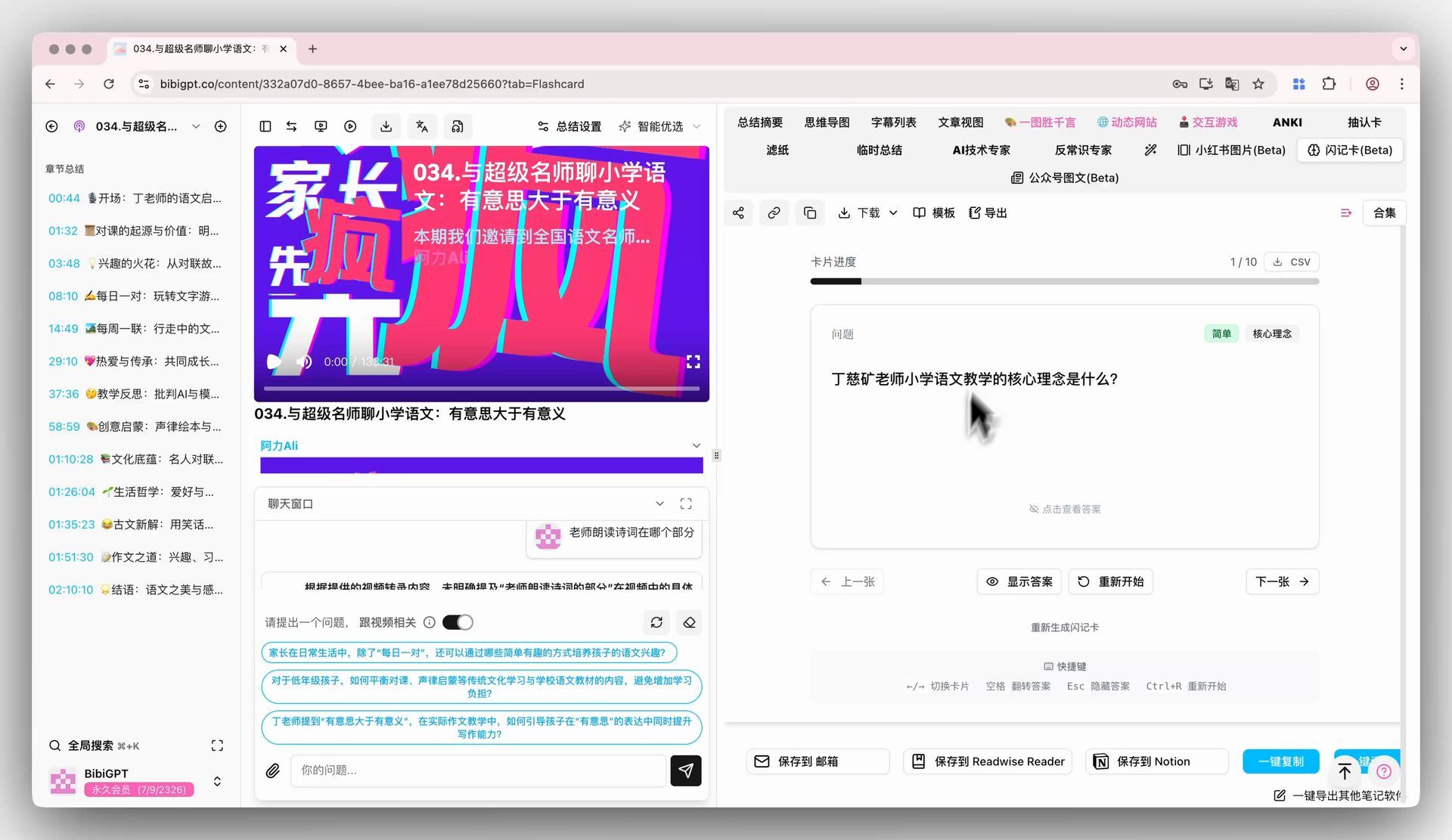
1 2026 student AI study workflow playbook: compare Microsoft Study and Learn Agent, Laxu AI, NotebookLM Education, and BibiGPT — plus a 5-step walkthrough turning lecture videos into Anki flashcards.
 2
2 Best Bilibili AI video summary tool 2026? Compare 5 options, then paste a Bilibili link for a free AI recap, mind map, and transcript-style takeaways — no login needed.
 3
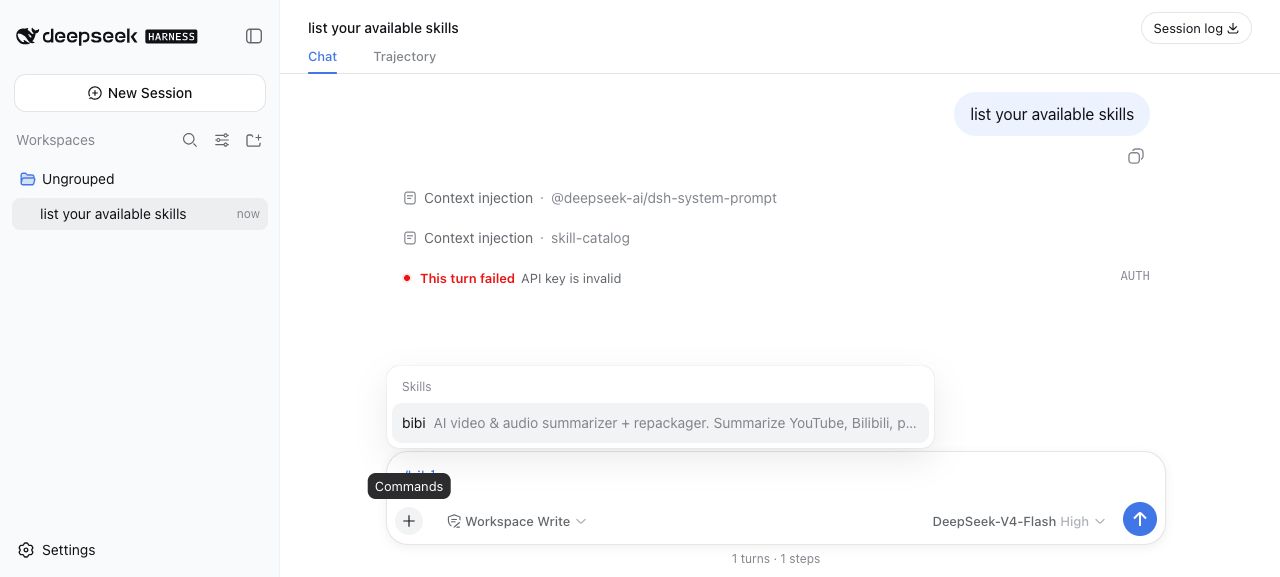
3 Install a video-summary skill into DeepSeek Harness in one copy-paste — SKILL.md matches Claude Code. Or skip dsh: paste a Bilibili or YouTube link in the browser and get a timestamped summary.
Paste a YouTube, lecture, or podcast URL into BibiGPT. You get chapters and a transcript. In the model list, choose GPT-6 Luna for a batch of notes or GPT-6 Sol for a longer script.